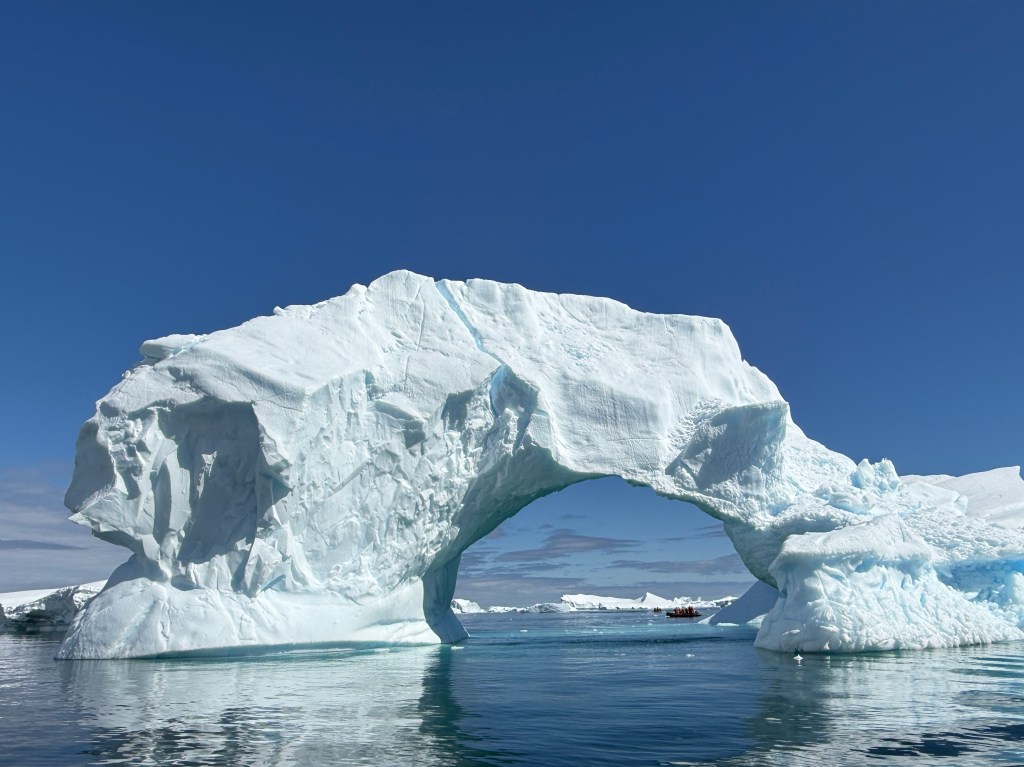
The White Continent.
It is a land of extremes: the coldest, driest, windiest. The only continent without permanent indigenous settlements. Where one will find over two-thirds of Earth’s fresh water (presently in solid form.) Somehow, it seems more “the end of the earth” than its fraternal twin at the other pole, back in “my” hemisphere.
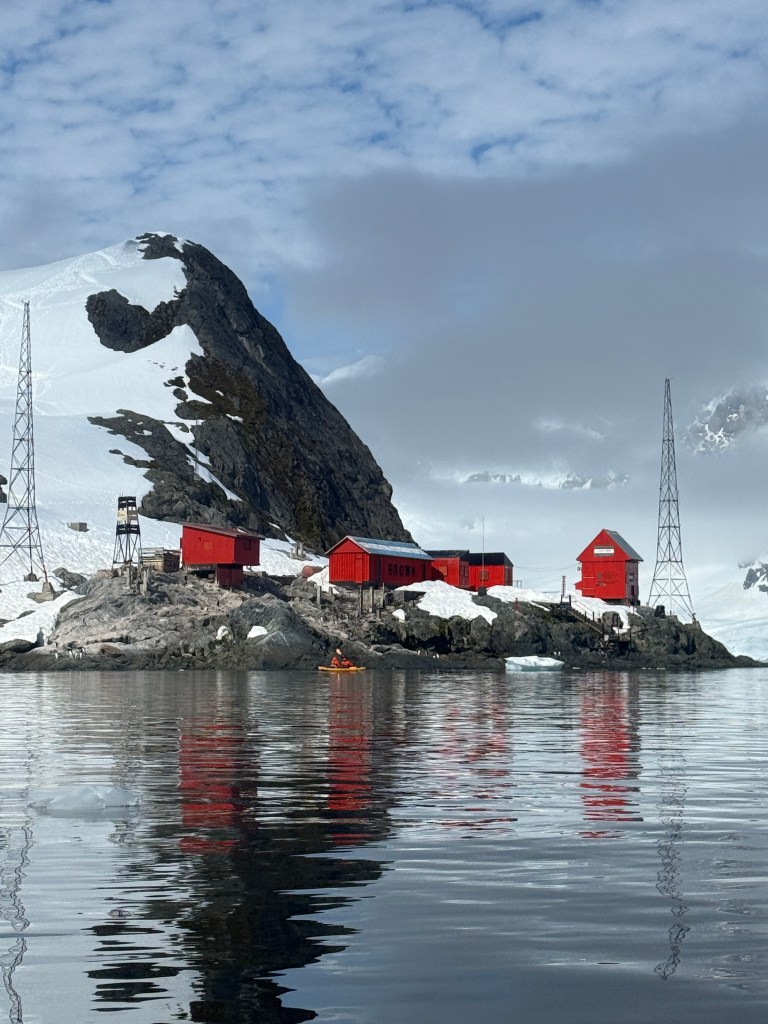
It had not been on my top ten list to visit — not that there ever is such a list, but, y’know, conceptually… I mean, does one even visit Antarctica? I knew enough to know that there are no non-scientific structures on the continent, by treaty, so nothing in the way of traveler infrastructure, so how would that even work…
Yet over the course of my travels over the past year and a half, tapping into the favored experiences of my fellow travelers, there was one destination that came up consistently as a must-see place: Antarctica. Having seen March of the Penguins a number of times, on top of countless hours of polar-related nature programming, I had long been fascinated by this harsh, alien world where birds swim instead of fly and where miles-thick ice can be millions of years old. But actually visiting a place where summer temperatures can freeze water and that is typically reached by sailing thru one of the most notorious stretches of open ocean on our planet? Hmmm… Yet the more I heard and learned, the more I became interested in seeing this land firsthand. Fortuitously, the stars aligned for a visit between Thanksgiving and Christmas this year.
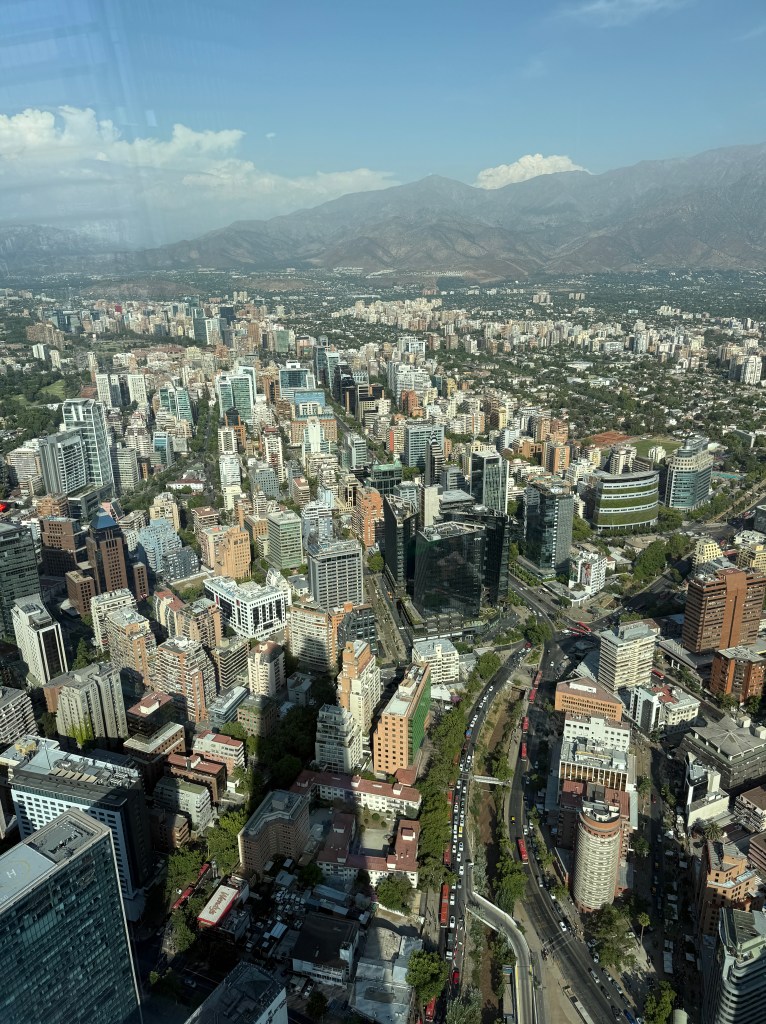
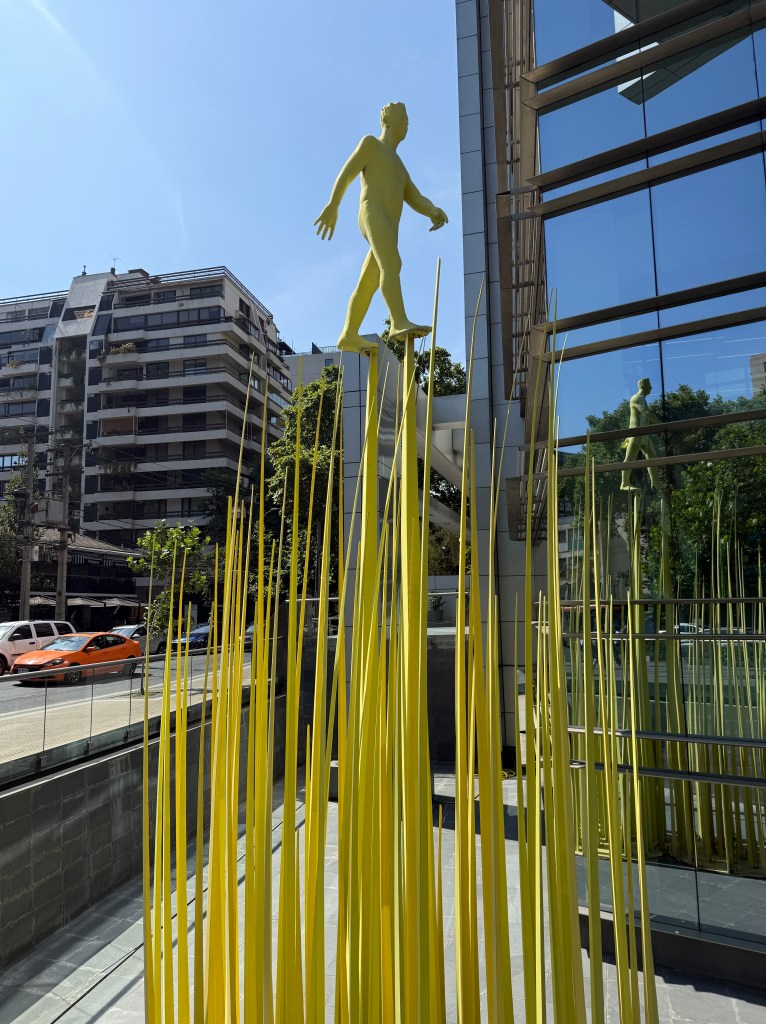
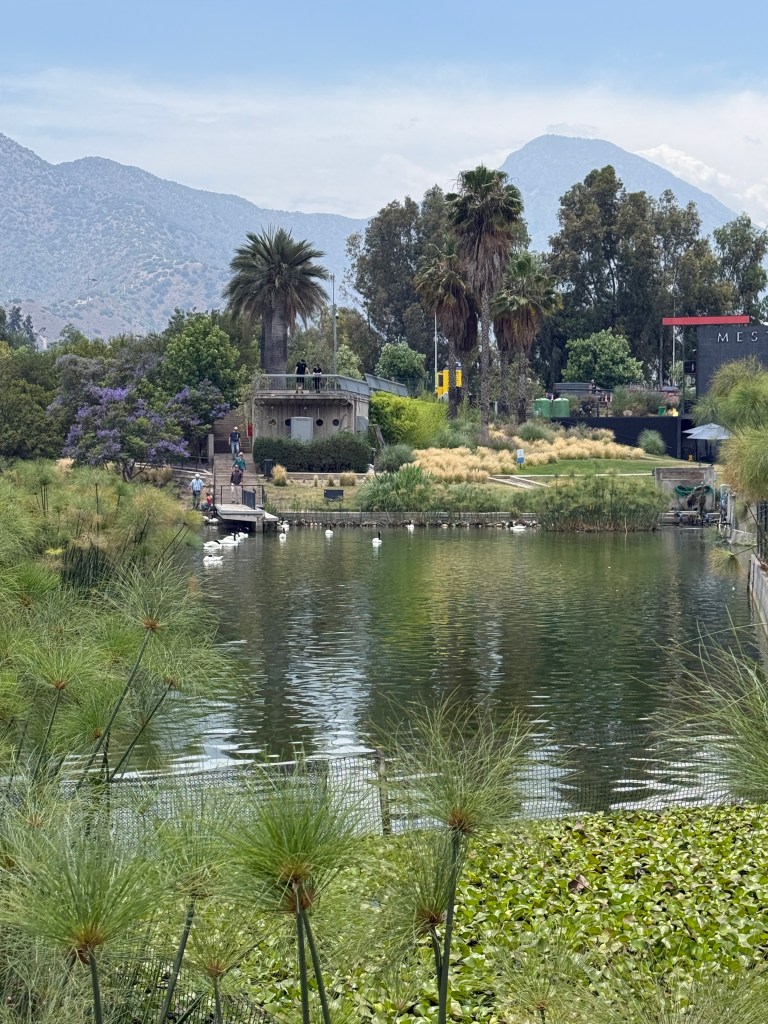
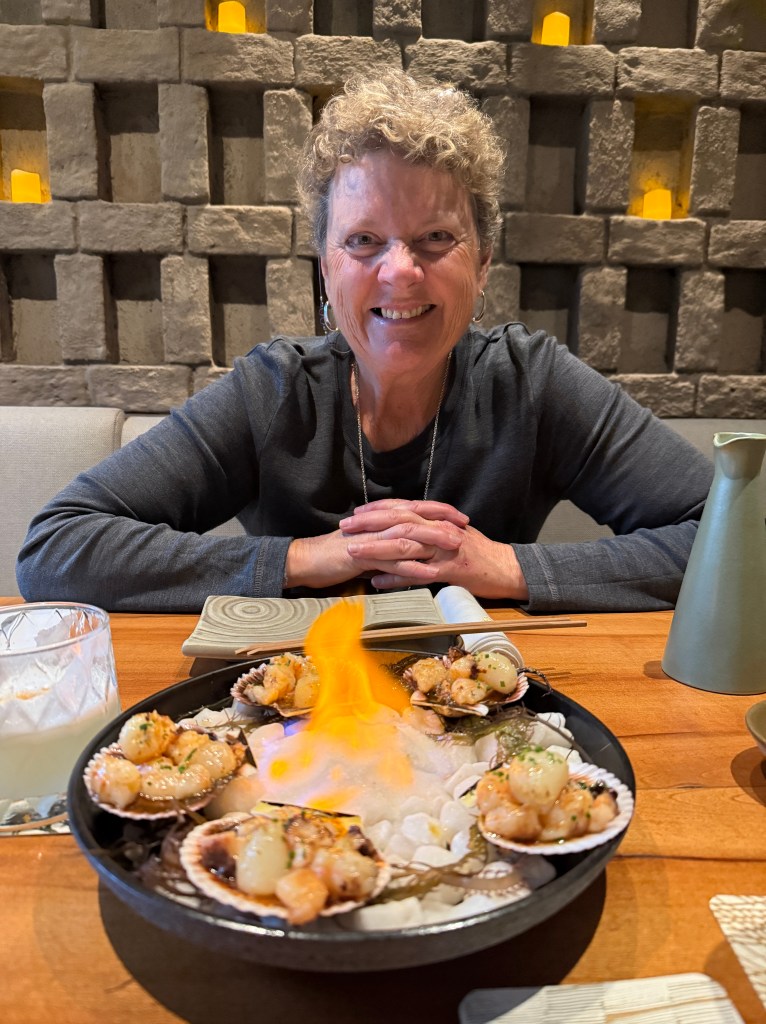
As the organized trip was to begin in Santiago, we arrived a few days in advance of the rest of the group for some downtime and exploration of Chile’s capital city. Nestled snug up to the towering Andes mountains, and quite a walkable city, we enjoyed exploring the parks and markets and consumed some yummy food and lots of public art — especially enjoyable with the temperature outside in the eighties. Even better, we spent a day with Jane’s friend Angie, a Denverite who has lived in Santiago for a couple of decades. Always great to experience a locale with a local.
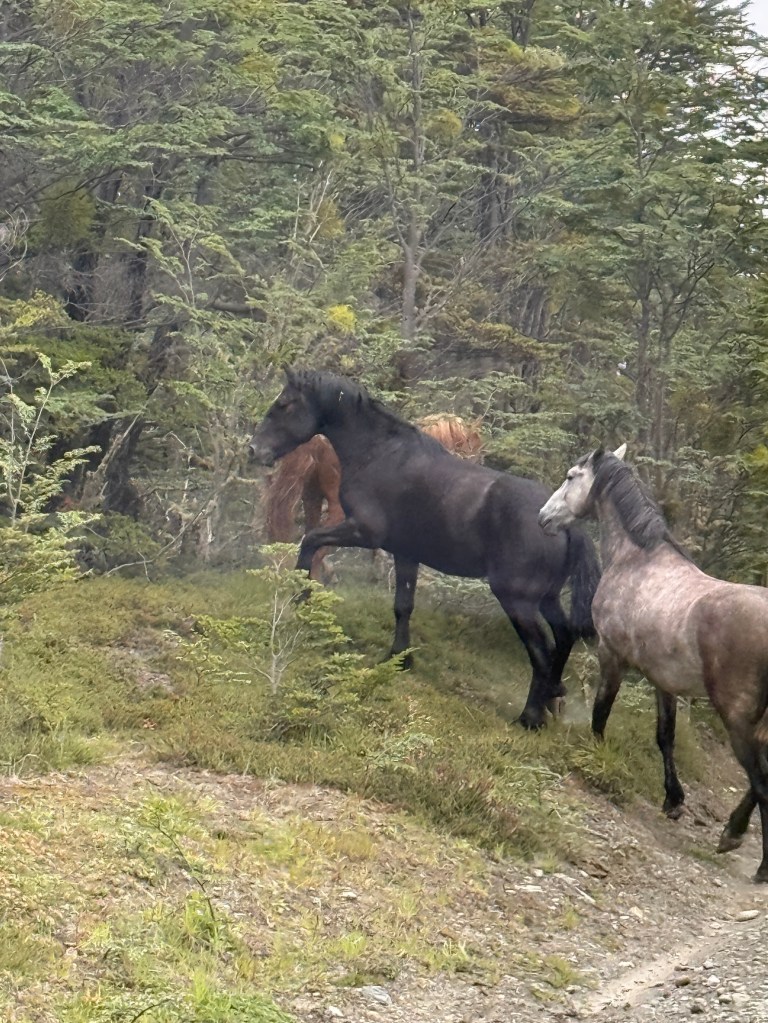
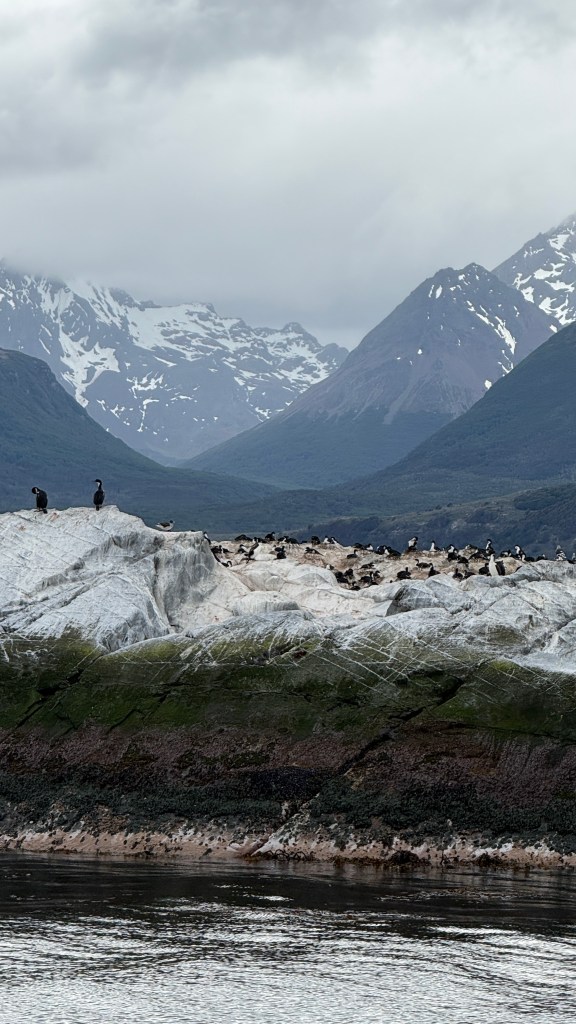
A few-hour flight later, we were in the Argentine port city of Ushuaia, whence most voyages to the Antarctic Peninsula commence. Before embarking on the ship, we enjoyed an afternoon tour of the nearby national park (wild horses and the end of the PanAmerican highway!) as well as a lunch cruise thru the Beagle channel (named after Darwin’s ship), spotting marine wildlife along the way as we started to get to know our shipmates for the next 10 days.
It takes two days to sail from Ushuaia to the tip of the Antarctic peninsula through the (dreaded) Drake passage. Known for its frequent gale-force winds and towering seas, aka the Drake Shake, we were highly fortunate to find the Drake Lake instead, with gentle seas the whole way. In fact, we were super fortunate to experience unusually warm, clear and calm weather each of our days in Antarctica. (We learned at the end of the voyage that none of the crew or the expedition team had experienced weather this glorious before.) Even the return voyage was flat until, overnight, the winds grew to 50 knots and the seas gave us a taste of the Drake Shake. Kinda fun to get a few hours of roller coaster voyaging to round out the Antarctica experience.
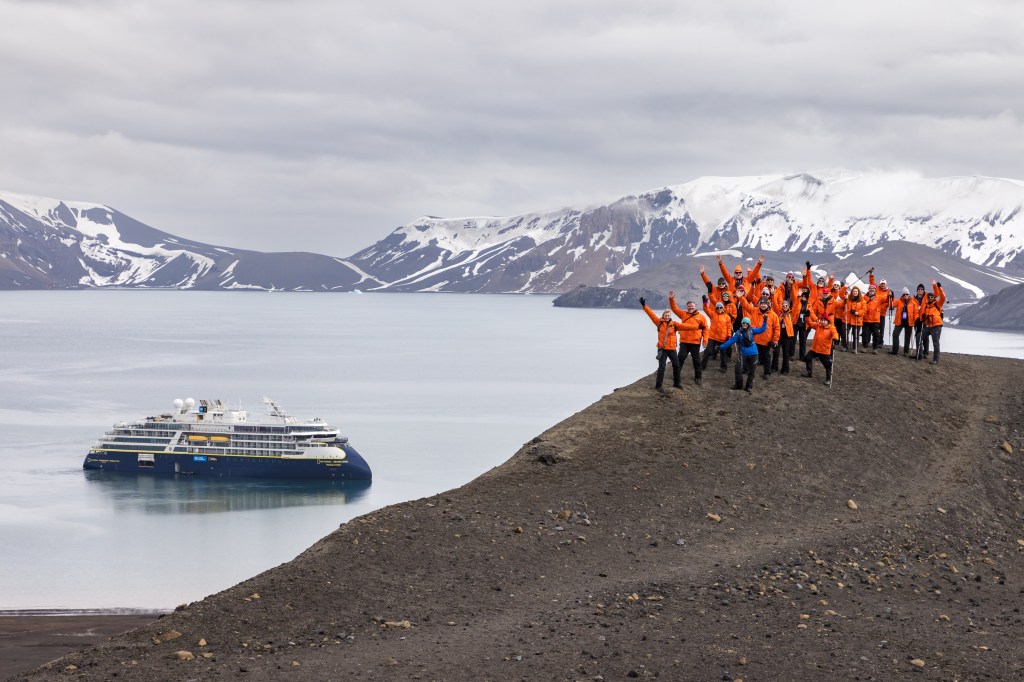
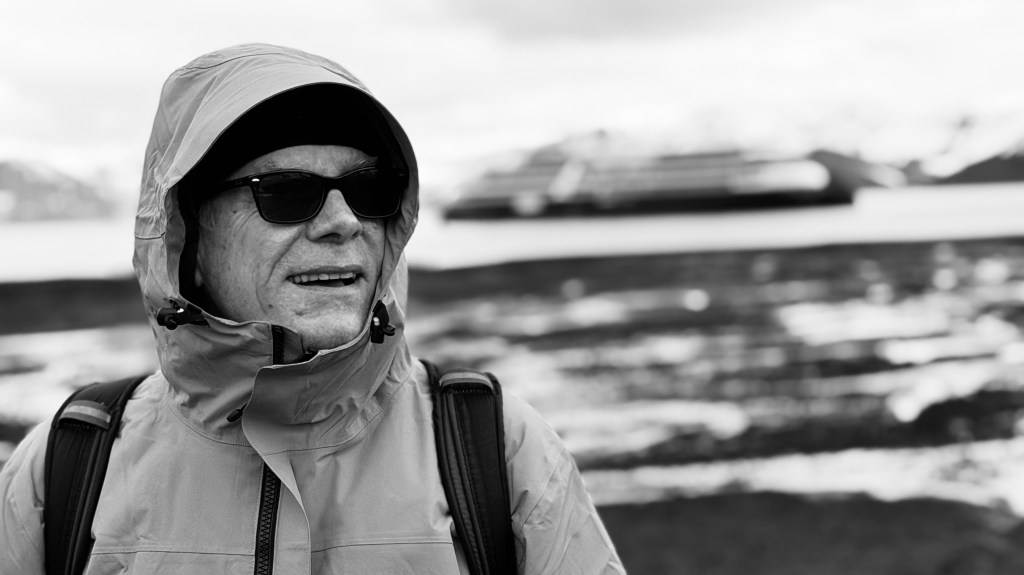
As we made good speed on the way south from Ushuaia, arriving at the Antarctic Peninsula ahead of schedule, we had time for an excursion on the afternoon of our second sea day — hiking on Deception Island, a caldera that last erupted 50 years ago. There is still steam rising from the beautiful black sand beach where the zodiacs dropped us for a hike to a promontory overlooking the island — so cool to see earth’s extremes of fire and ice on such vivid display. Fun fact: Deception Island is one of only two calderas on the planet into which one can sail a ship.
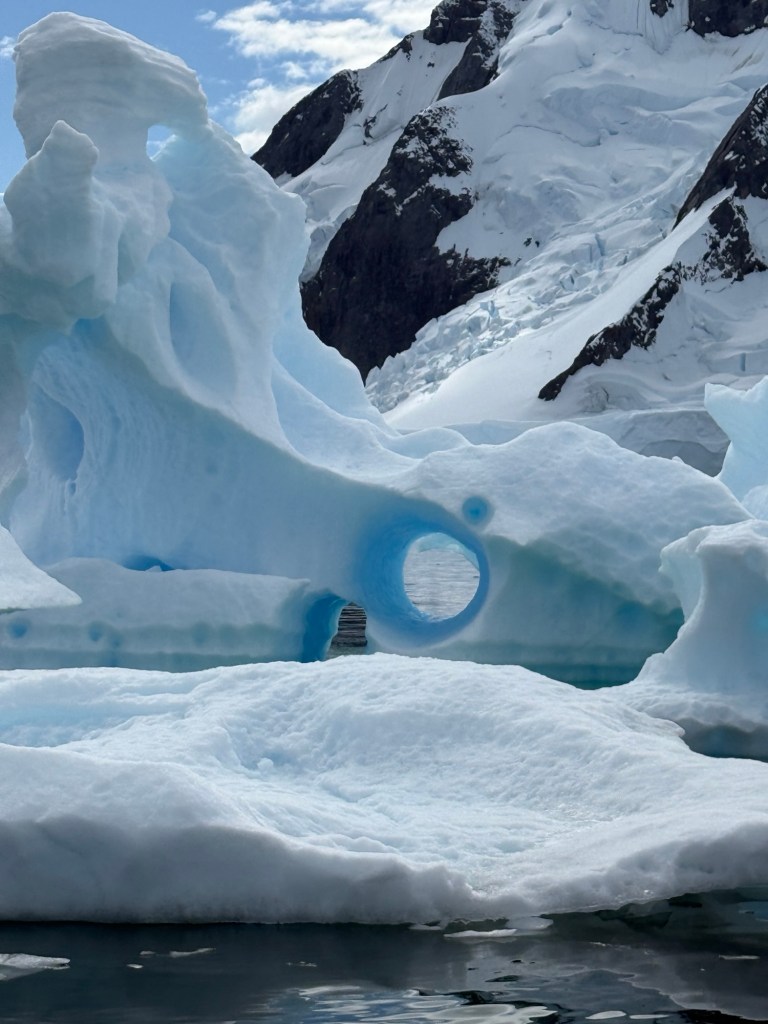
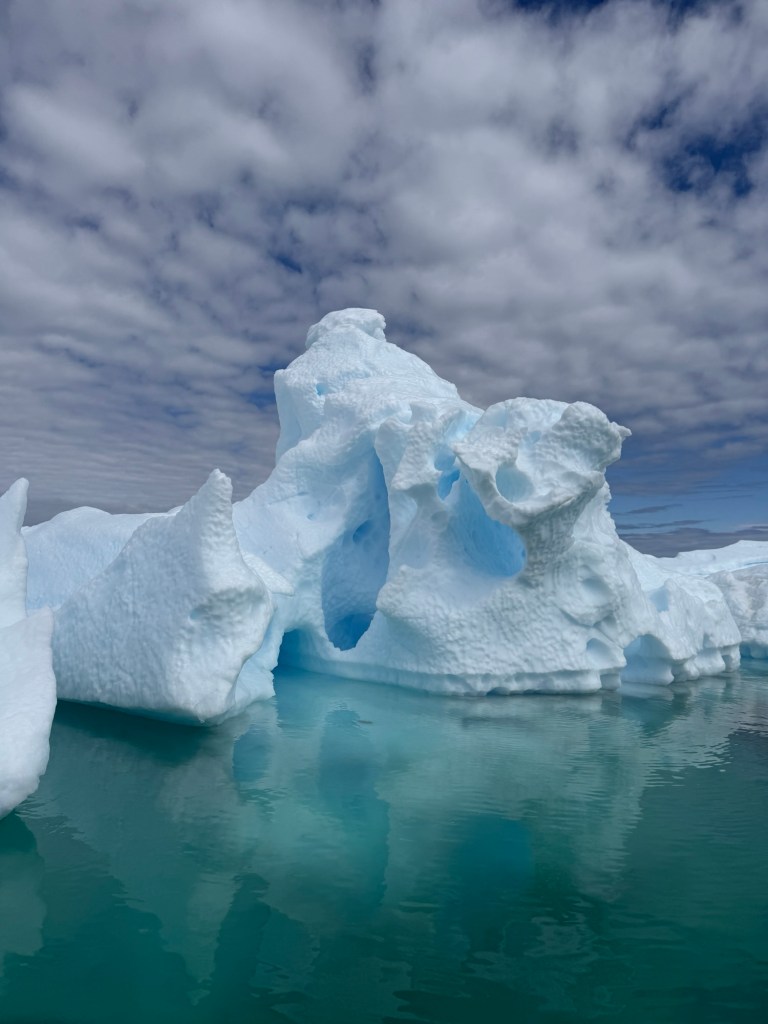
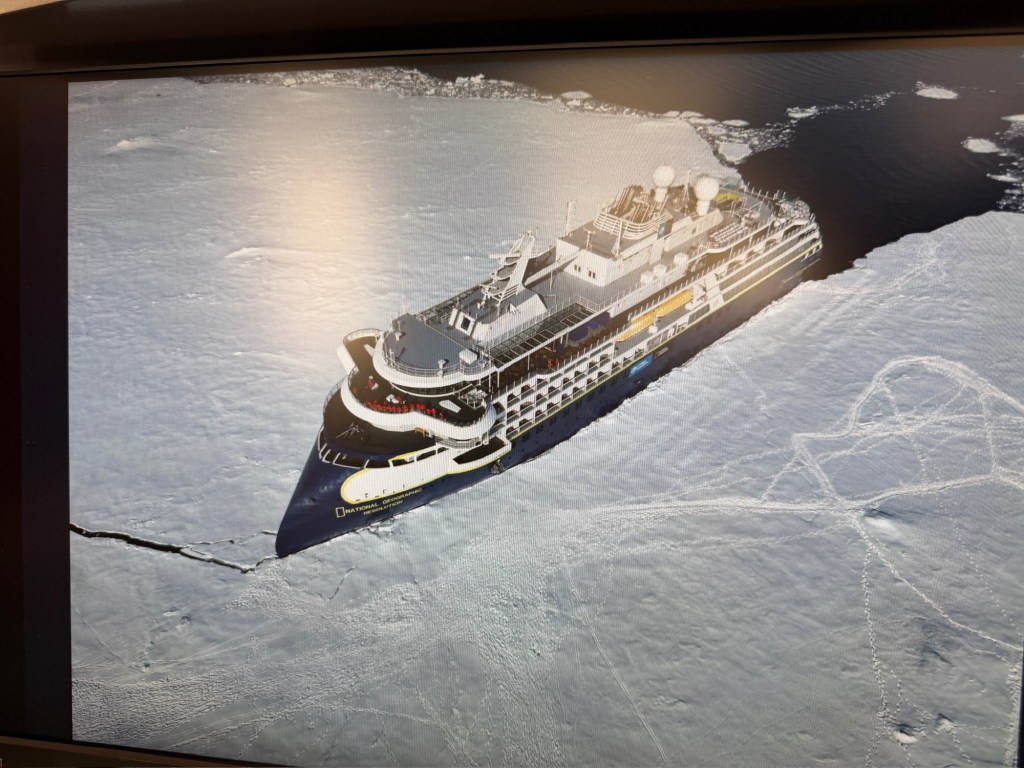
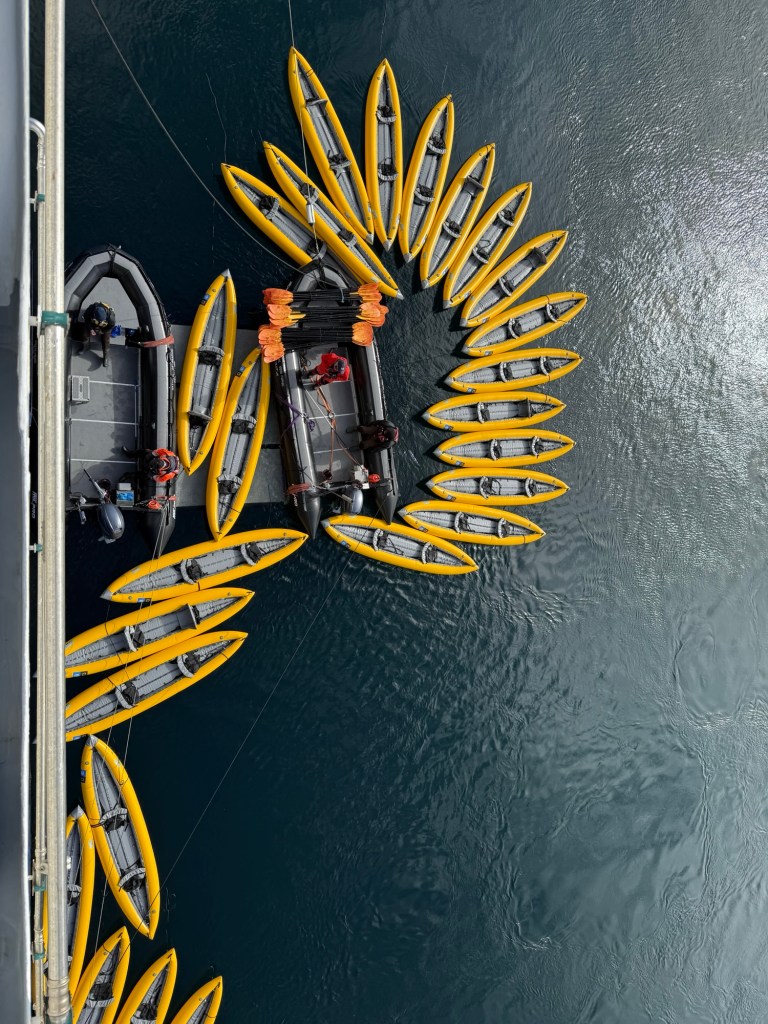
For the next 5 days we sailed south, into the Antarctic circle (and, literally, the land of the midnight sun), keeping to ice-choked inside passages (the Resolution is a Polar Class 5 icebreaker, meaning we could go places many other ships couldn’t), with morning and afternoon hiking, zodiac and kayak activities. As a bonus, the ship operates with an open bridge policy, so we could hang out there whenever we wished, which provided not only a great viewing platform, but allowed an insider look into the ship’s operations and the interactions and decision-making processes between captain and crew. Very nifty.
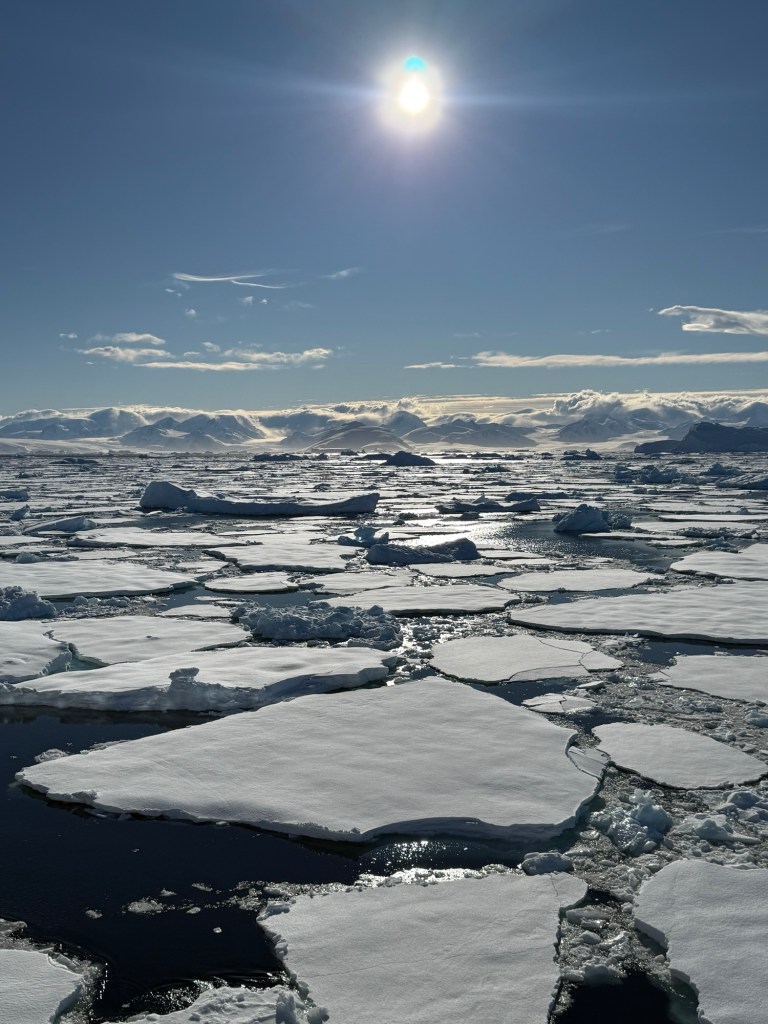
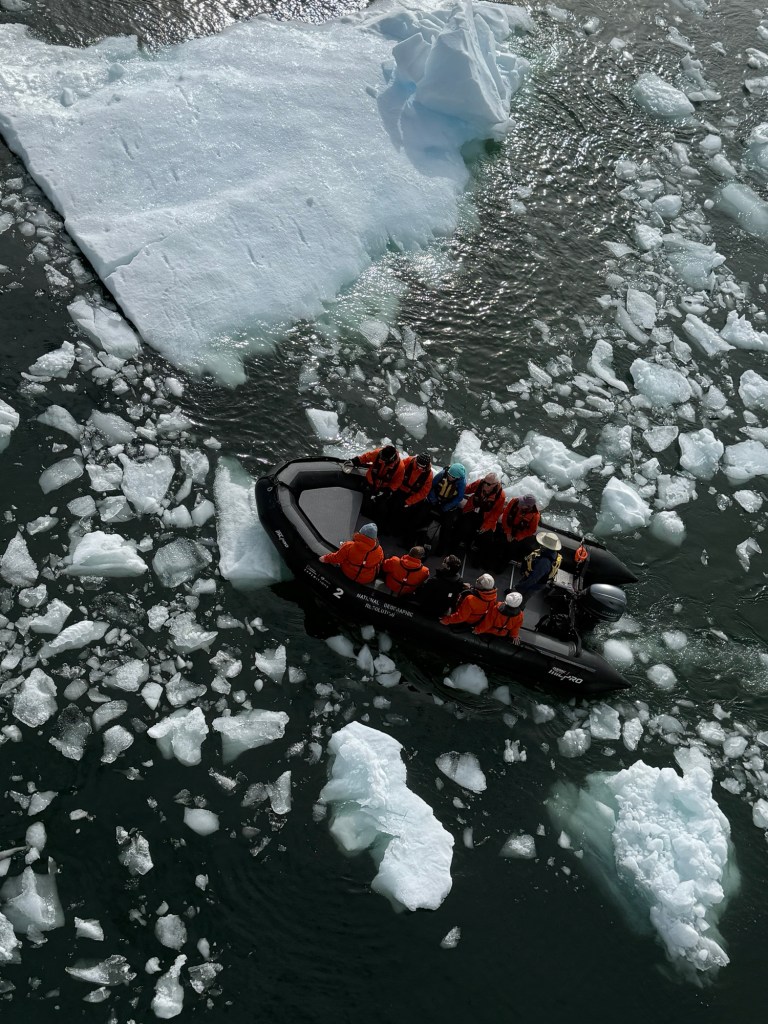
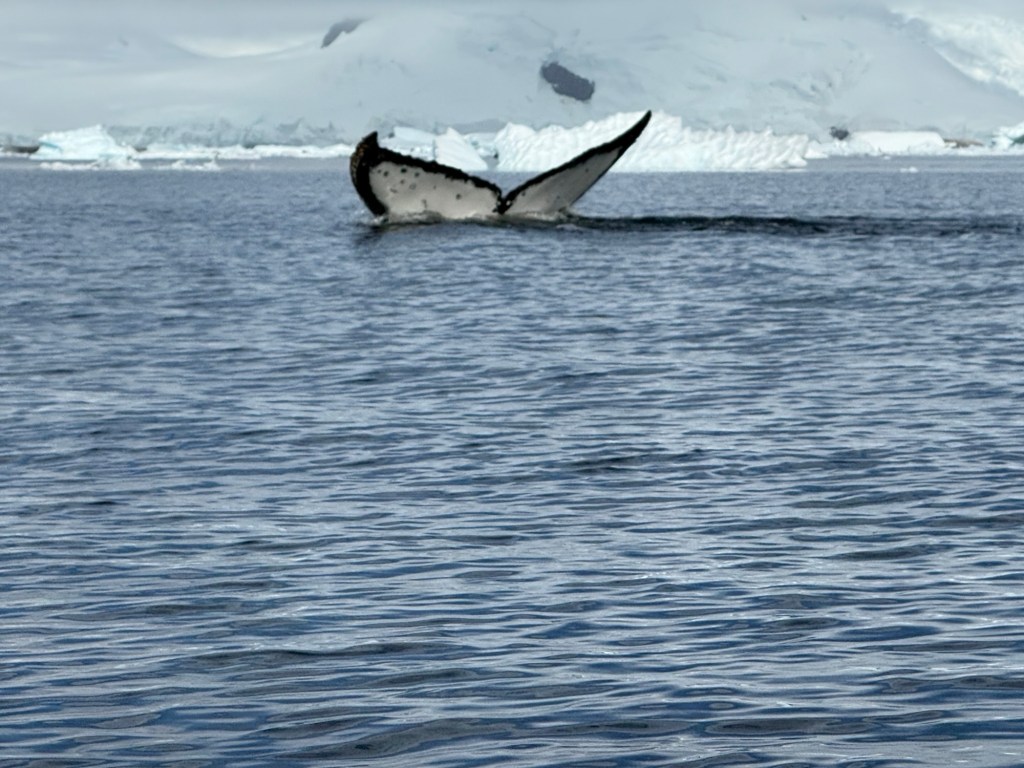
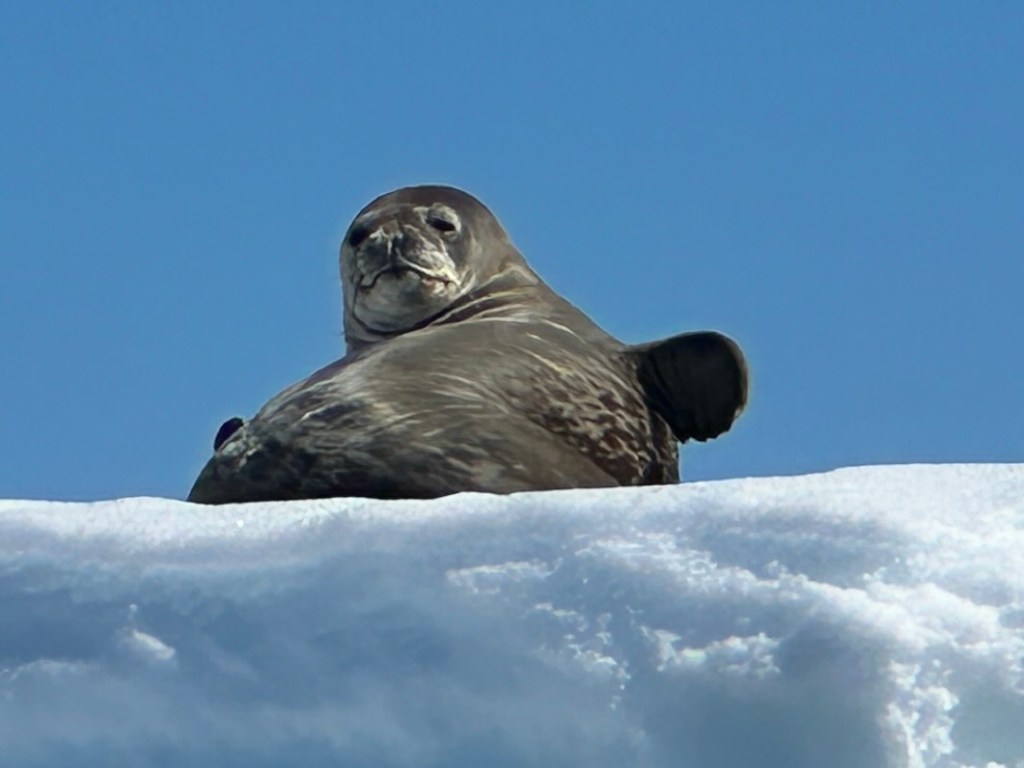
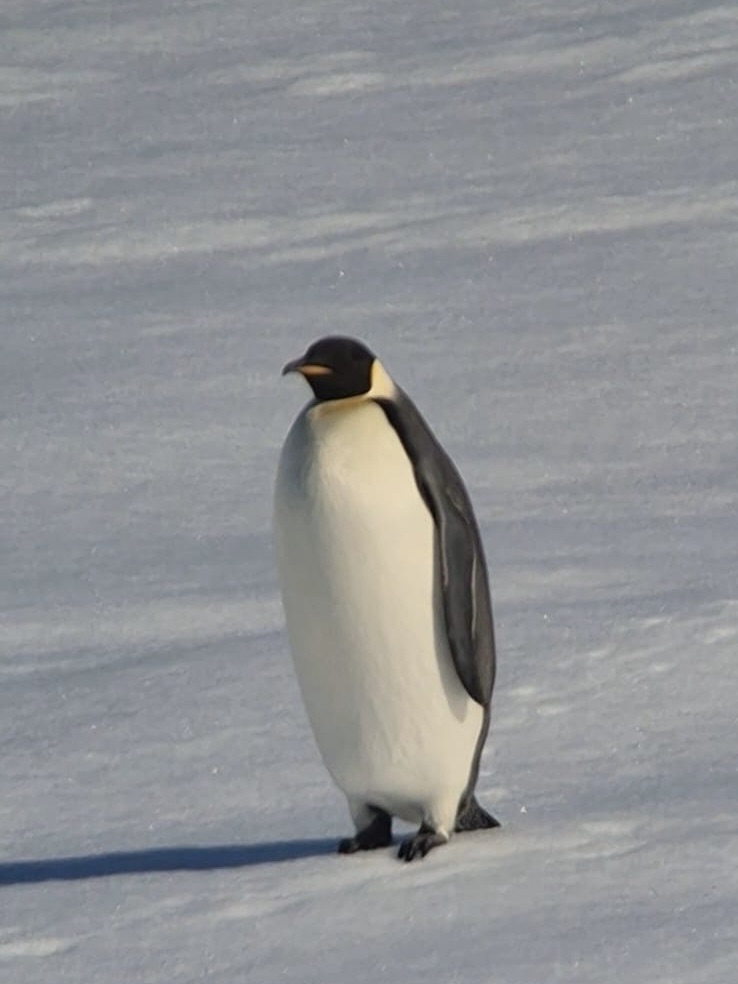
The wildlife is amazing: Penguin colonies (Gentoo, Adelie and Chinstrap, along with an unexpected Emperor penguin sighting); cormorant rookeries, albatrosses, terns, petrels and skuas in abundance; more humpbacks in one place than I have ever seen (“whale soup” being the technical term); various seal sightings and the first time I had seen orcas in the wild. All so very cool to experience.
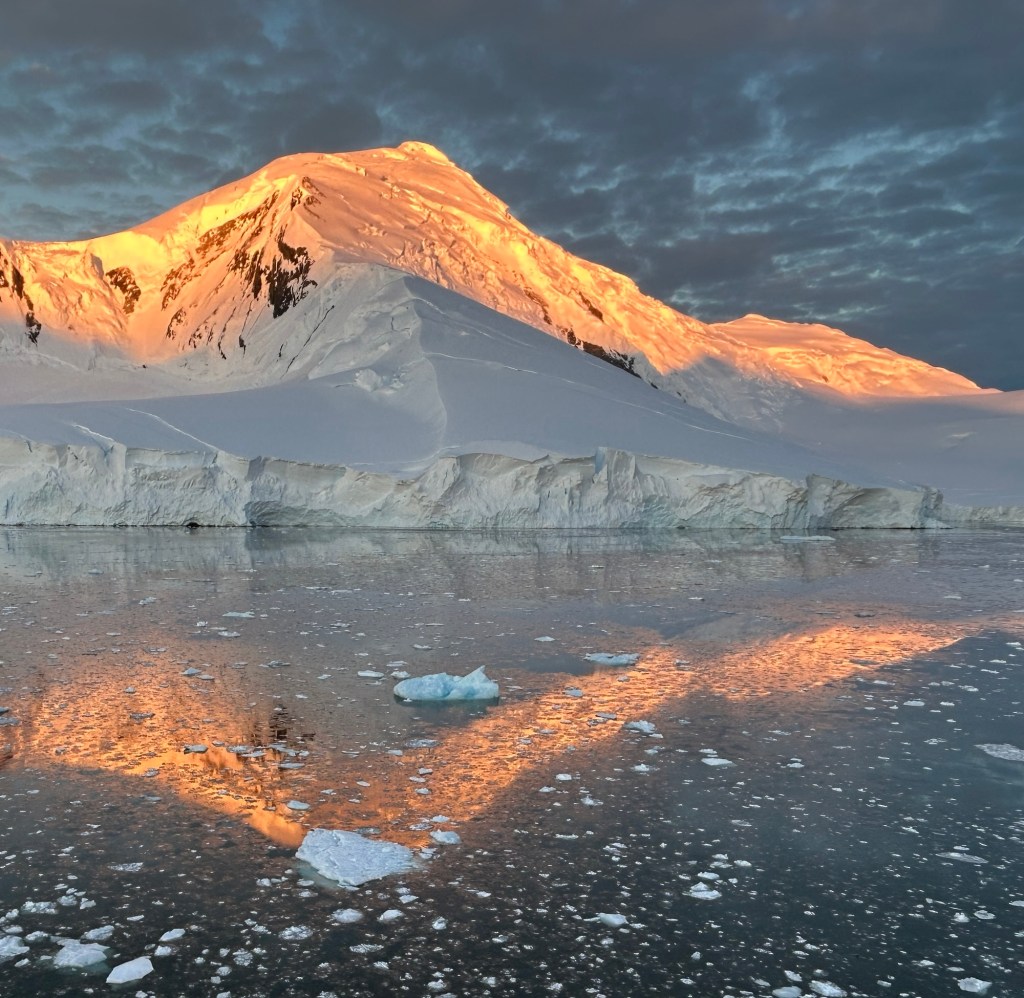
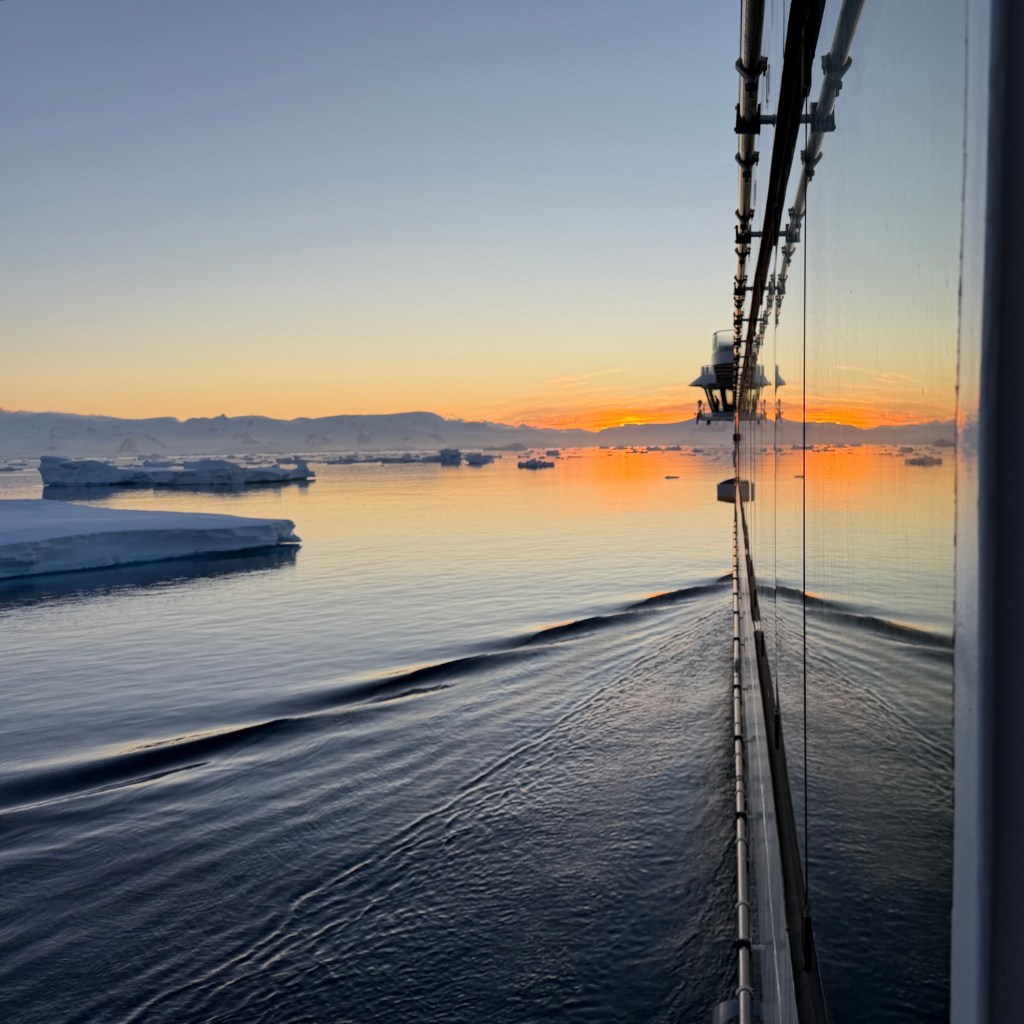
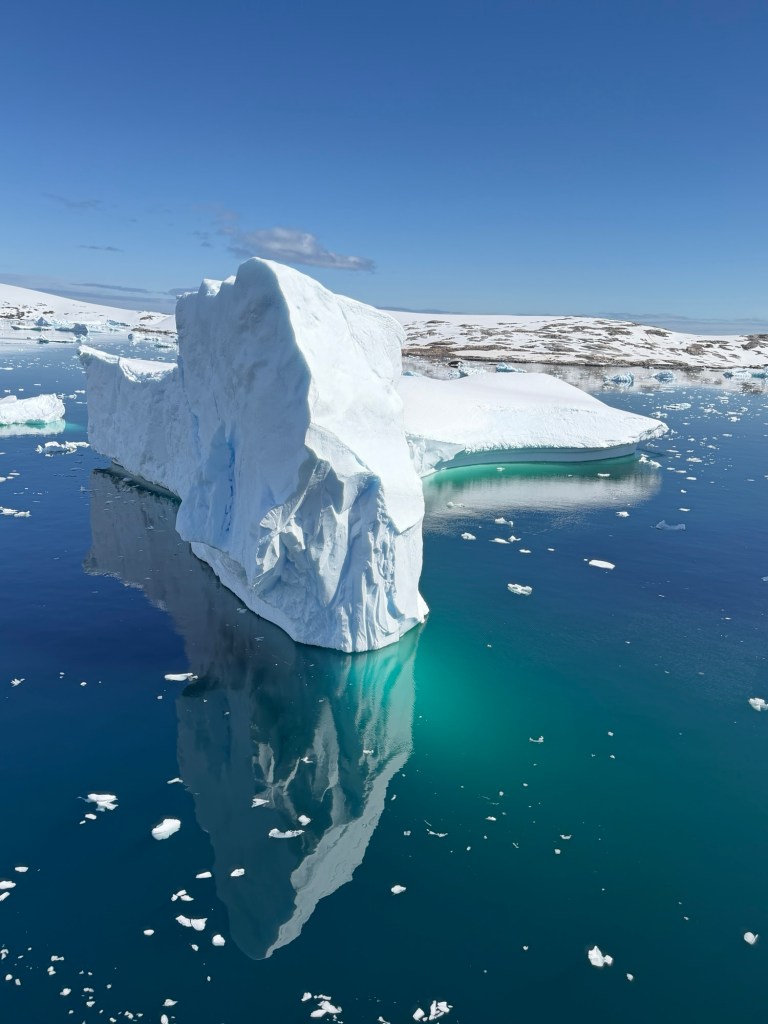
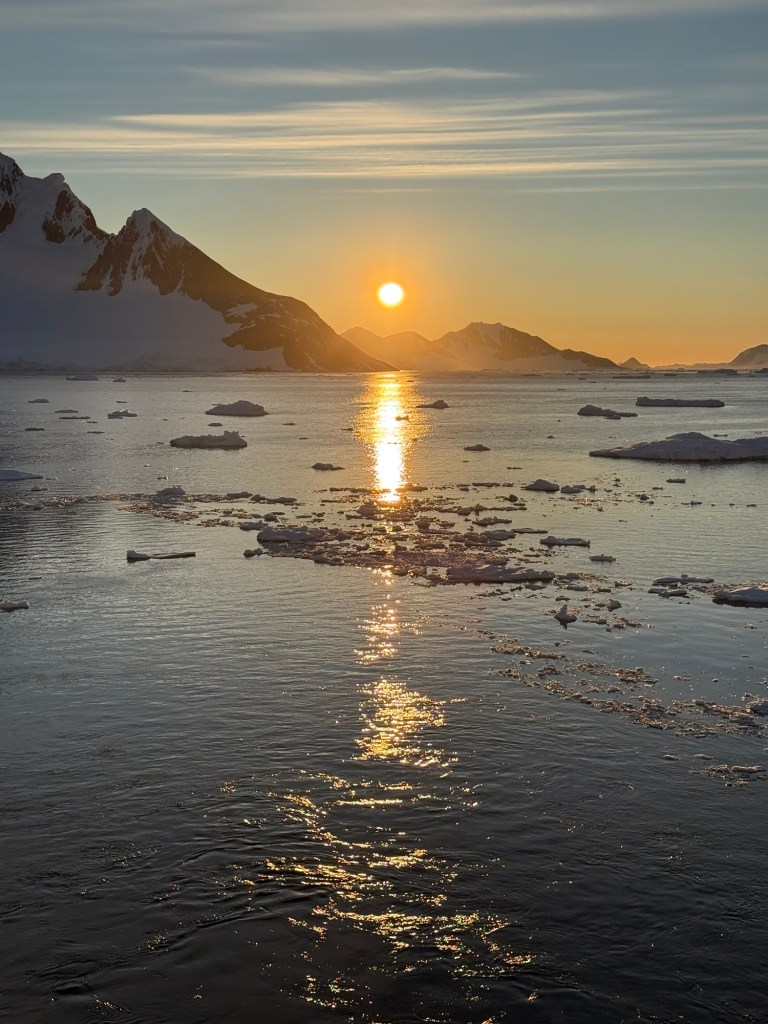
Yet, as amazing as the bountiful wildlife are to see, it was the ice and terrain that I found most appealing, especially in the eerie, tinged light of the not-setting sun.
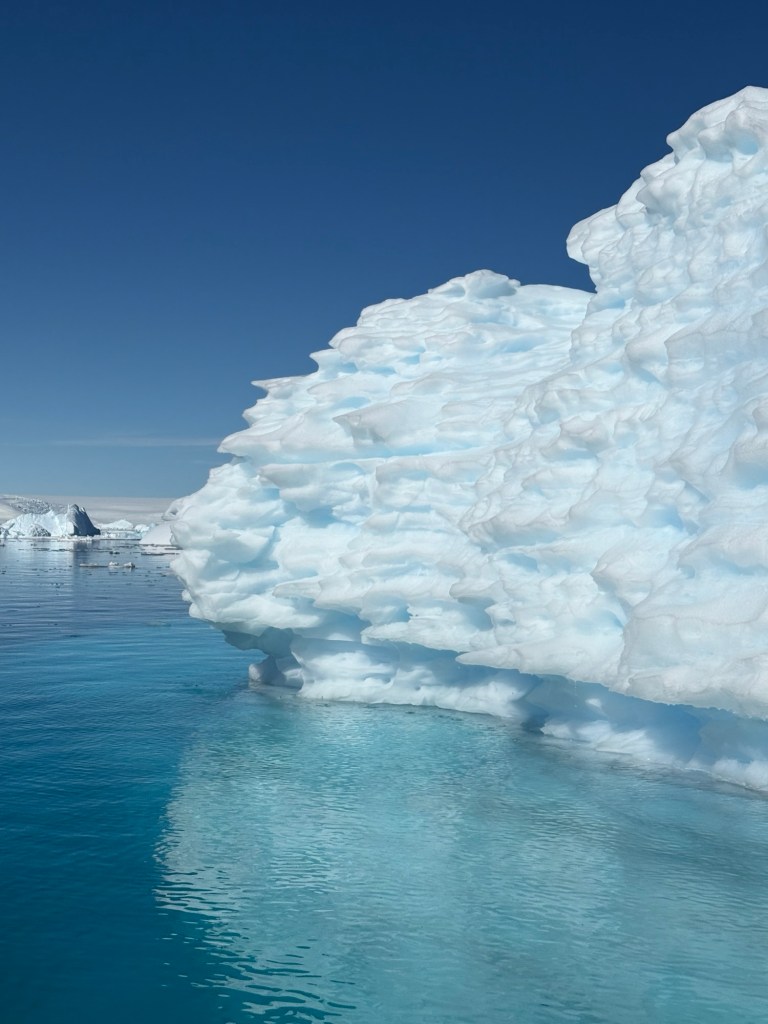
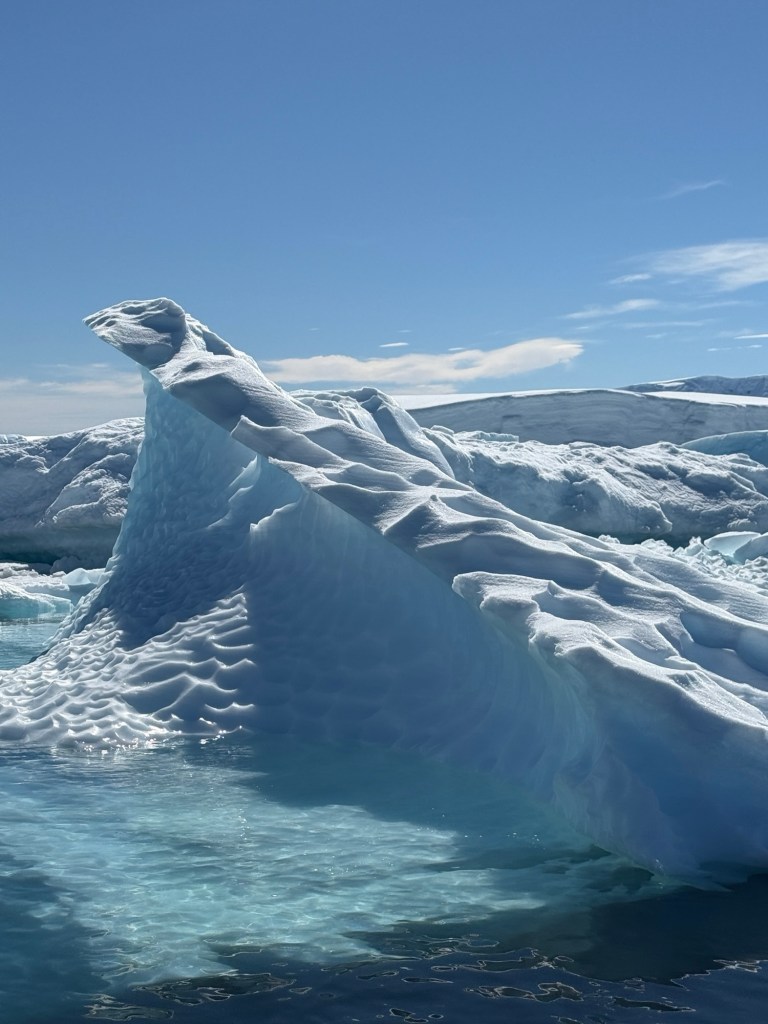
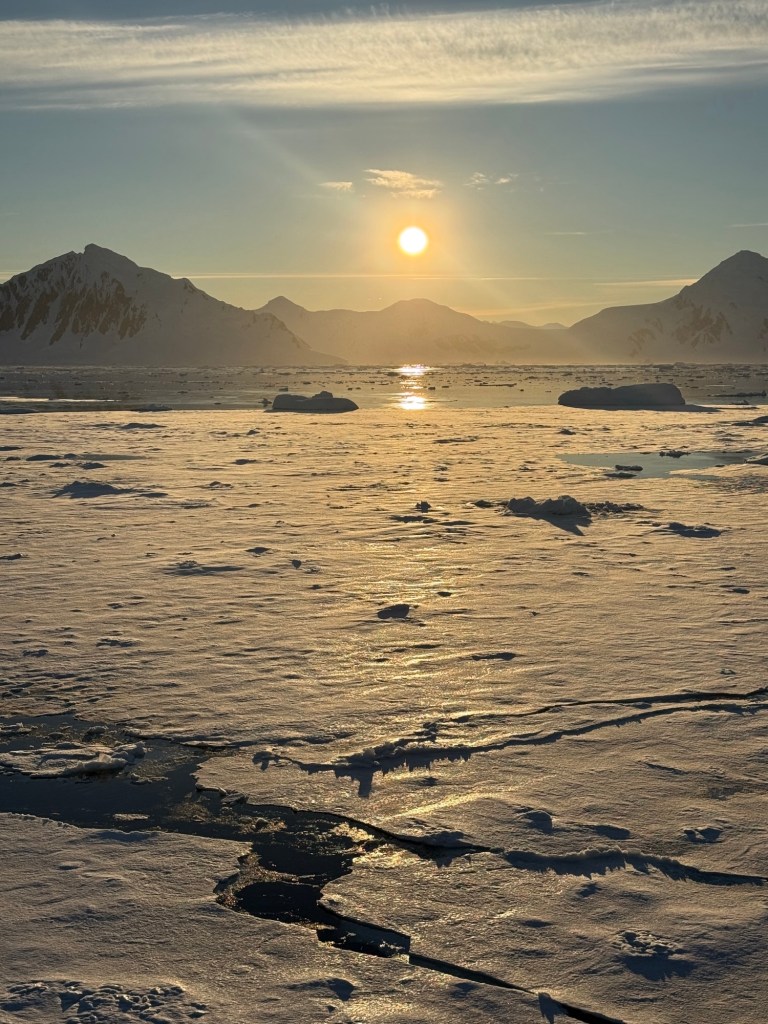
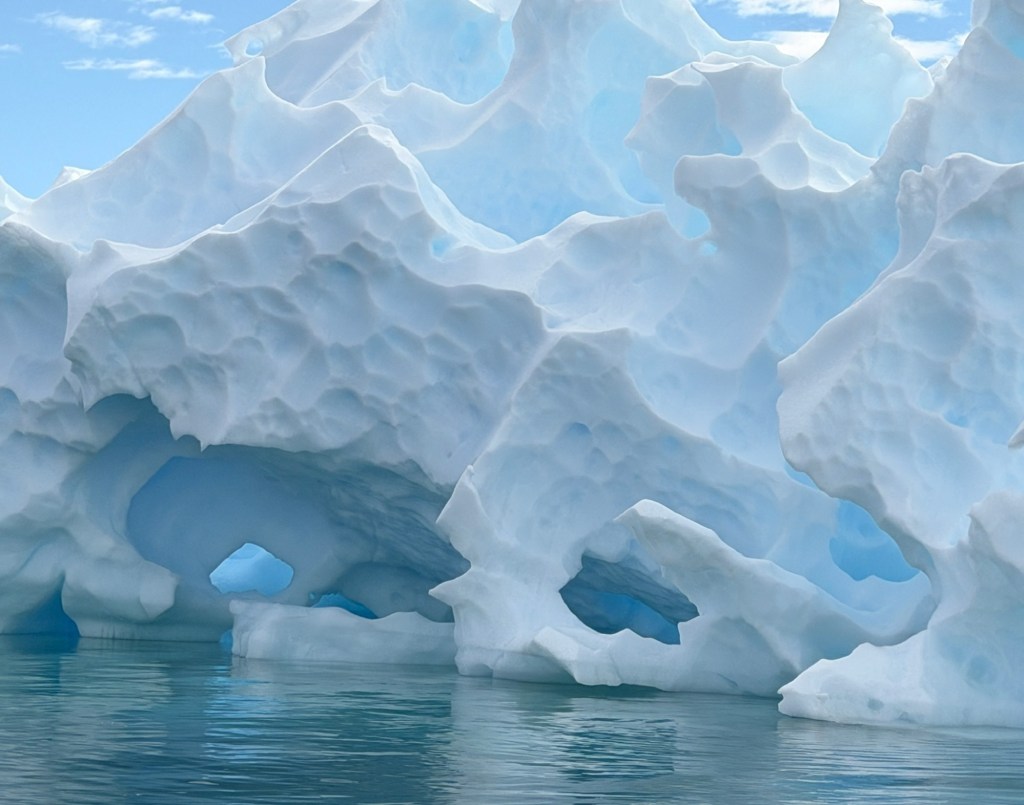
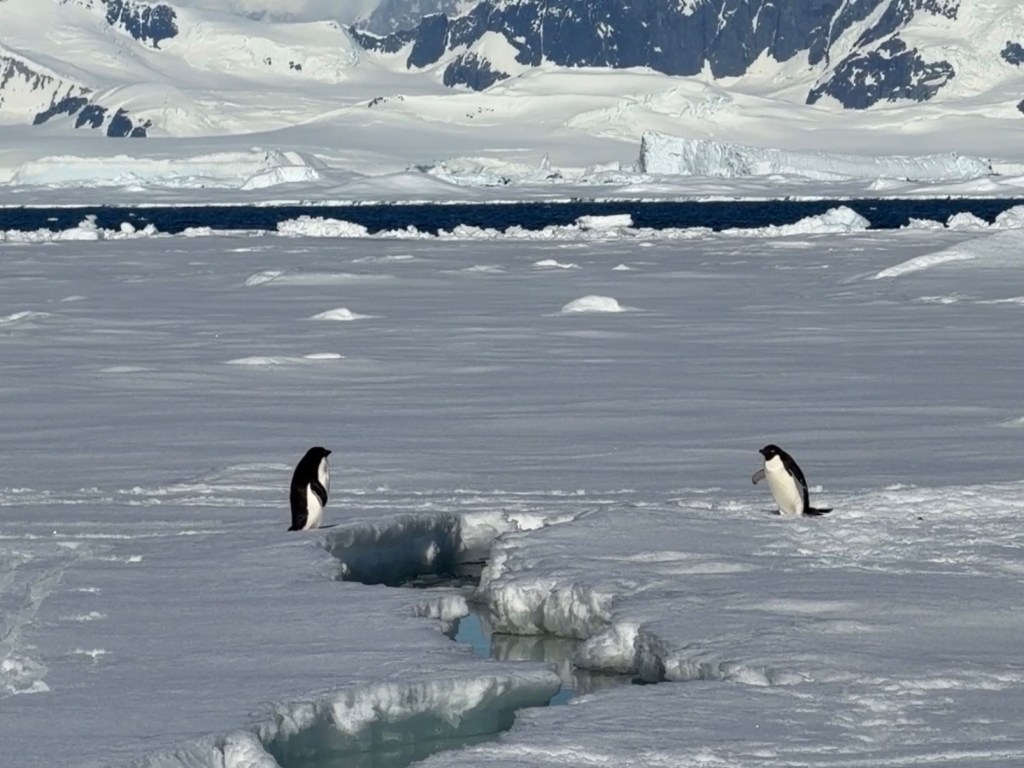
While the entire experience was thoroughly enjoyable and most memorable, there are a few things that will stand out for a while: kayaking trips amongst the icebergs and whales and penguins, hiking on sea ice into which the captain plowed to park the ship, watching penguins steal rocks from each other for nest building, being on the bridge while the captain navigated narrow, marginally charted waters all chock-a-block with ice whilst a glacier calves and watching with twenty of our shipmates in rapt attention for nearly fifteen minutes as two penguins sought to reunite after one was intimidated by a 1 meter-wide crack in the sea ice — we all burst into applause when the trepidatious one finally made it across. There is something about such random, yet poignant, moments that I so enjoy encountering and which illustrate one of my favorite tenets: show up for life and life will show up for you, often in surprising and delightful ways.
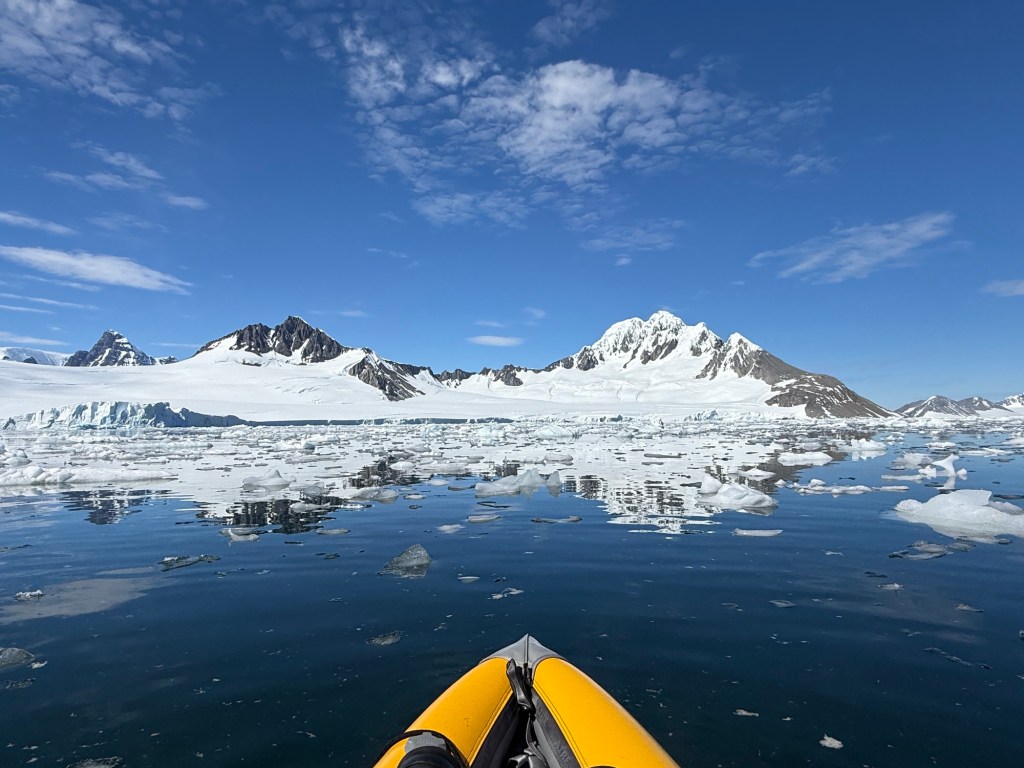
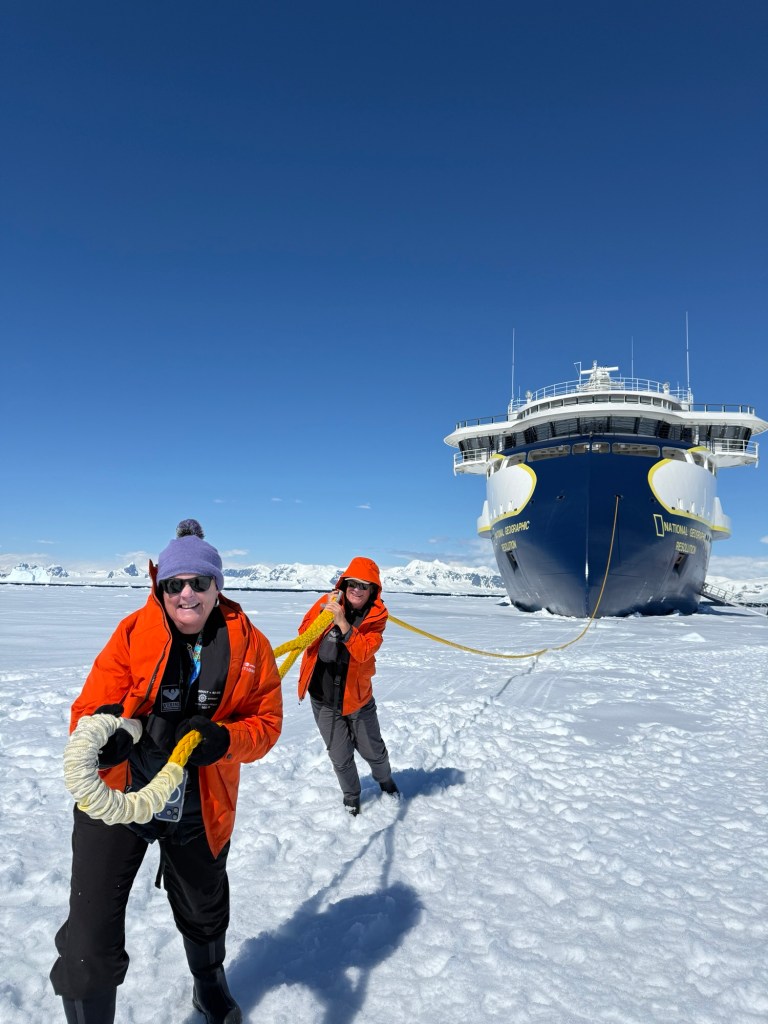
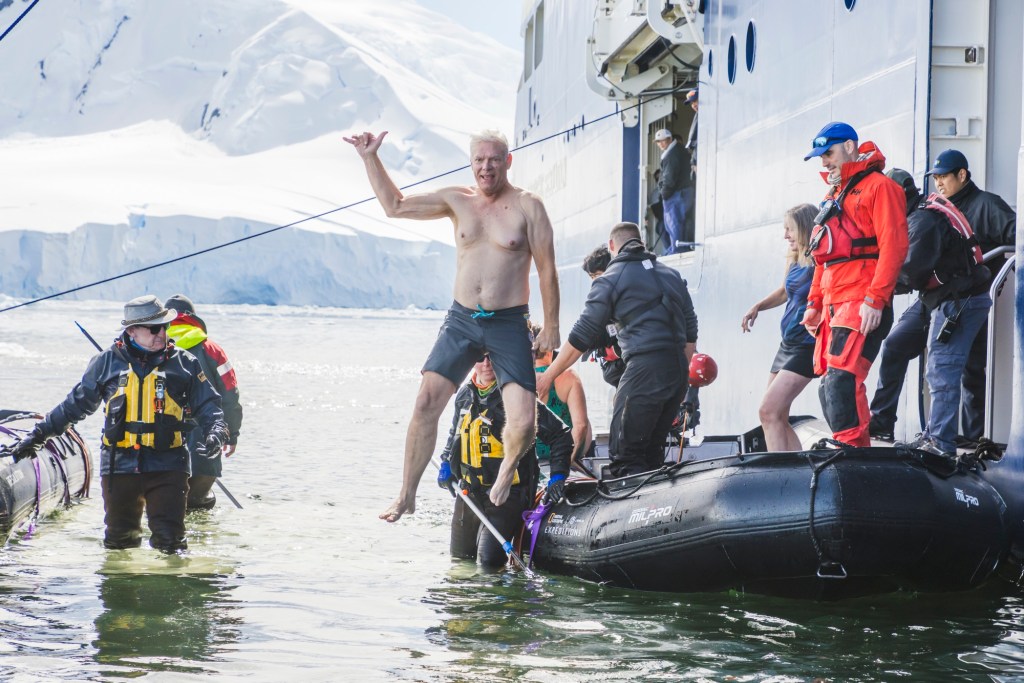
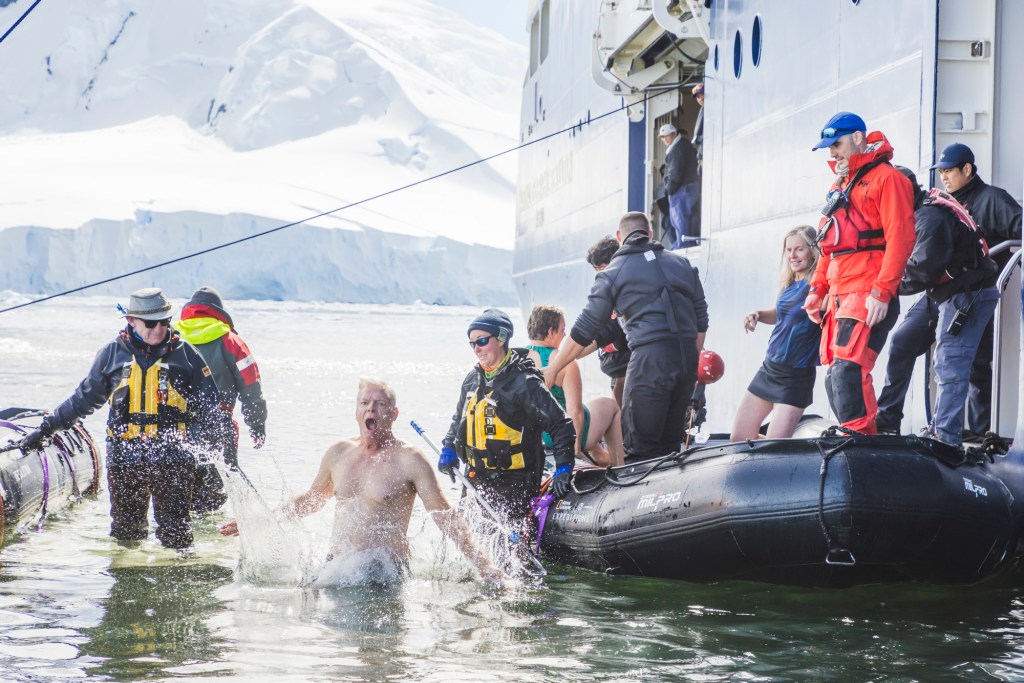
Oh, and there was the (obligatory?) polar plunge, duly photographed (in excruciating detail) by a crack National Geographic photographer. Some sixty passengers, about half of our cohort, plus some crew members took part in this ritual. That evening, during the daily recap over the cocktail hour, the photographer showed some photos of the “plungers”, including my entire sequence of half a dozen shots, where I start off smiling, but as I became increasingly immersed in 1 degree Celsius seawater, that smile morphed into something like “aaaarrrgh…”. Utterly hilarious, if not humbling, to watch… Surprisingly, the plunge was not as physically uncomfortable as I had anticipated — numbness?, perhaps — but still, I’m glad we were tryful for this unique, edge-of-the-world experience.
Interspersed between the twice-daily off-ship excursions were fascinating lectures, delicious (and not over-portioned) food and surprisingly little time for doing nothing. Especially at this time of year, when it is always light outside, and life takes advantage of the opportunity to feed and breed, there is always something of interest to see. Plus the ice and the light are constantly changing, providing captivating perspectives at each turn.
Yet, change is afoot: our warming climate is impacting a millennia-old ecological balance, both directly (e.g., melting glaciers and ice sheets) and indirectly such as the spread of avian flu (enabled by warmer temperatures) that has, for instance, reduced the elephant seal population on the nearby South Georgia Islands by over half in the past few years. Other human-caused factors are at play as well, such as the unsustainable (and loosely regulated) harvesting of krill, the tiny crustaceans that are a keystone species and essentially the basis for the entire food chain in the rich waters of Antarctica (and in the Arctic too) and which rely on sea ice for their existence. It is very concerning. Especially because of its remoteness, the climate impacts on Antarctica seem even less urgent to a world often willfully dismissive of our planetary reality. Sad. Yet I remain optimistic that human societies will find a way thru this morass, as we will thru other existential challenges to our societies with which we presently grapple.
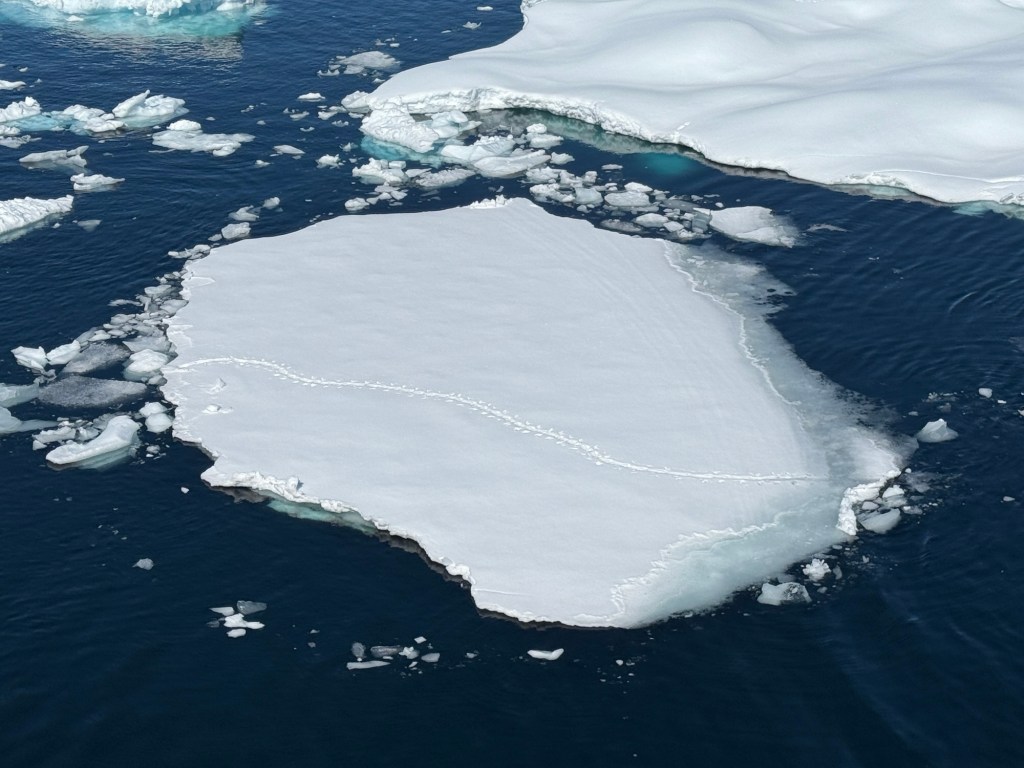
Now having experienced a sampling of Antarctica, I understand why people are so taken by this place — it is (literally and figuratively) the end of the earth, with unique biology and geology, and with sparse human history. It is a place of contrasts, often extreme: Ice/fire, dynamic/serene, alien/familiar. It is the only continent on which indigenous human habitation never developed, but I’m grateful that today it beckons the curious traveler. May it beckon you as well.


Leave a Reply