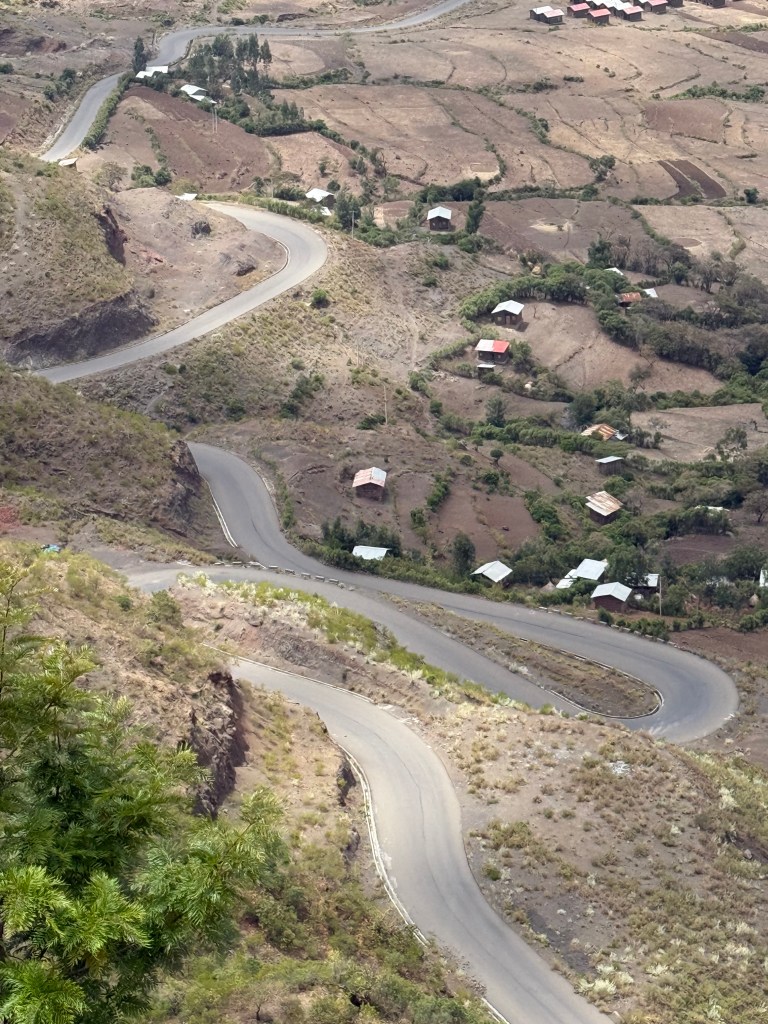
While it is less than 200 km from Lalibela to Gondar as the crow flies, it would have taken the day to drive there on the sole main road between the two, bespeaking the undeveloped nature of the road infrastructure in Ethiopia. In between is rocky mountainousness that can only support low population densities, as we had seen right outside of Lalibela. Instead, we flew back to Addis, then on to Gondar, arriving at our hilltop lodge in time to hear the afternoon chants from the churches mingling with the call to prayer from the mosques — enchanting. I love how Ethiopians have honed their culture of religious coexistence over countless generations.
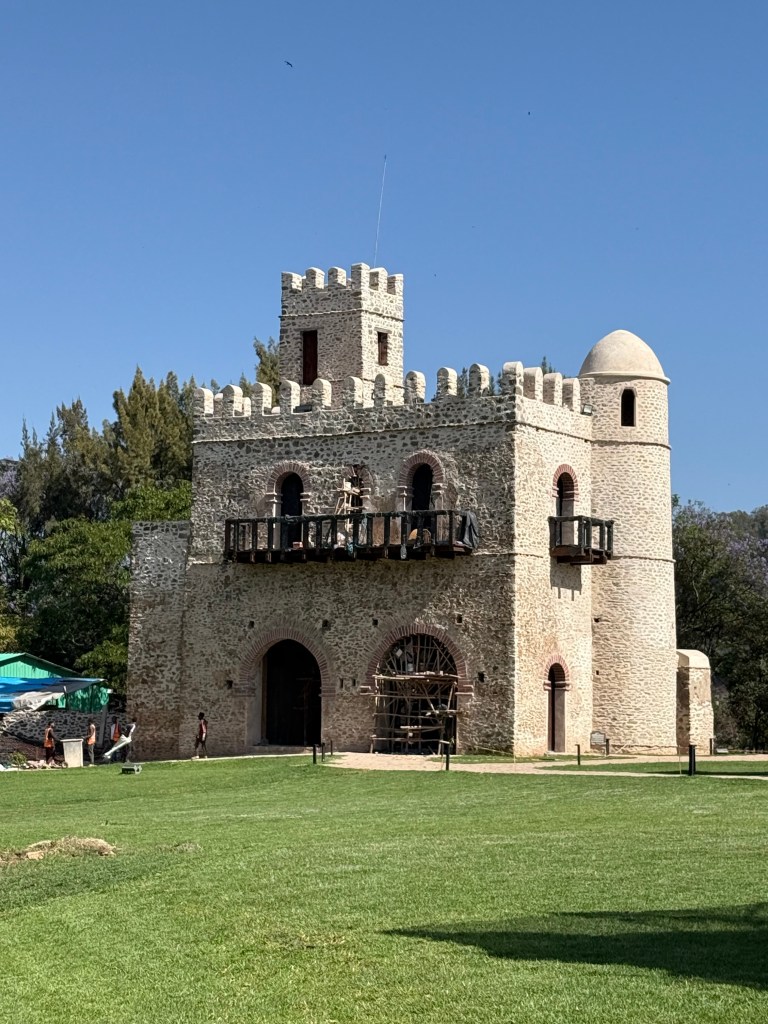
We came to Gondar, in part, for its historical significance to the sociopolitical development of the country, as it was the capital for a couple of centuries until relocated to Addis Ababa the late 1800s. With architectural influences from Europe weighing heavily on palace design in this new center of power, and with omnipresent rock as a building material, castles became the norm for each successive ruler, leading to Gondar’s present nickname “The Camelot of Europe.” I’m all for chivalry, but other than that, I’m not sure that medieval Europe was all that emulatable. Nonetheless, it is interesting to see local design elements seep into the buildings’ construction — domed turrets, tweaked crenellations and exterior balconies. And it is great to see the government interested in preserving its heritage sites for current and future generations. UNESCO listing helps; Ethiopia has a dozen well-earned UNESCO-listed sites.
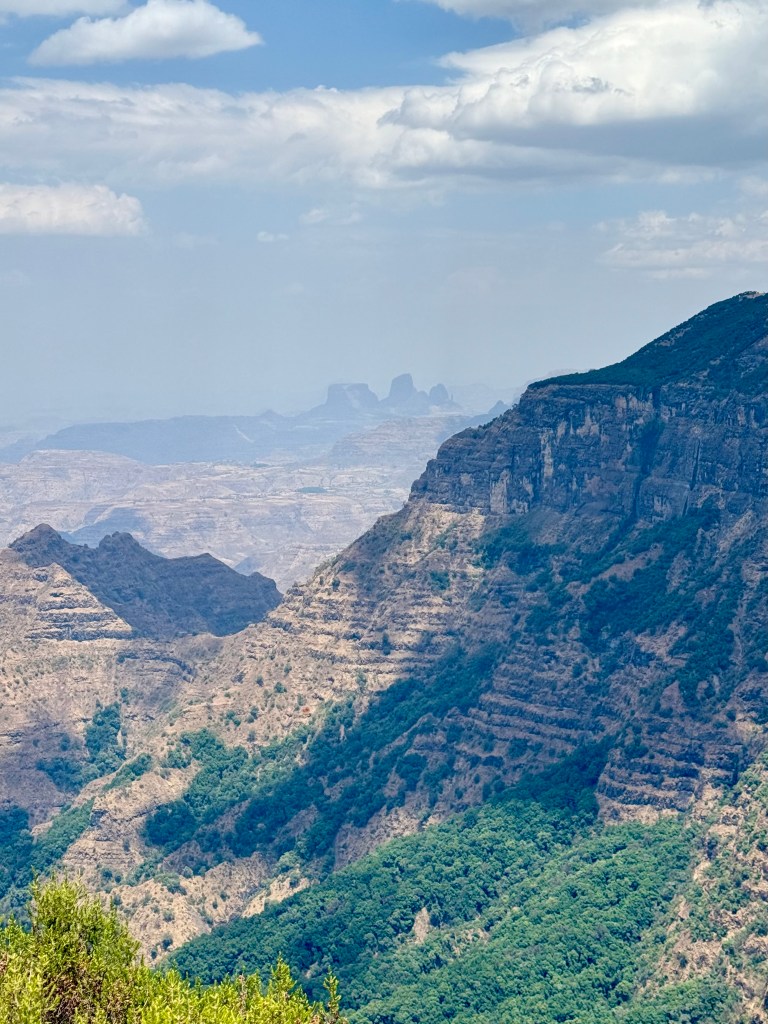
Whilst in Gondar, we decamped for a couple of nights to Simien National Park, about 100 km to the north, to hike in the crisp mountain air (10,700’ — the Roof of Africa) and partake the stunning natural beauty of this place. I’m immediately reminded of Waimea Canyon in Kauai, with dramatic cliffs eroded from land borne of volcanism. Except that, here, the cliffs are home to a unique species of monkey and the wooded valleys sport the random jaguar, hyena or ibex.
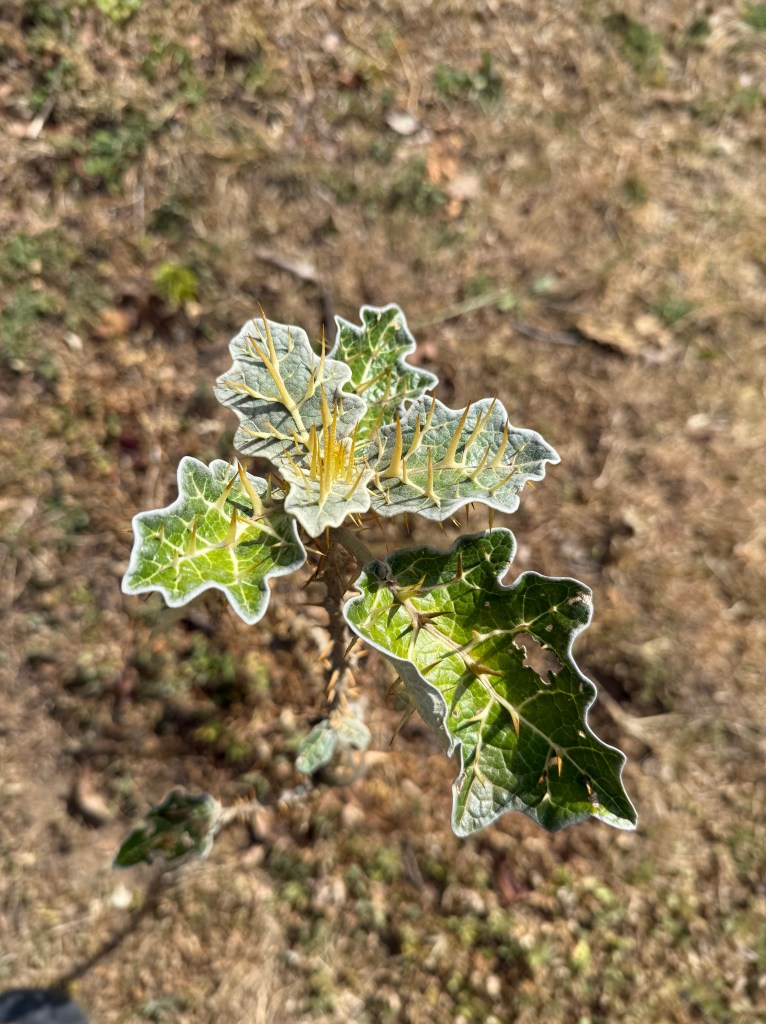
We took a couple of hikes, seeing interesting flora and fauna overlaid on this glorious terrain. One of the most unique plants I came across is a member of the nightshade family, thus a form of tomato, but one with spikes protruding from the leaves — quite formidable looking…
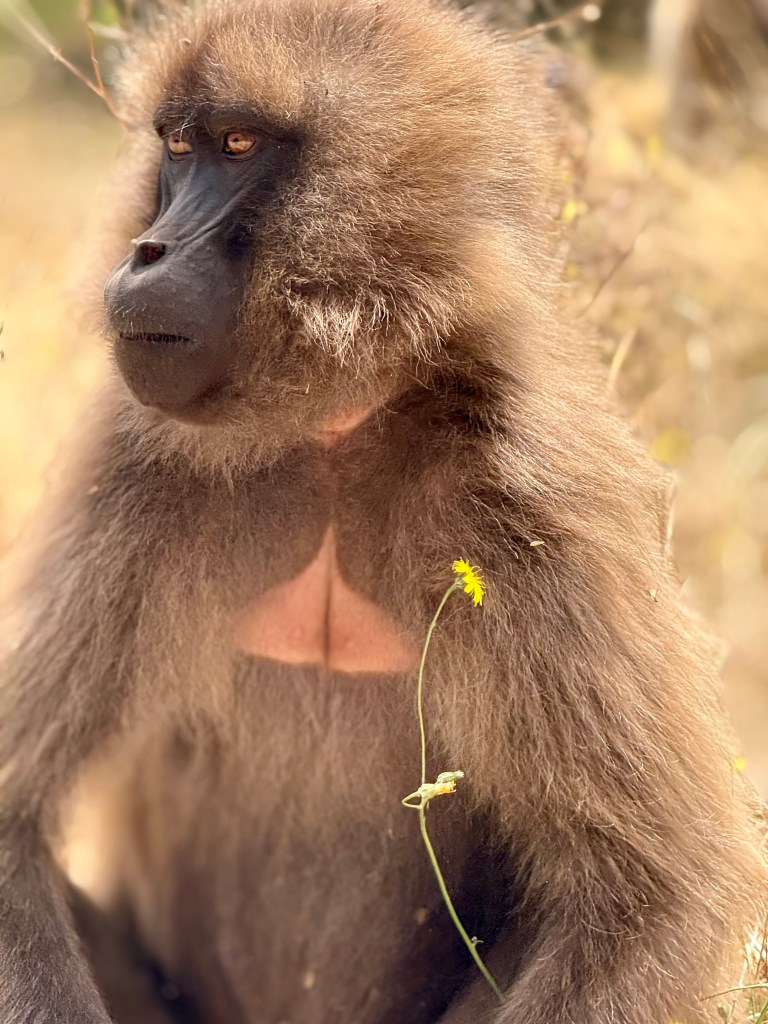
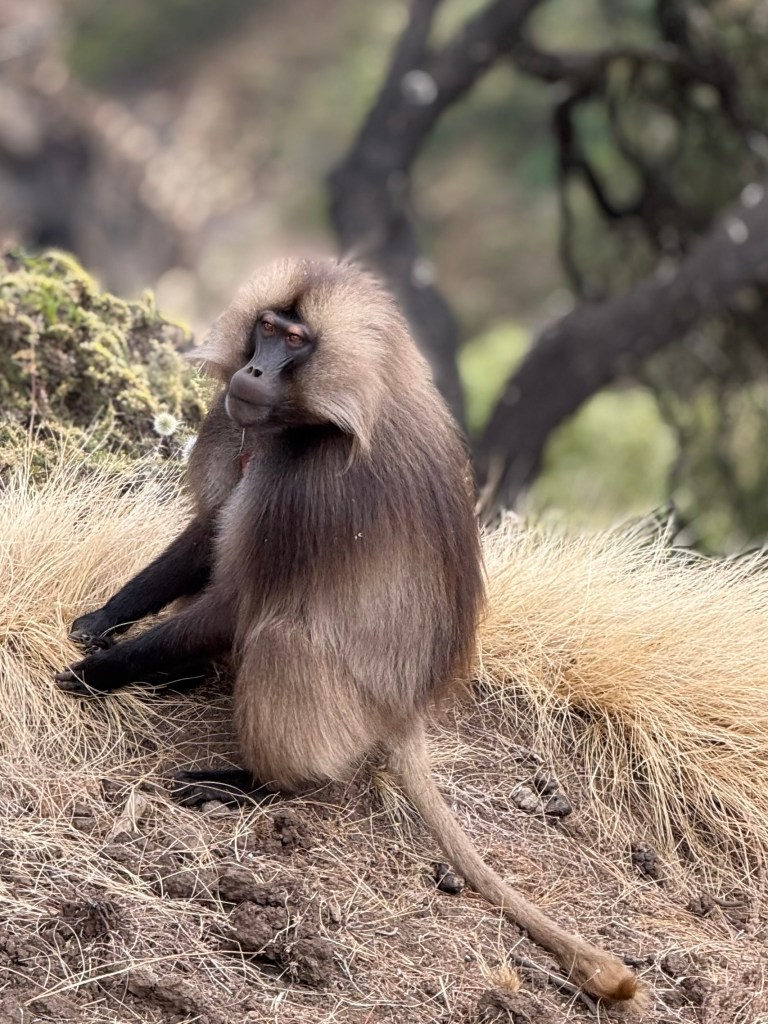
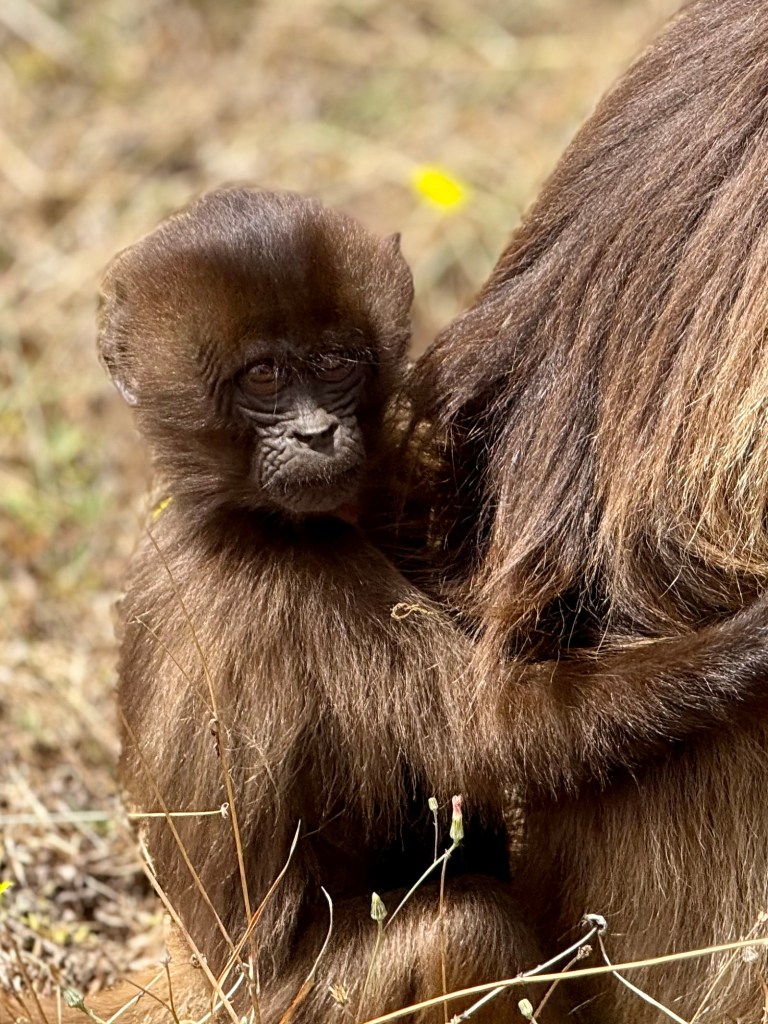
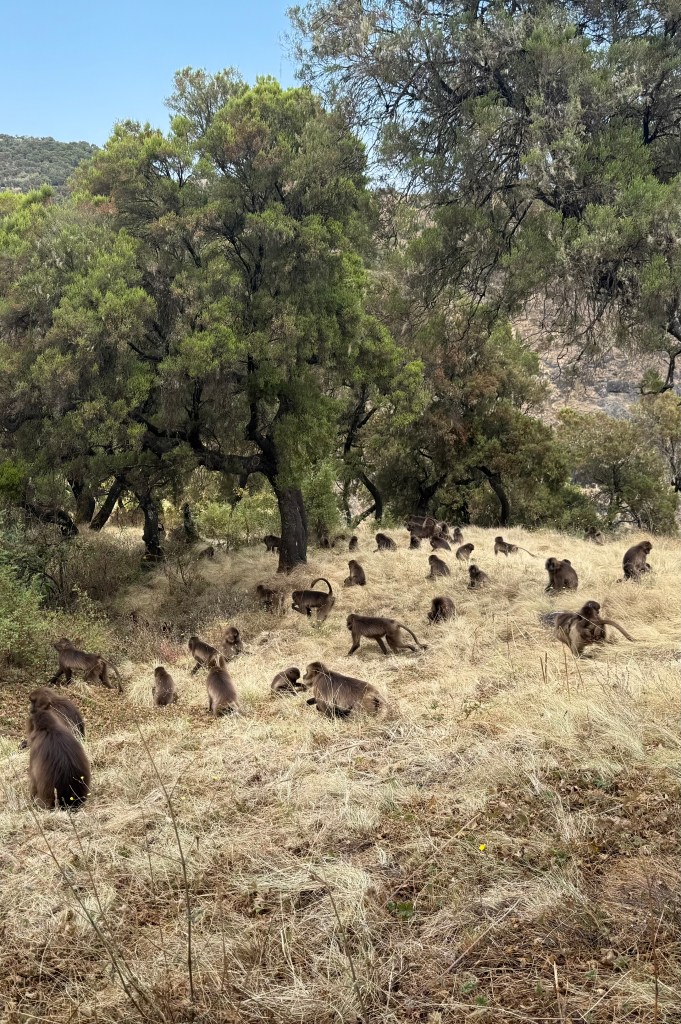
My favorite part of our stay at the Park was a hike to see Gelada monkeys. Found only here in these mountains, the monkeys are generally docile and completely unconcerned with humans. It was so cool to sit with them, one just a meter away, as they foraged for thin roots amongst the cliffside grass meadows — a most peaceful time…
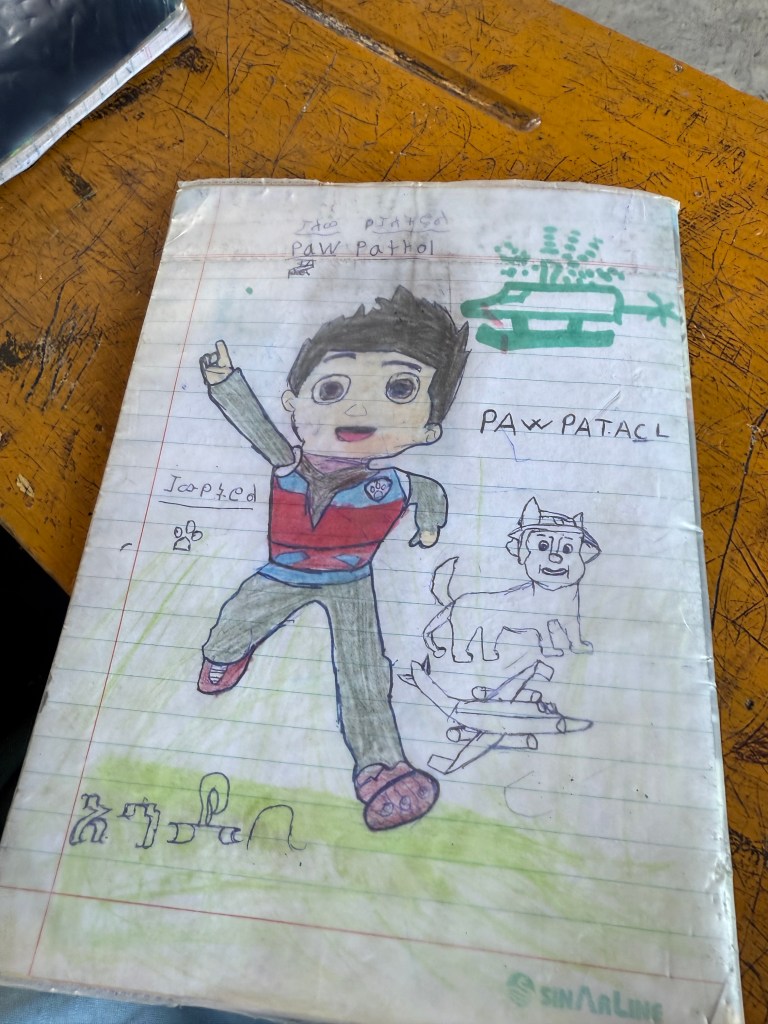
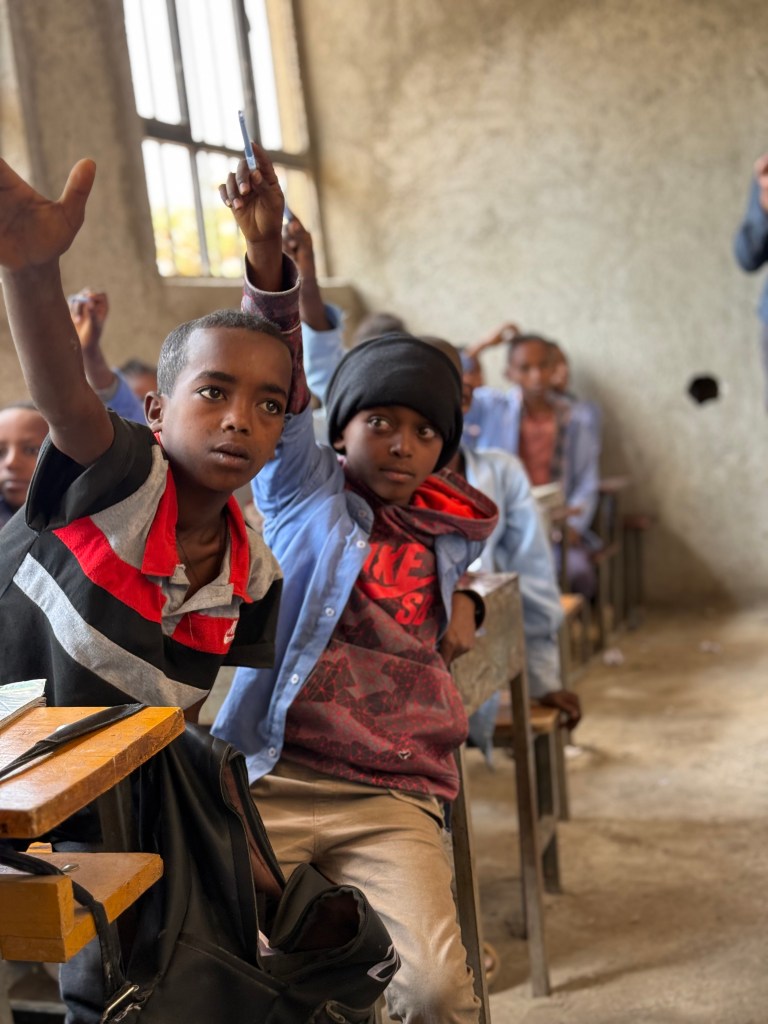
Back at our hilltop lodge in Gondar, we spent an afternoon at a local primary school to get a better understanding of the Ethiopian public school system. As we all had a heads-up about this activity, each of us came with appropriate gifts for the school, e.g., world maps, schoolyard balls, pens & pencils… you get the idea. It is heartwarming to see the difference simple tools such as these can make in the classroom. While school is theoretically compulsory thru the 8th grade, the reality is that many kids in rural areas are needed in the fields to support their families. Even so, schools are packed; many schools operate double shifts and class sizes are huge — the 4th grade class we visited had one teacher and 70 students!
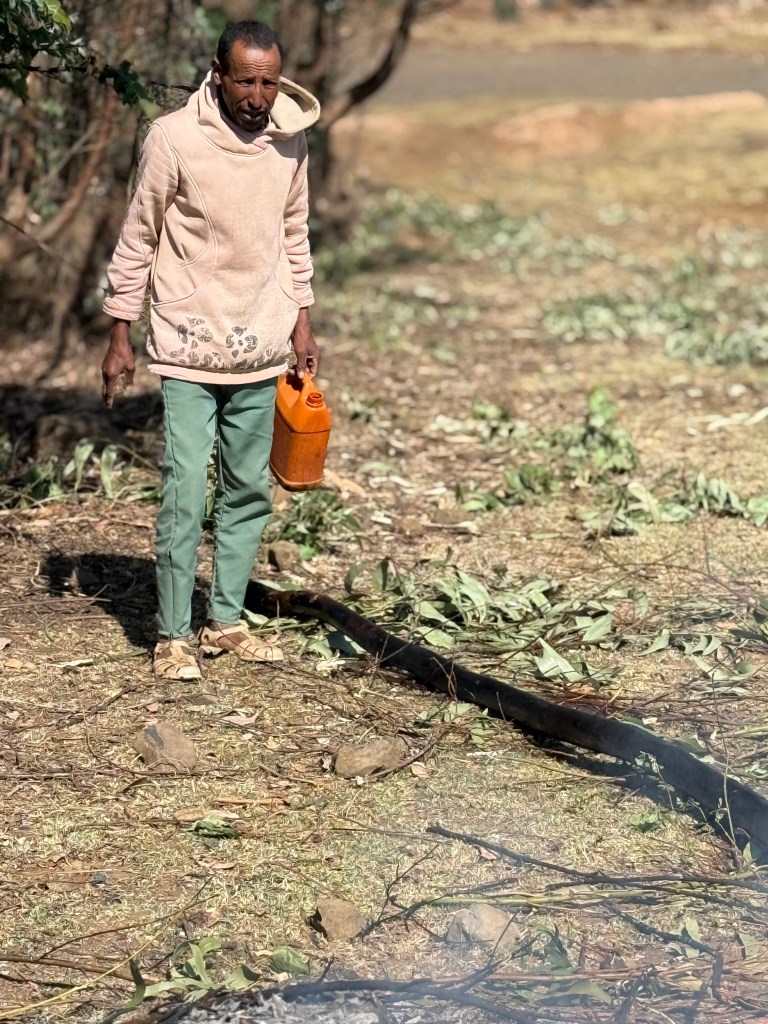
As we were driving back to Gondar from Simien National Park, our trip leader noticed a farmer burning something by the side of the road. (I love that the format of these trips allow for spontaneous curiosity about the life that happens around us.) Turns out he was fire-hardening a piece of wood for use as the main shaft of a plow. He explained that he slowly heated the wood until hot then cooled it off with water, thereby making it stronger and more resistant to decay. And since I’m all into plowing these days, this stop was right up my alley…
The last destination on our trip was Bahir Dar, on the southern shore of Lake Tana, Ethiopia’s largest lake. The plan was to get there via a 5 hour bus ride due south from Gondar along the eastern flank of the lake. An hour into the drive we learned the army had closed the one and only road south. After waiting at a local coffee shop for a couple of hours, soaking up local culture, it was decided to head back to the lodge in Gondar and try again in the morning. Fortunately, by breakfast, we learned the road was now open and we were able to enjoy an interesting drive thru differing terrains and various villages, as well as many army and militia checkpoints. The next day, perusing local news feeds, I read an article from an Addis newspaper indicating that the army had been conducting operations against Fano rebels around the lake, with reportedly hundreds of rebels killed — no word on civilian casualties. I wasn’t completely surprised, as previous news reports had indicated there had been skirmishes in the area recently, but it really hit me how war can be happening right next door, but since it is all essentially done in secret, belligerents may act with impunity. All very yuck… I realize this is just today’s version of “us vs. them” struggles that are as old as, well…, “them”…, yet I do feel disappointed in our species’ halting progress in getting along, particularly since sociability is what has made our species so wildly successful in the first place. I wonder if coffee had something to do with that sociability…
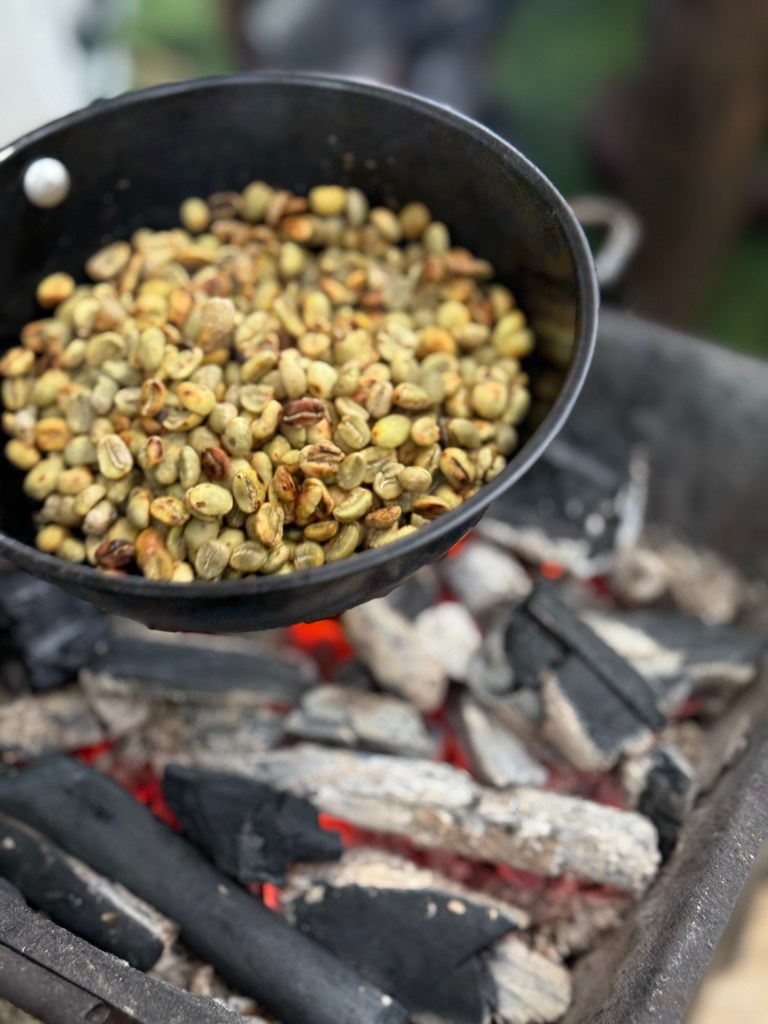
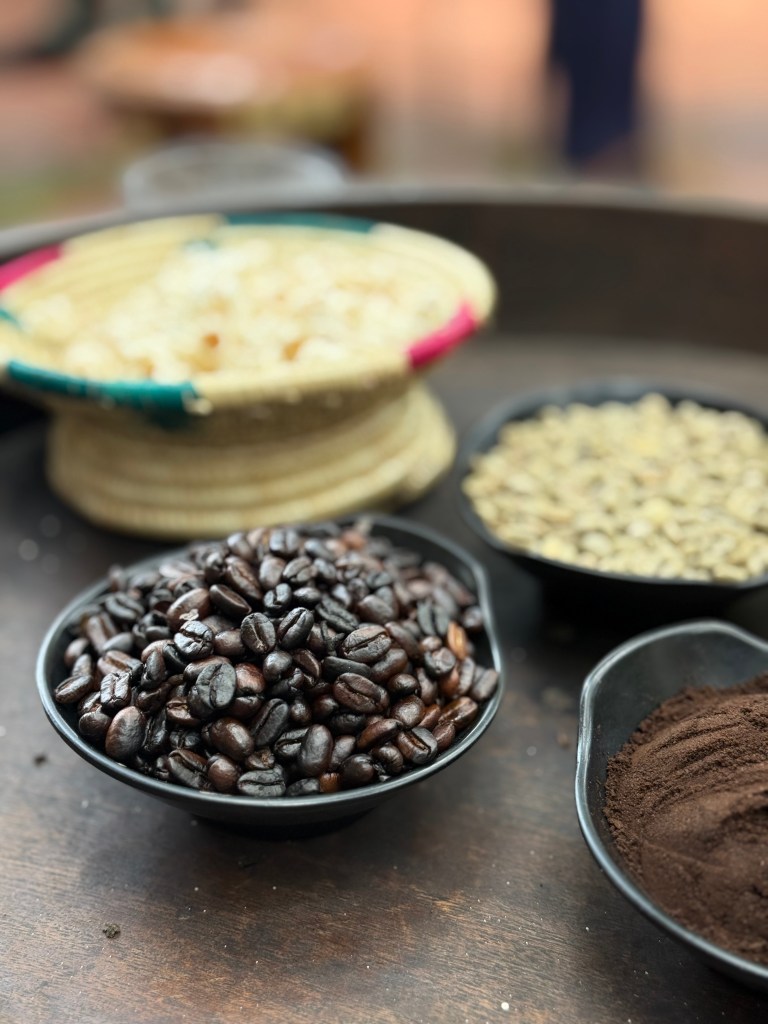
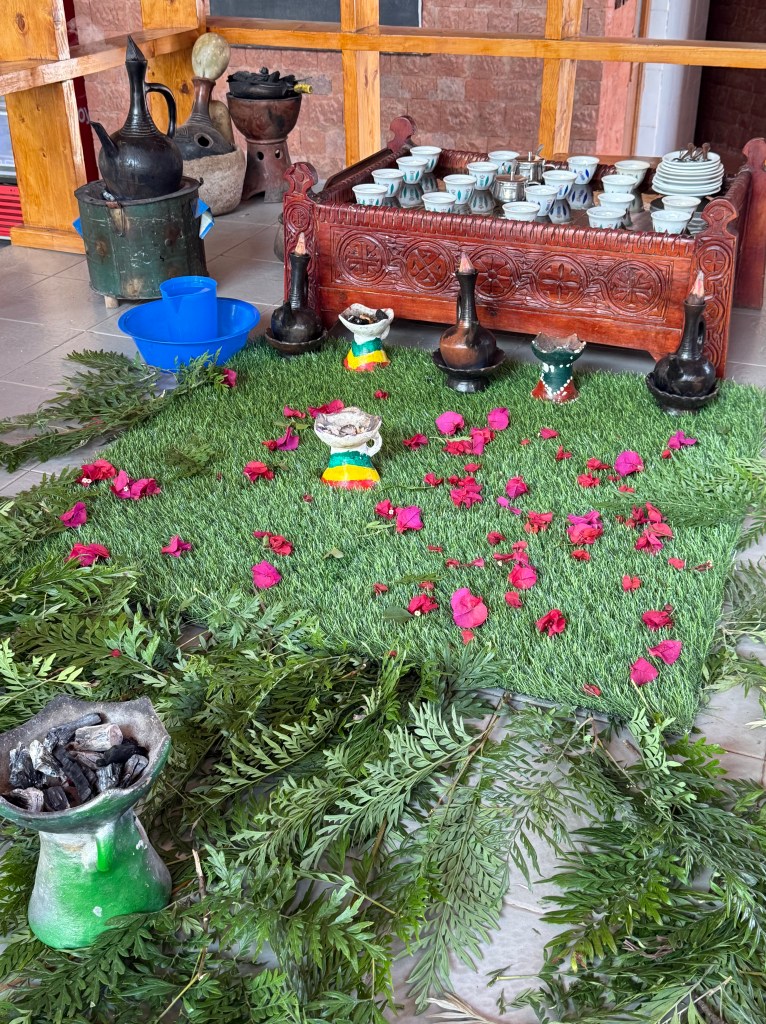
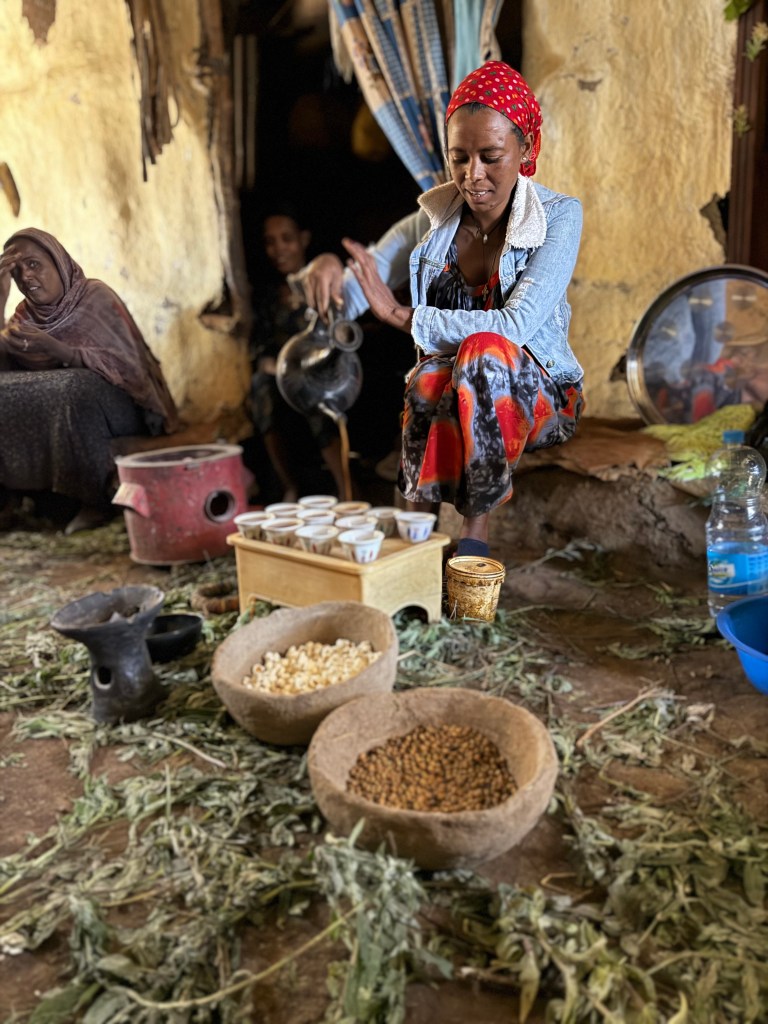
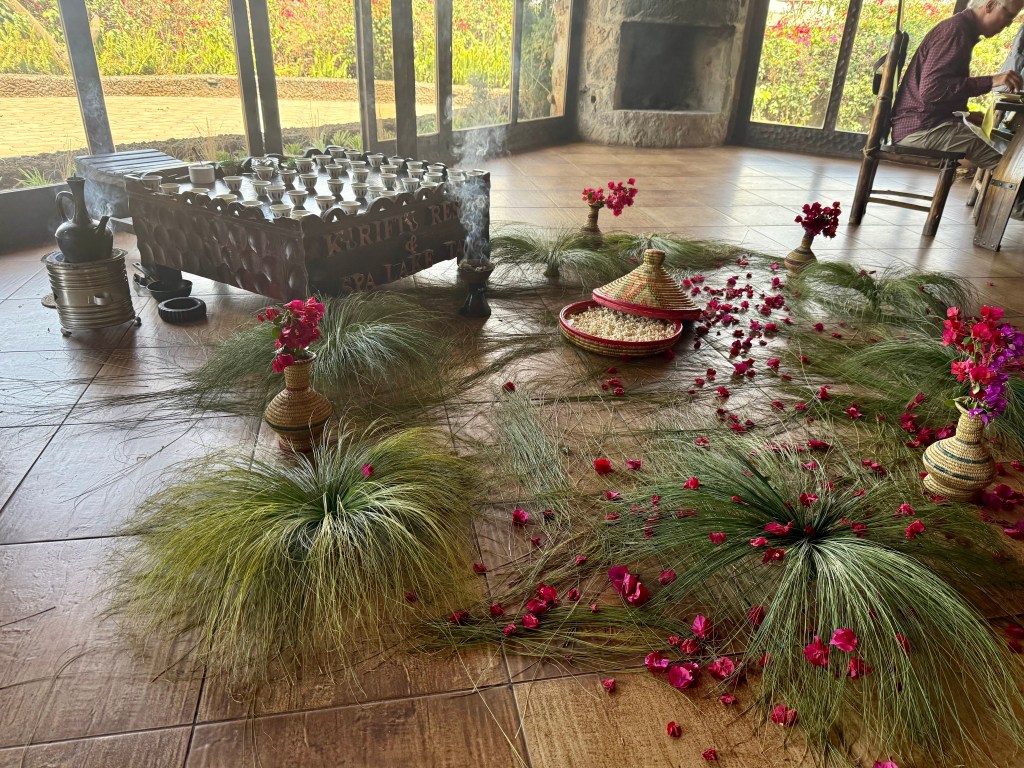
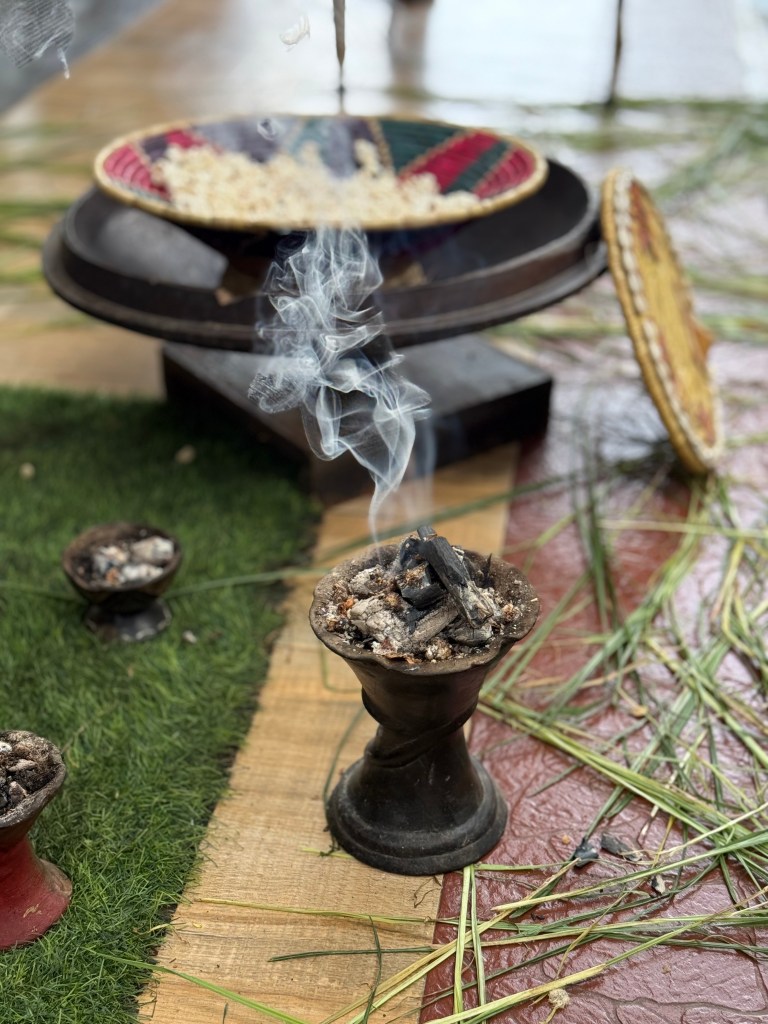
Coffee originated in Ethiopia. Today, beyond being an important agricultural export, it is a cultural hallmark of Ethiopia. There is a whole process — ceremony, even — around making, serving and drinking coffee. It starts with creating a suitable environment, with cut grasses, flower petals, astroturf…, setting a garden vibe either literally or figuratively. Fresh coffee beans are roasted in a pan before crushing and brewing to order. Just from a flavor- and freshness-optimization perspective, you gotta love a process like this. But even more than a gastronomic experience, coffee is a key element in the fabric of the society. Incense is often involved to further set the mood, popcorn is a near-univeral snack and there is a pacing that encourages slowing down and connecting. Over three cups of coffee and chatting about this and that, social connections are formed and reinforced. Maybe the resilience and patience of the populace is learned over coffee…
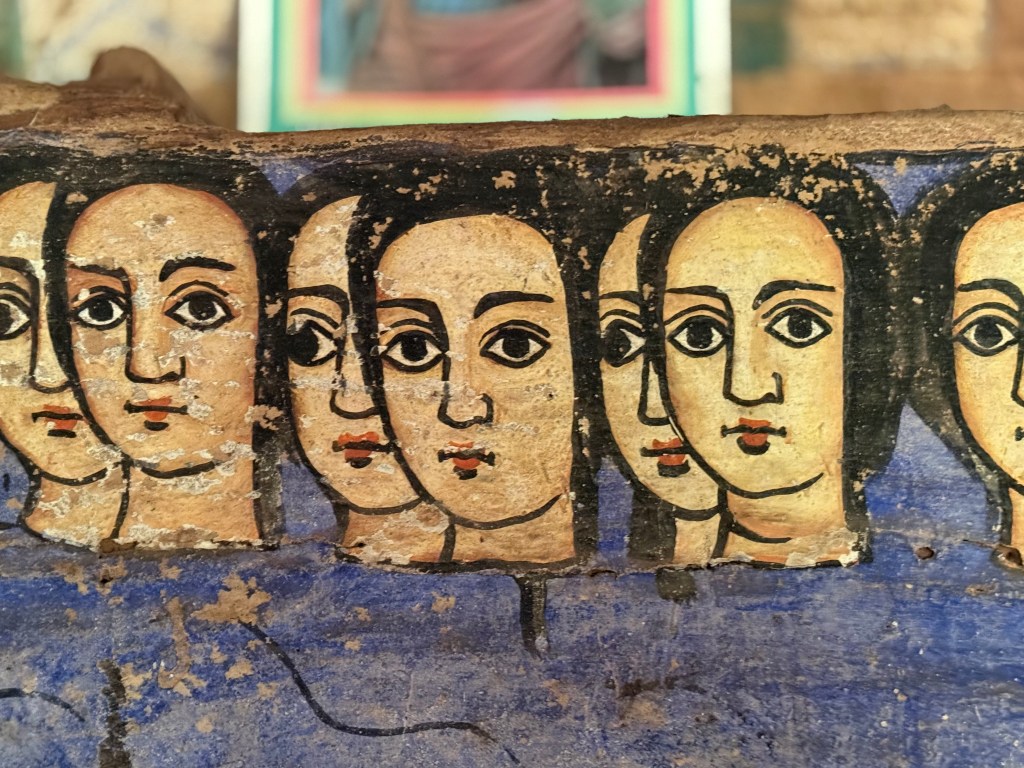
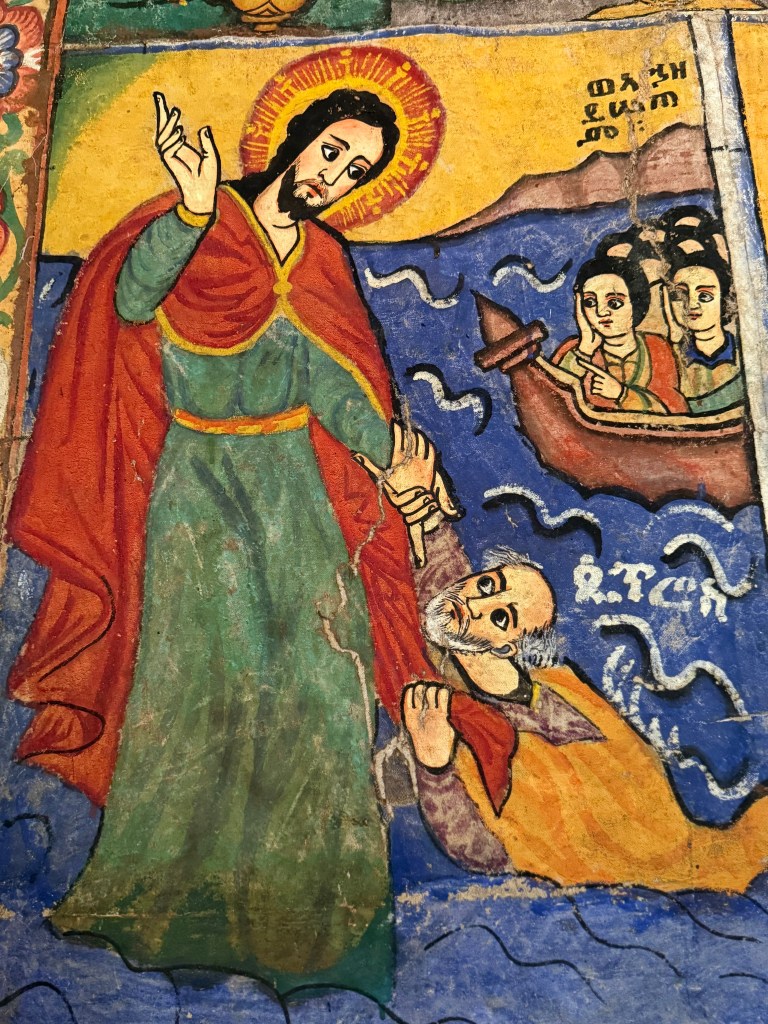
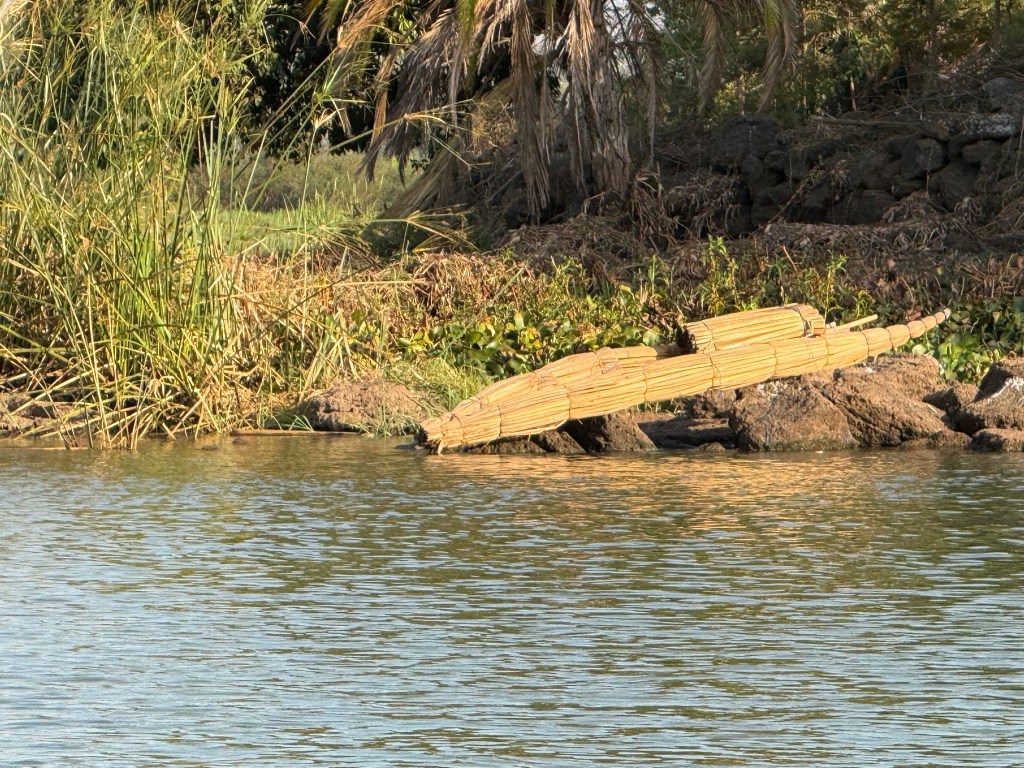
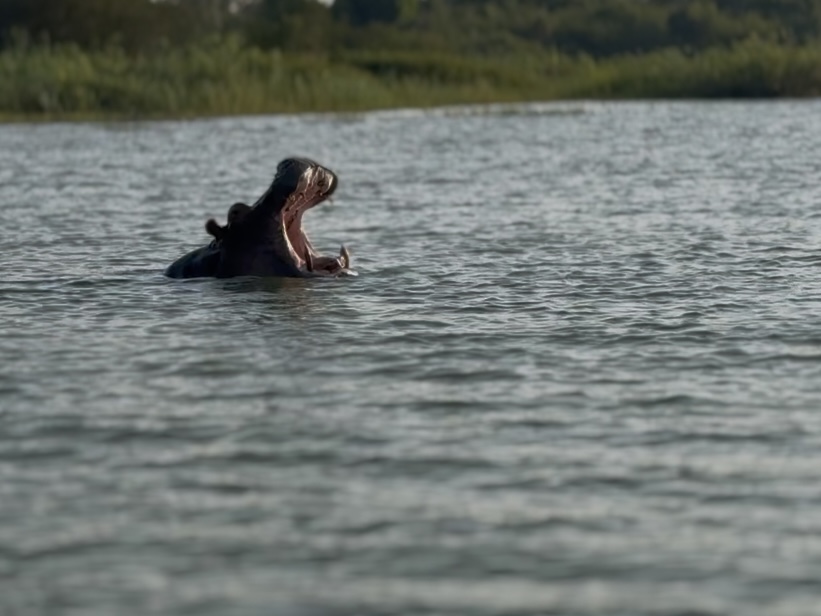
Bahir Dar translates to “Lake Shore” in Amharic, where it sits prettily at the southern cusp of Ethiopia’s largest lake at the headwaters of the Blue Nile. While our time was abbreviated, we did have time to visit the local market downtown (and watched the un-permitted street vendors play cat-and-mouse with the constabulary), take a boat trip to a beautifully muraled monastery (being lovingly rethatched with volunteer labor), see a papyrus raft in use (5,000 year old technology still in use because it works — gotta love it) and, oh, have a run-in with local fauna…
Heading back to Addis for transit to Zanzibar, I reflected on how my understanding of Ethiopia has evolved. From first learning about Lucy around fifty years ago, then reinforced with the publicity surrounding Live Aid, my early impressions of the country were largely focused on the forbidding nature of the land and the hardships that its people have endured. With an improved lens that presence affords, the reality of those early impressions is even more acute today, but a broader picture has also emerged. It feels more of a birthplace place: of our species, of institutional Christianity, of the world’s favorite stimulant (coffee)… And it is an old-school, often pious and generally humble society, yet one that is hurtling into modernity, both by choice and by fate. May their strengths as a unified people help their transition be productive and just.


Leave a Reply