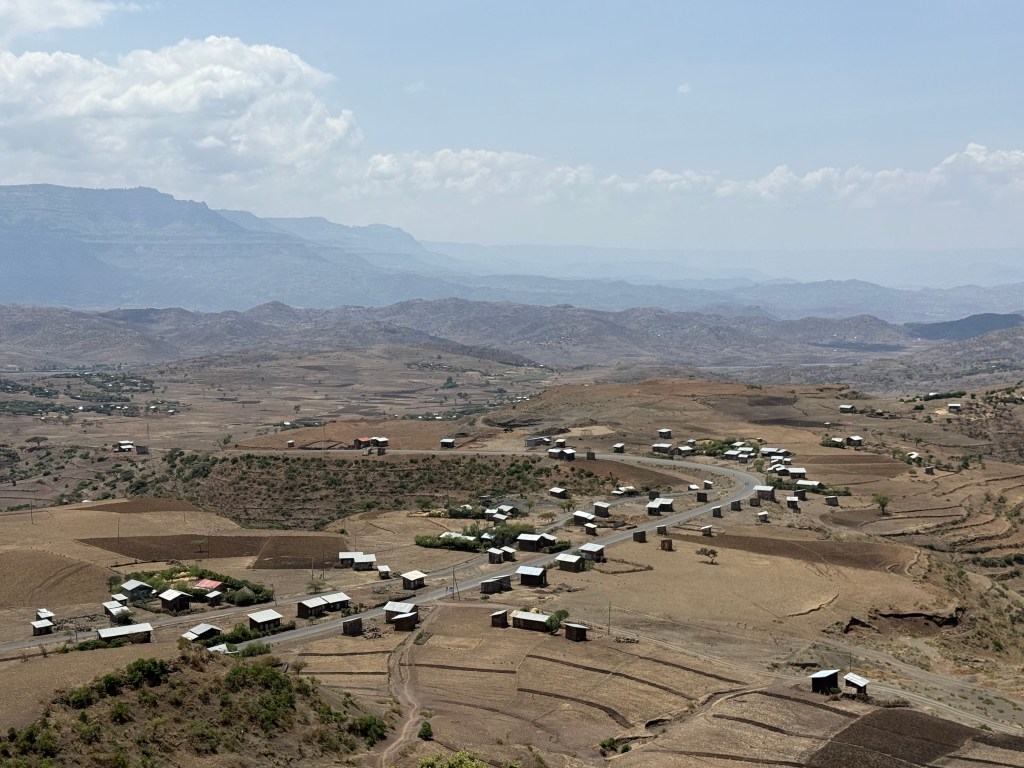
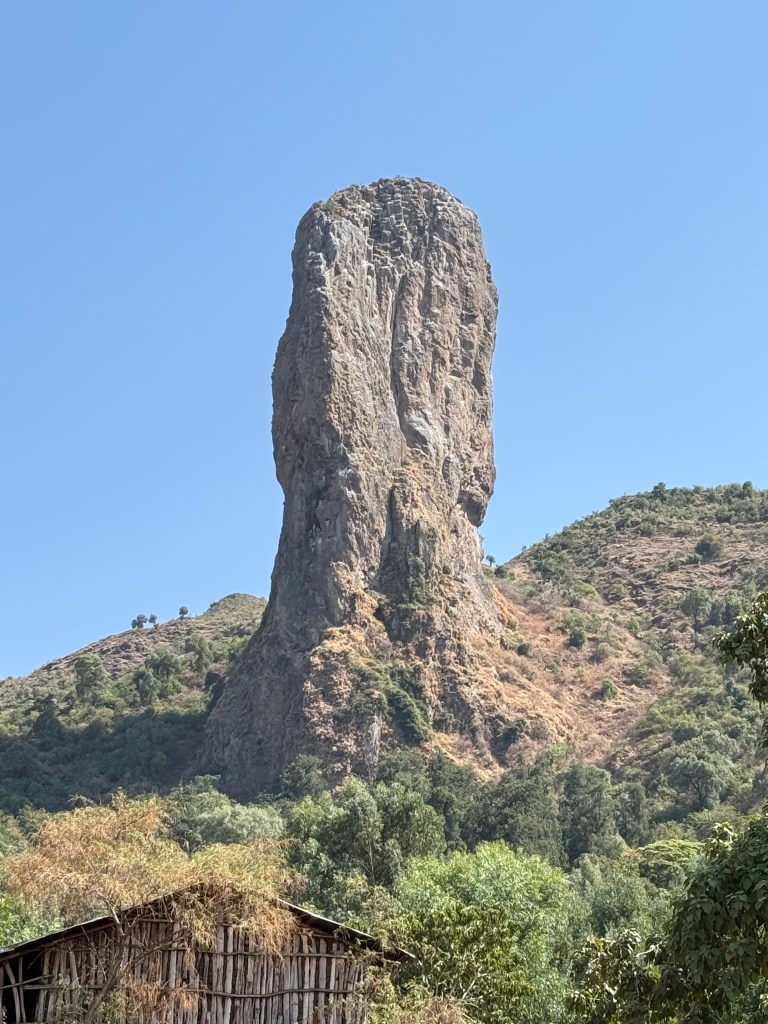
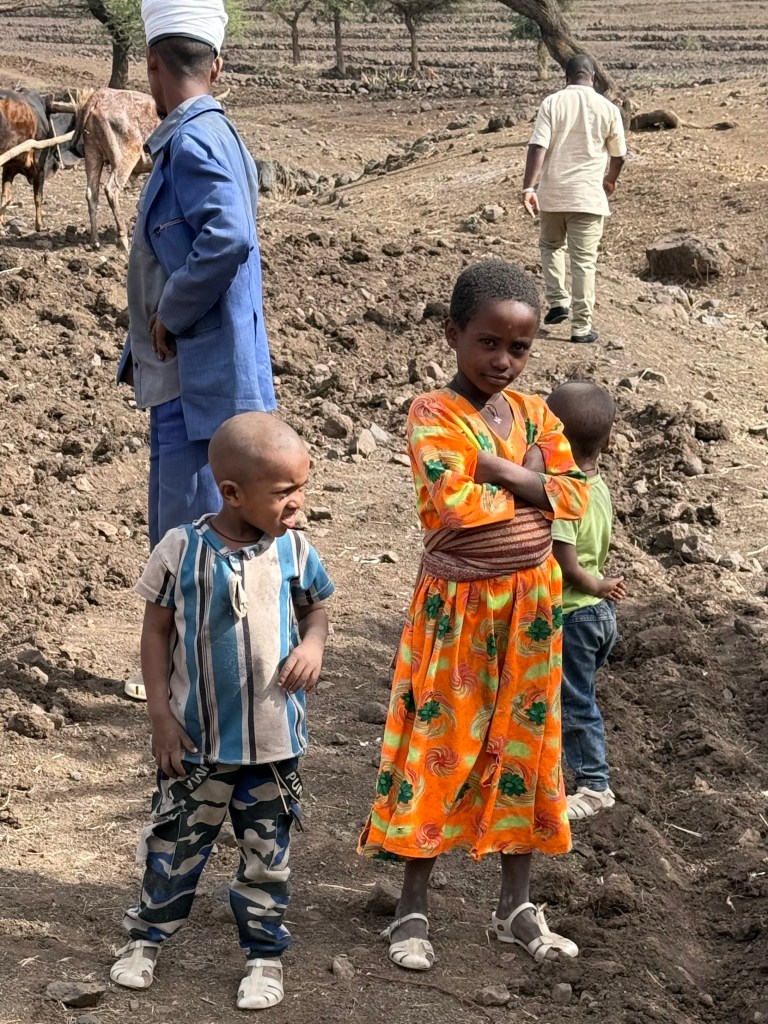
Once out of the capital city, Ethiopia becomes a land strikingly familiar in its climate and topography, recalling the beauty of the mountainous American southwest. Looking closely, though, details emerge that shape the uniqueness of this place: family farms leverage any arable land available, small rectangular homes and barns — each made of eucalyptus boles, adobe mud and corrugated metal — dot the land, and most everyone walks (the average rural person walks 20km, that’s 12 miles, per day.) The pace of life seems slower, yet, in a way, relentless too.
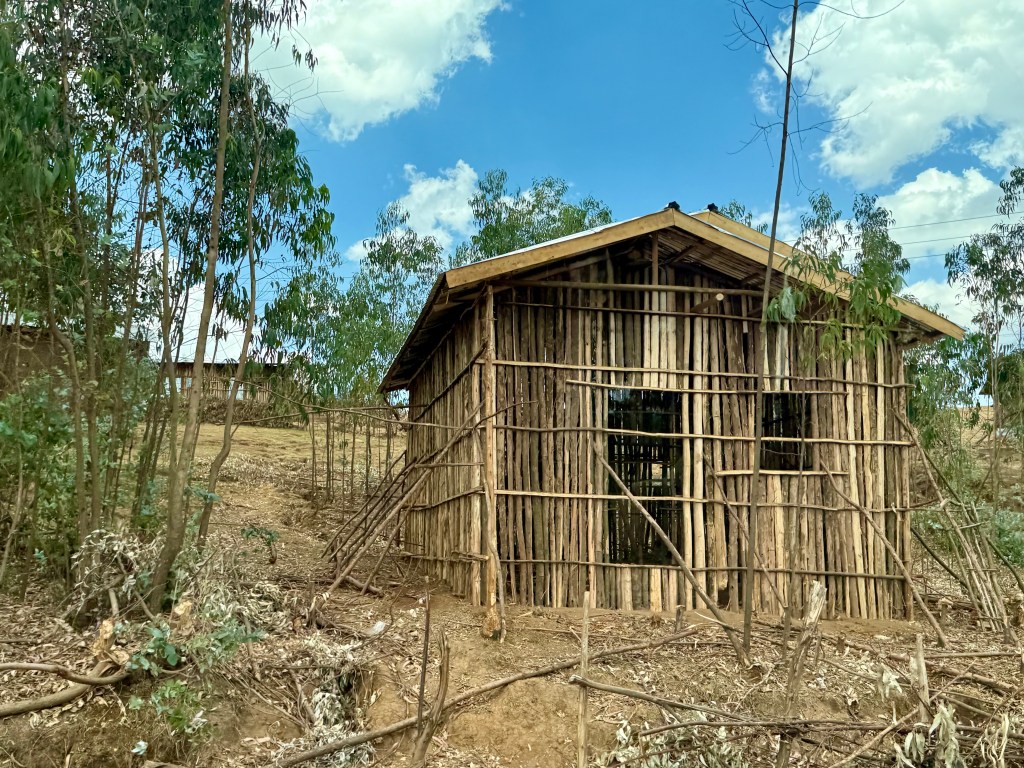
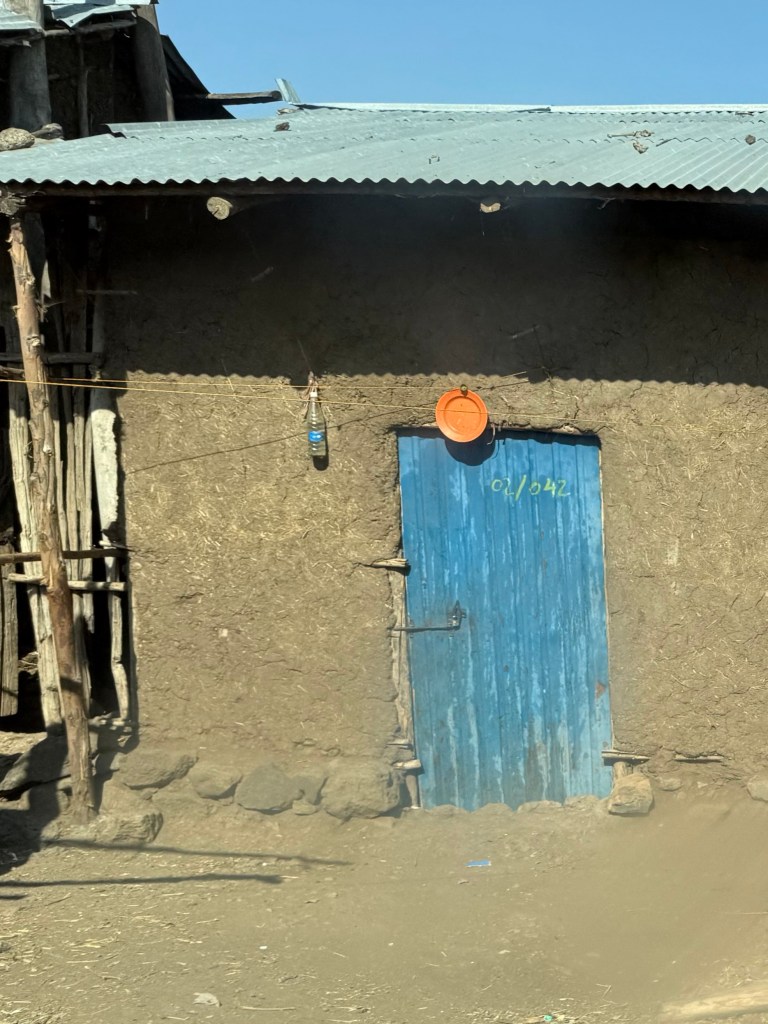
Maybe that relentlessness stems from the fact that the land is hard — literally. If there is one takeaway impression of this land, it is rocks; they are everywhere. Whether underfoot, as the second most popular building material, or in every bit of farmland I encountered, rocks are a consistent feature of the country. In a way they seem a right metaphor for the Ethiopian people — not in a cold, hard or unfeeling sense, but in that they can weather so much travail and live on, unbowed by the currents of the day. And from a spiritual perspective, the notion that the Christian church was built on a rock foundation connects well with the deeply religious backbone of this society.
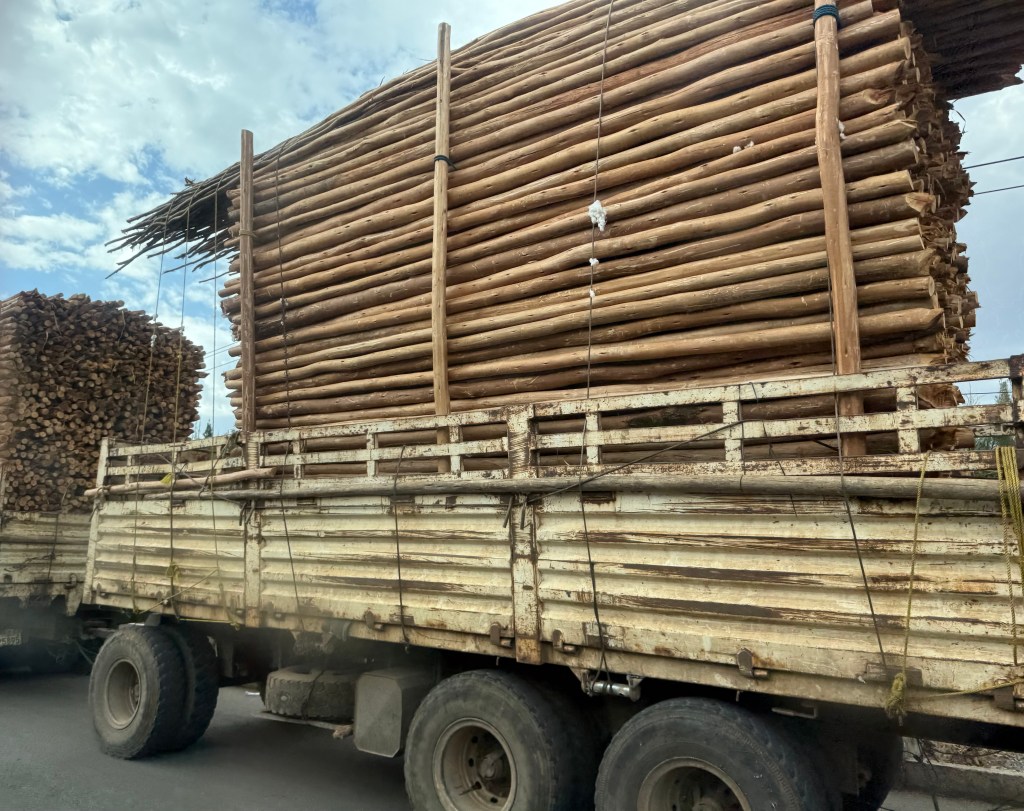
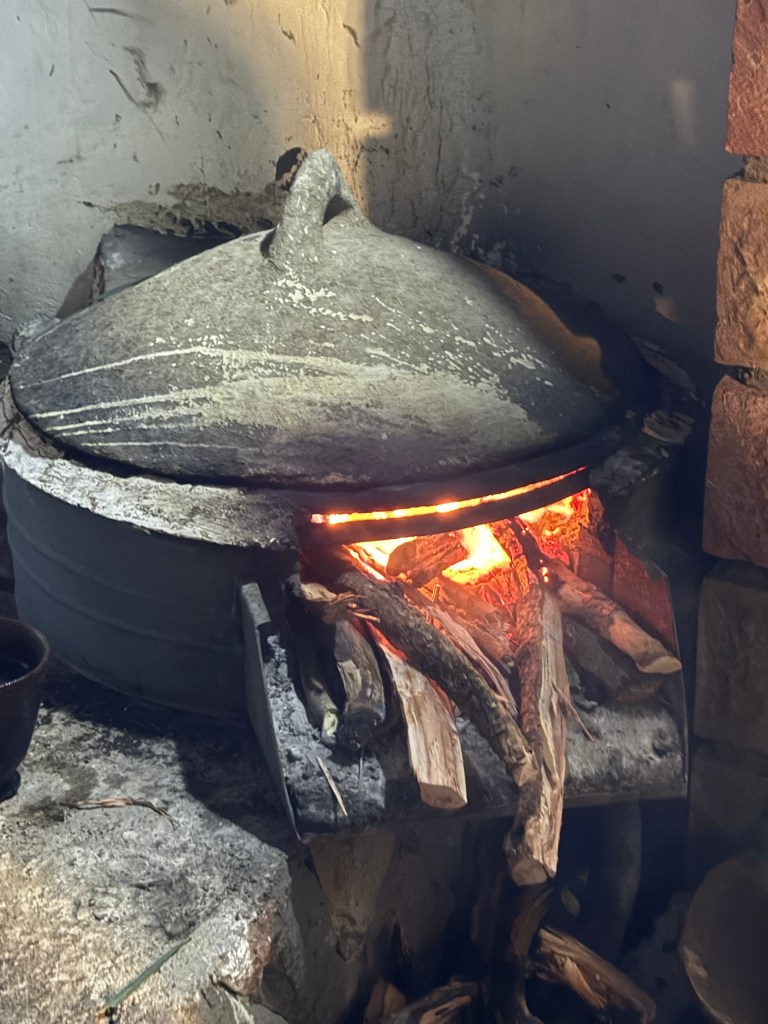
A second defining feature of the landscape would be eucalyptus trees; they too are (almost) everywhere. I had been joking with the group that if the word Ethiopia doesn’t mean “rock”, it must translate to “eucalyptus”… Introduced, on purpose, over a century ago to address shortages of firewood and building materials in Addis, they now dominate forest ecosystems and local economies alike. I get the appeal: it is fast growing (harvestable every few years), grows fairly straight (great for building) and burns well (it’s also the primary source of firewood for cooking and heating). Yet, this widely relied-upon resource is also a water-guzzling, invasive species in a time when climate change has already affected water supplies here, which are primarily dependent on rainfall and groundwater. And until an equally inexpensive and broadly accessible alternative energy source is available, people will burn this wood, independent of longer term consequences.
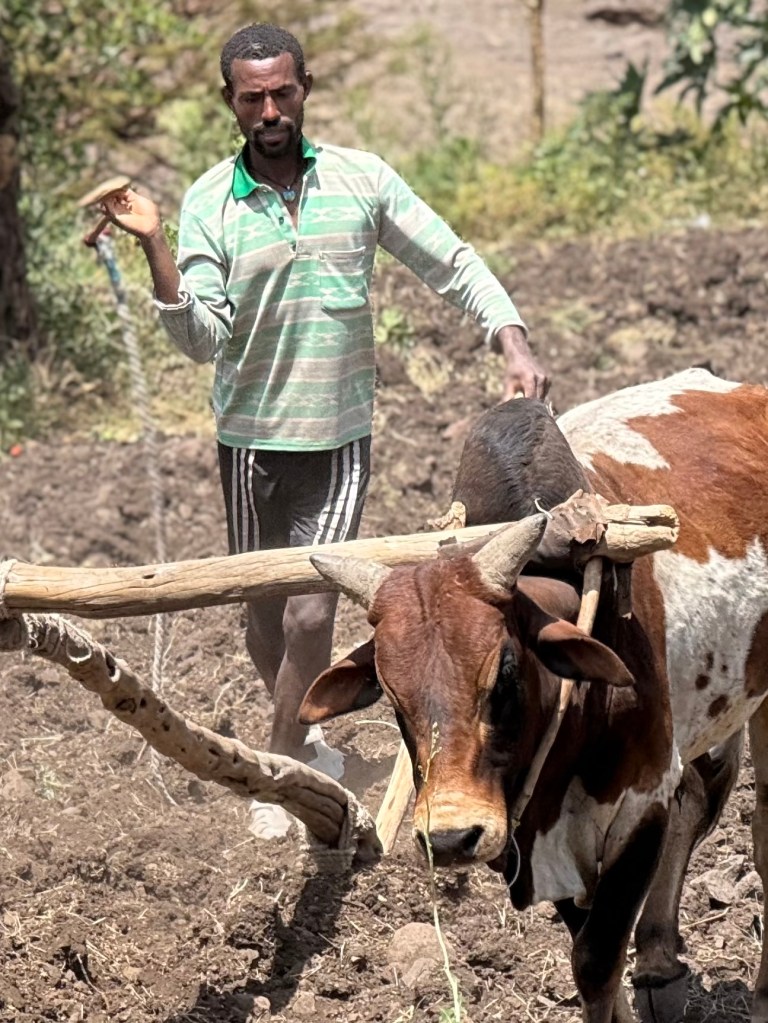
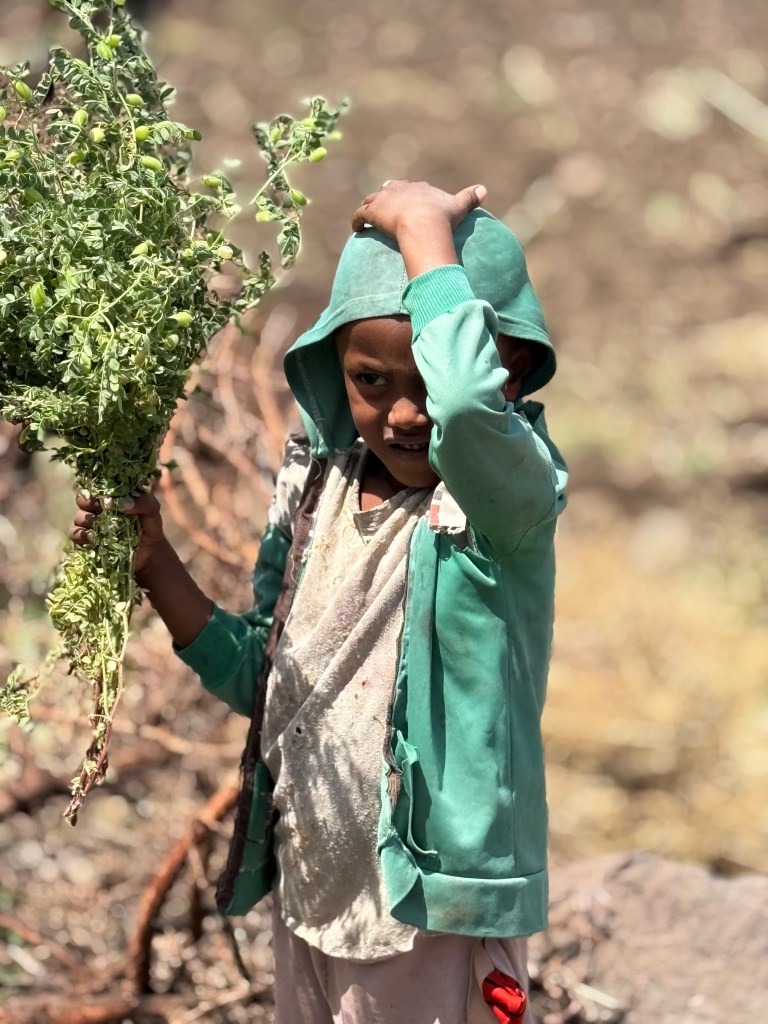
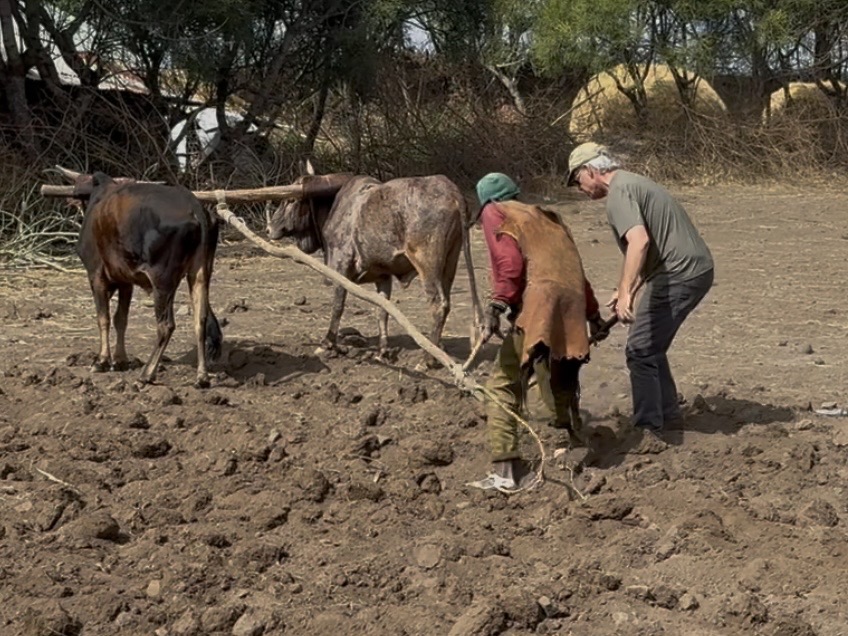
These thoughts coalesced as we spent a few days in Lalibela, a small town of 25K situated halfway between the capital and the out-of-bounds areas to the north (Tigray & Eritrea). On the way from the airport we made an impromptu stop along the road to chat with farmers plowing their field. I found it fascinating to have a front row seat on farming practices that date back millennia: Ox-driven, manually steered wooden plows, kids harvesting onions and chickpeas in an adjacent field, all while the family goats and sheep rummage to and fro… Daily life for a billion people on our planet.
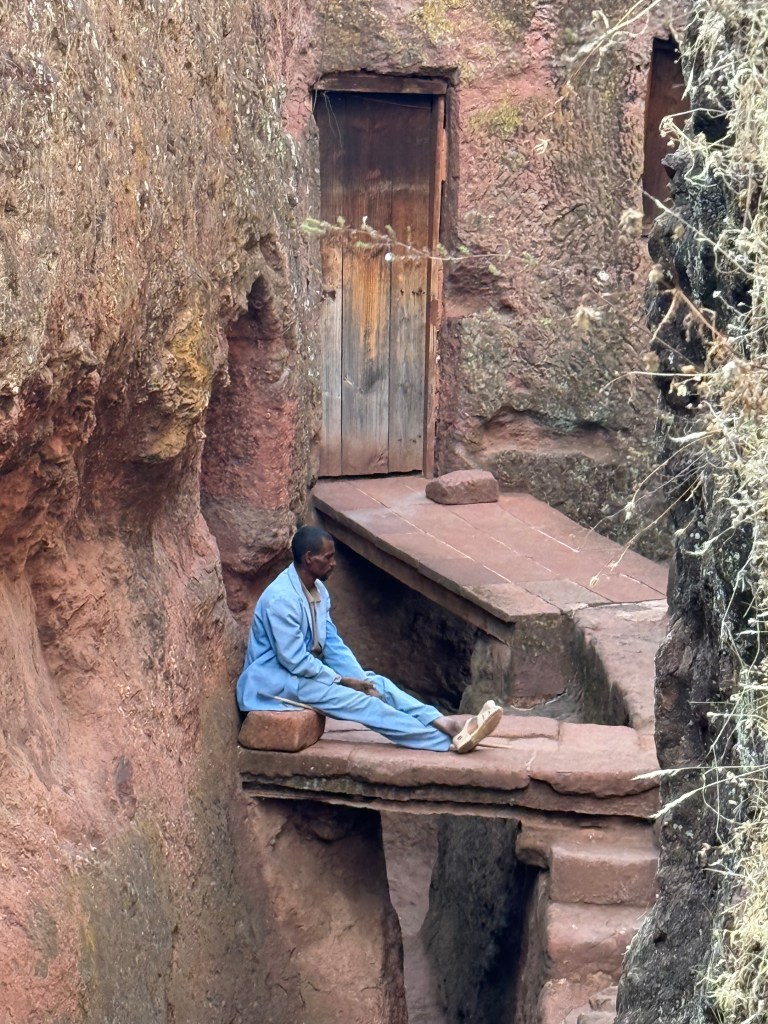
Lalibela is most well known for its eleven nowhere-else-on-earth churches literally carved in situ out of solid rock at the turn of the 13th century using nothing more than hammers and chisels. Some are carved whole out of monolithic stone, from top, down; some are carved into rock faces à la Petra. Each is quite remarkable to behold. And to think it took just two dozen years to complete them all; doubly remarkable.
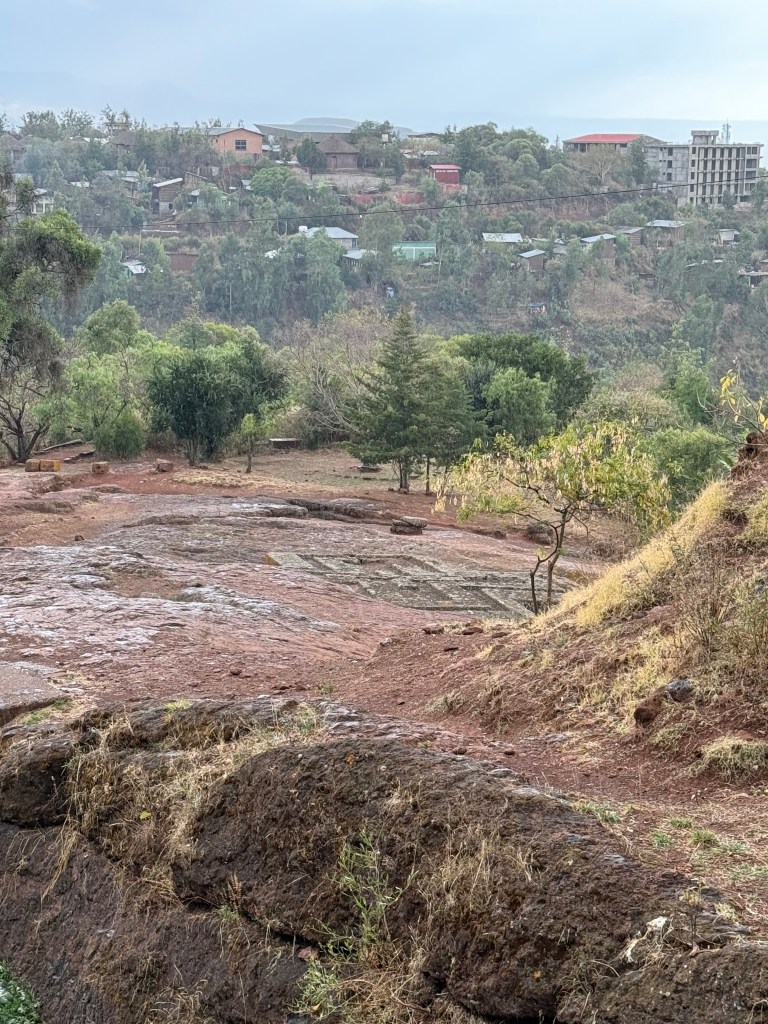
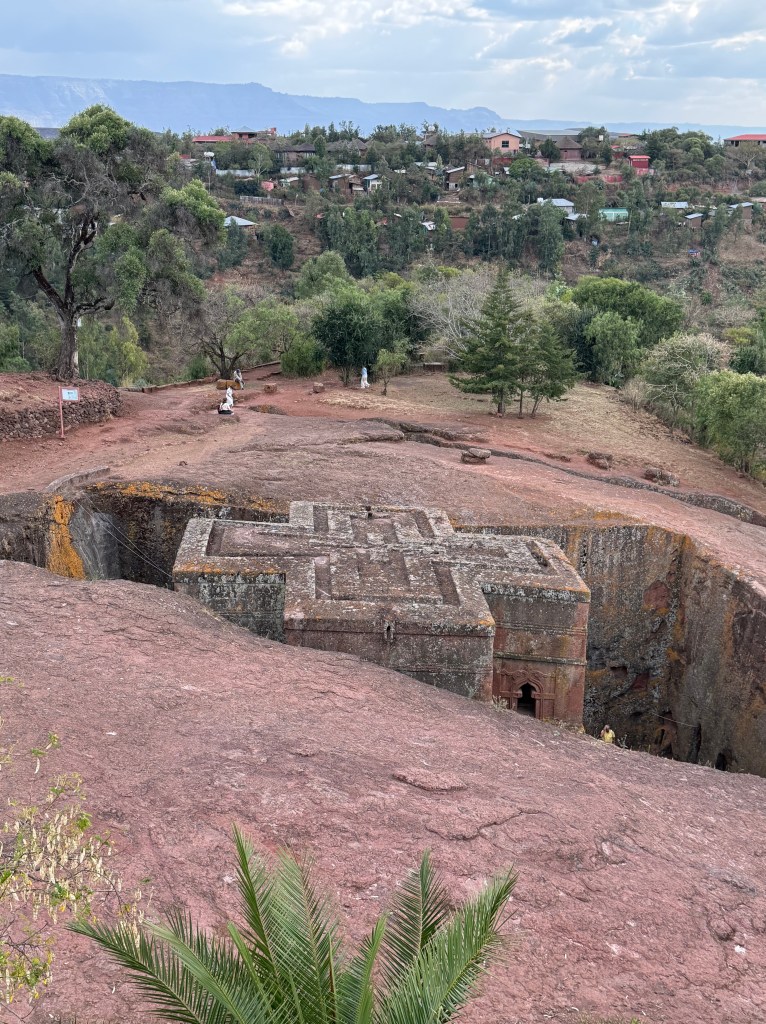
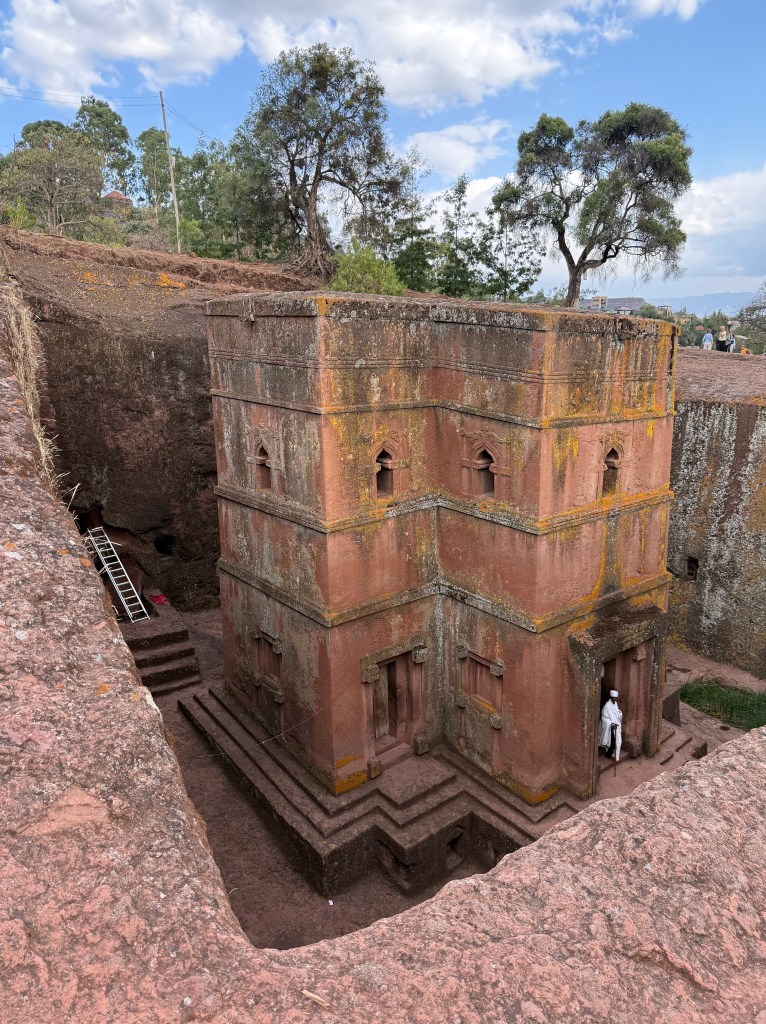
The churches are clustered in two groups and are interconnected by low, narrow tunnels. We had the chance to experience walking — hunched and shuffling and in utter darkness — through a section of tunnel between churches, all while chanting the Ethiopian Orthodox version of Kyrie Eleison (lord have mercy). I found it disorienting and claustrophobic and mesmerizing and enriching.
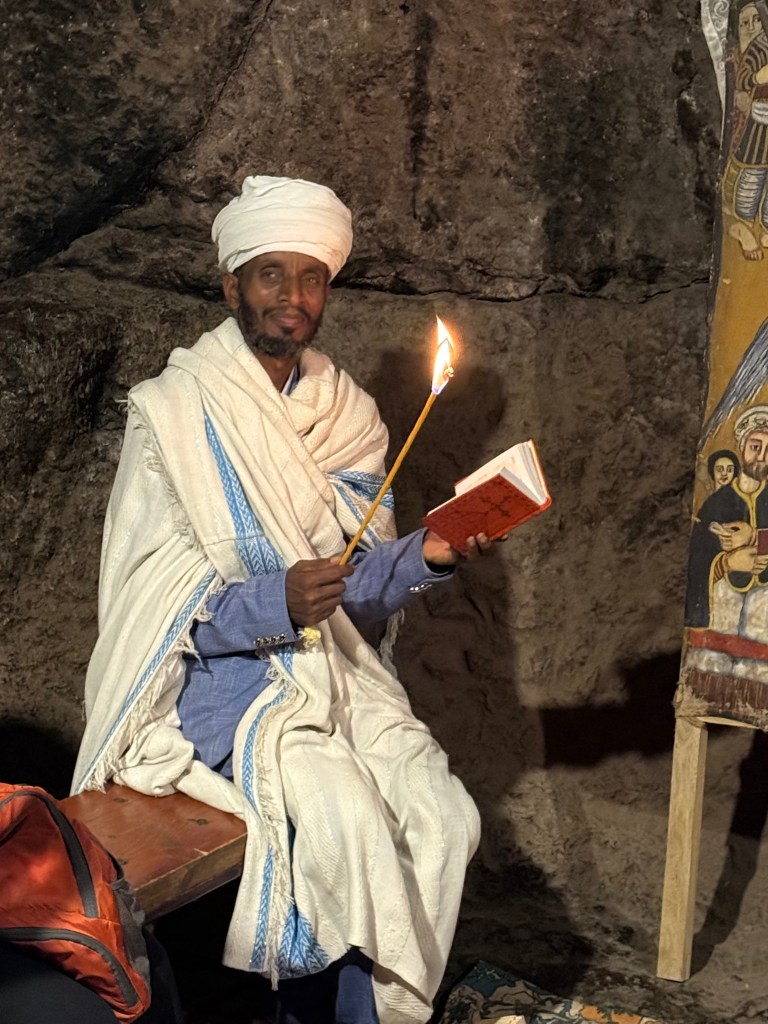
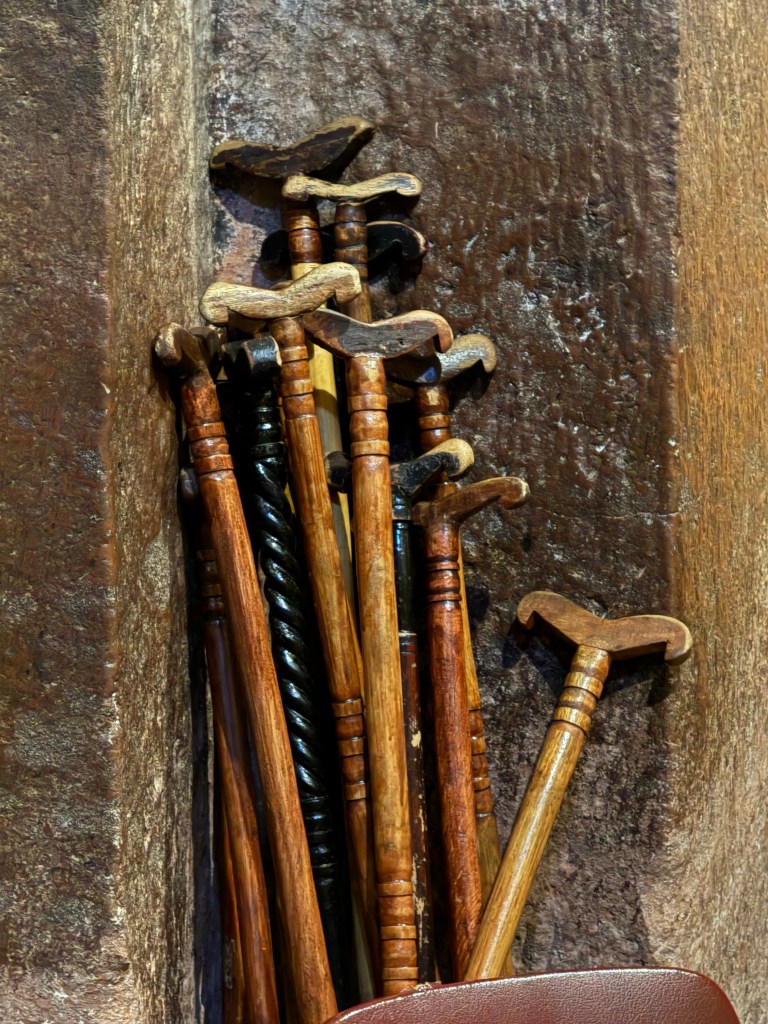
In each of the churches, there are small areas where congregants sit or stand, often leaning on staffs. Each staff is unique but each follows similar design, with a top end shaped similar to a whale tail, providing a suitable resting surface — welcome, I’m sure, given the 3 hour-long services.
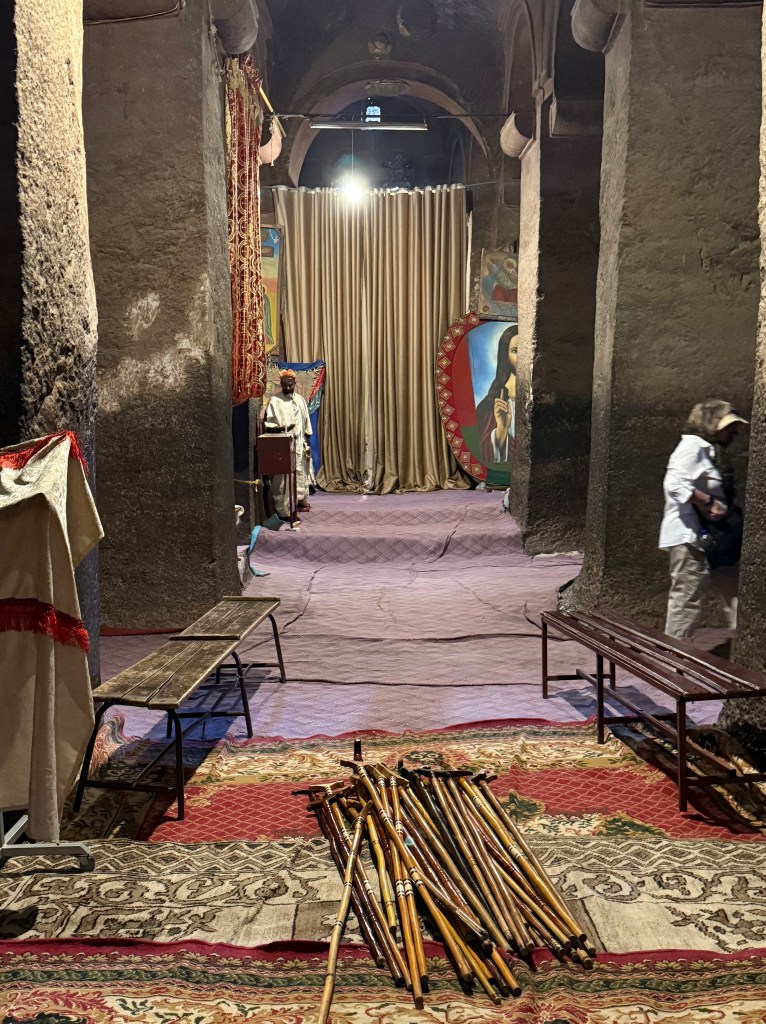
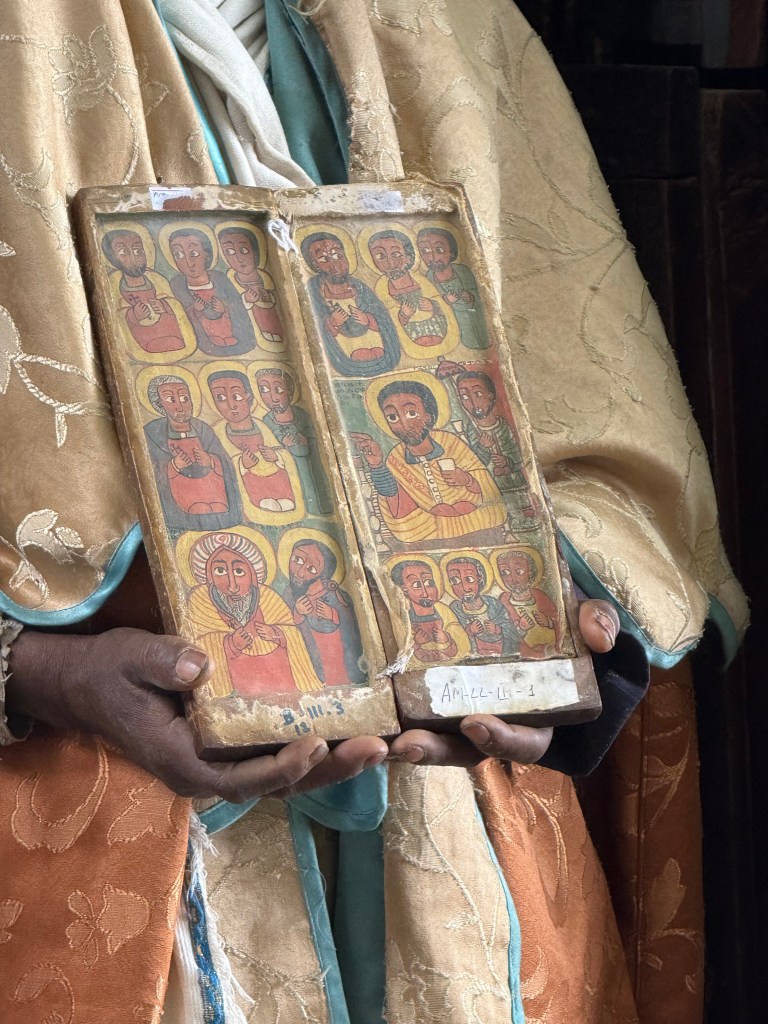
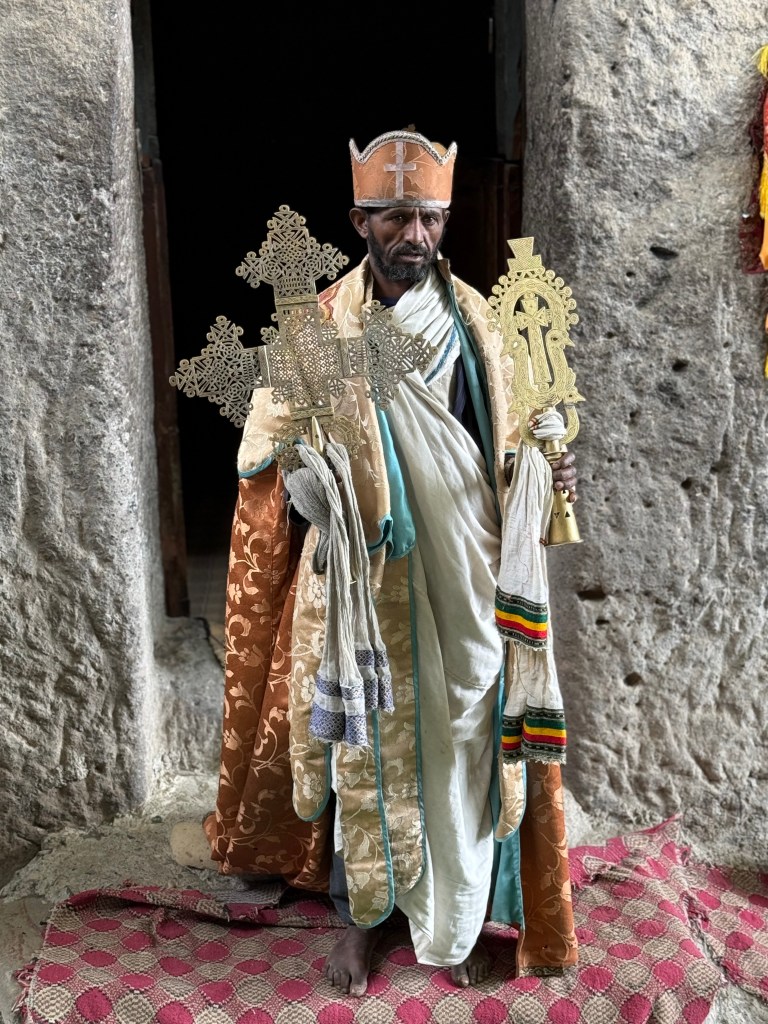
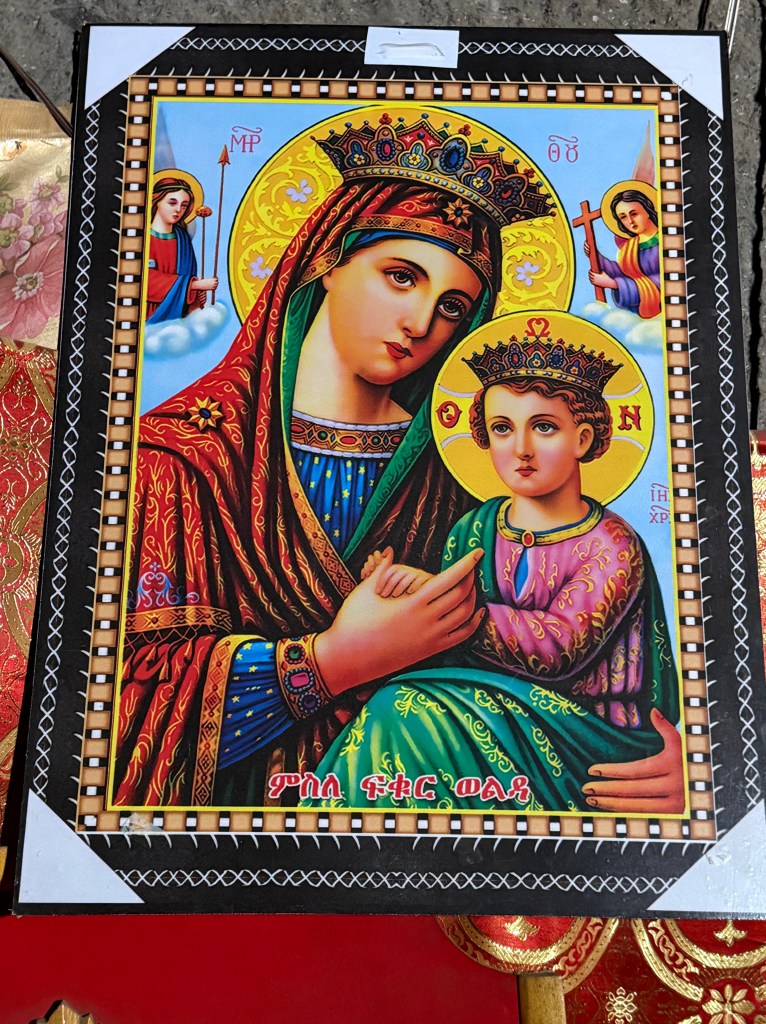
Generally void of interior painting or decoration, all of the churches we visited had freestanding framed paintings, each in traditional Orthodox styles, at the back of the churches, adjacent to the Holy of Holies where the sacraments, relics and other accoutrements are stored. The priests were so kind to show us their treasured manuscripts and crosses, many of which date back to the creation of these churches.
While in Lalibela, we spent the day with a couple of farming families in a nearby village learning about the pace of life, complexities and joys in their families and communities. These tend to be the parts of these trips that I find most interesting, especially as we avail ourselves at some of the daily tasks that dominate their lives. For me, placing myself in another person’s shoes is a great way to kindle empathy, learn a bit more humility and be reminded of all the blessings I enjoy in my life.
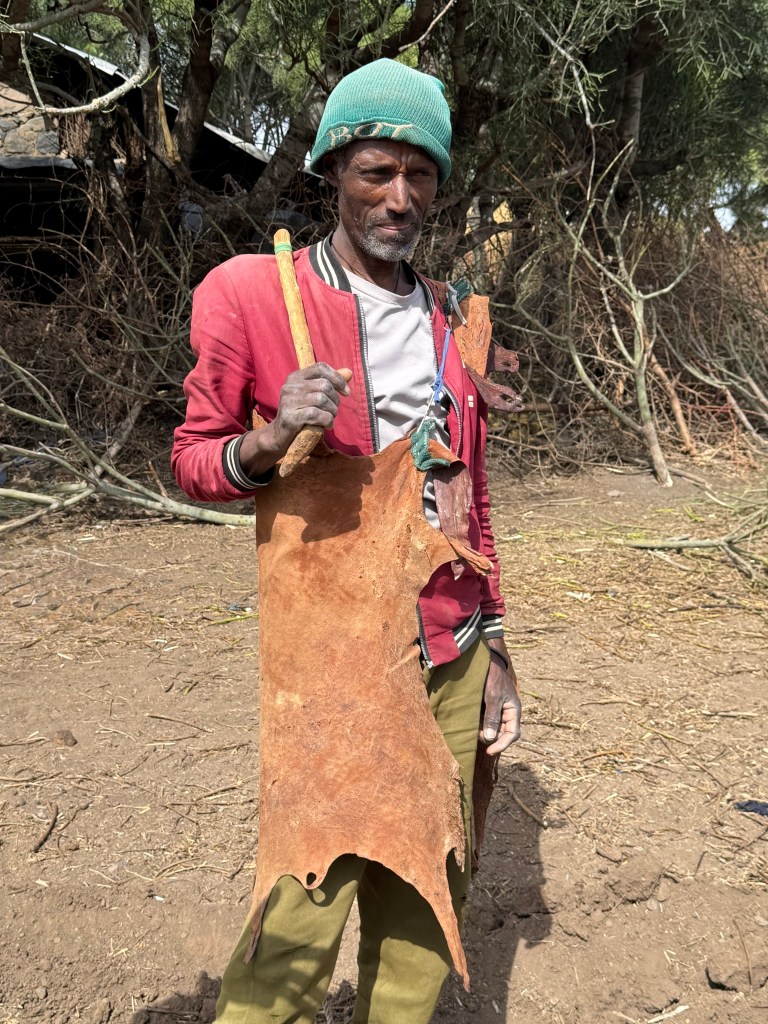
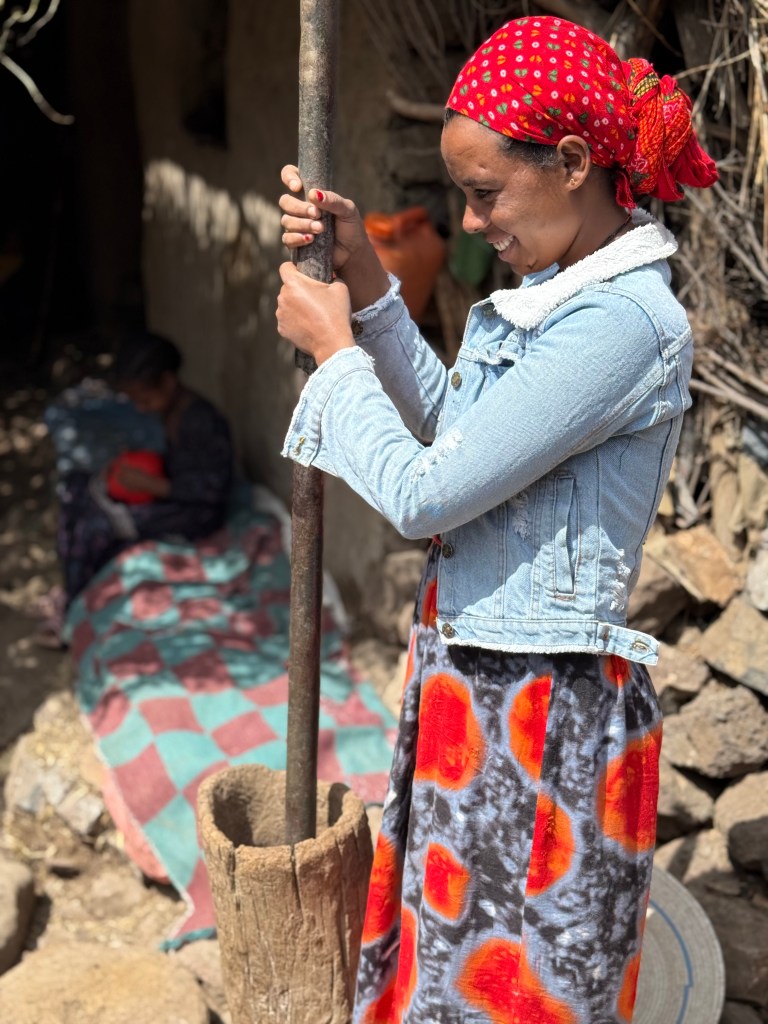
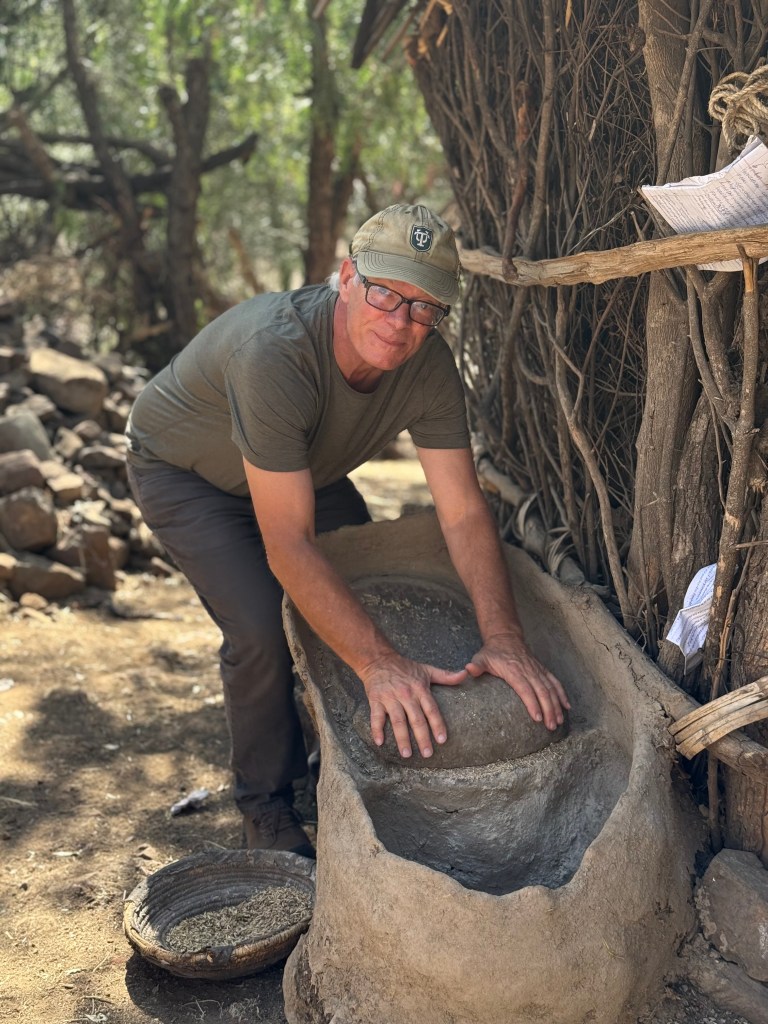
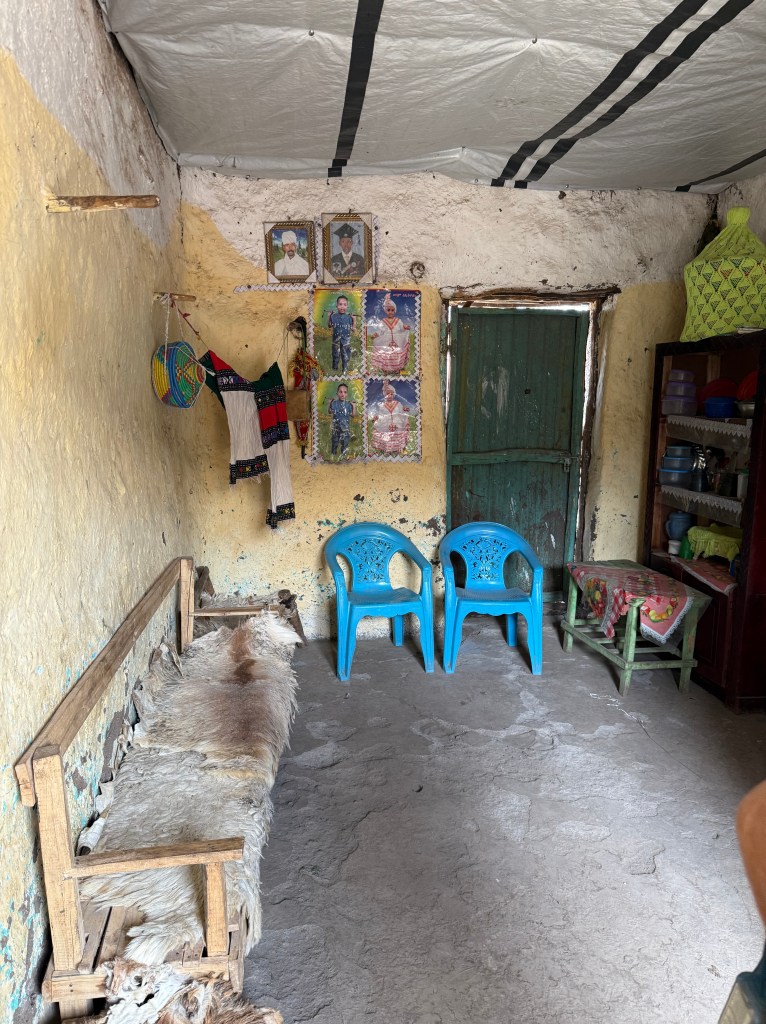
Despite having had experience with plowing fields on my aunt’s ranch as a teenager (with the assistance of a sturdy Ford tractor), I was ill-prepared for the old-school version of plowing – with a handmade, single shank cedar plow pulled by a pair of oxen. It was physically strenuous and mentally taxing trying to keep downward pressure on the plow, an eye on the plow line, watching for rocks and, oh, trying to coax the ox along too? I was exhausted after just a few tens of meters. A humbling, yet enlivening, experience.
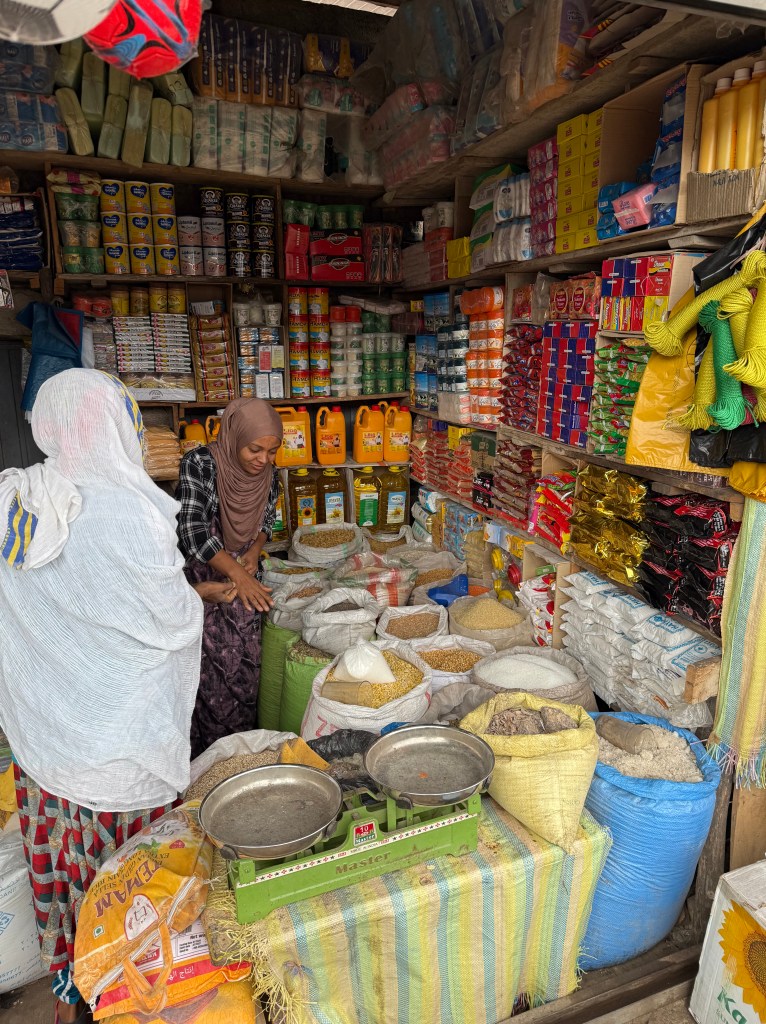
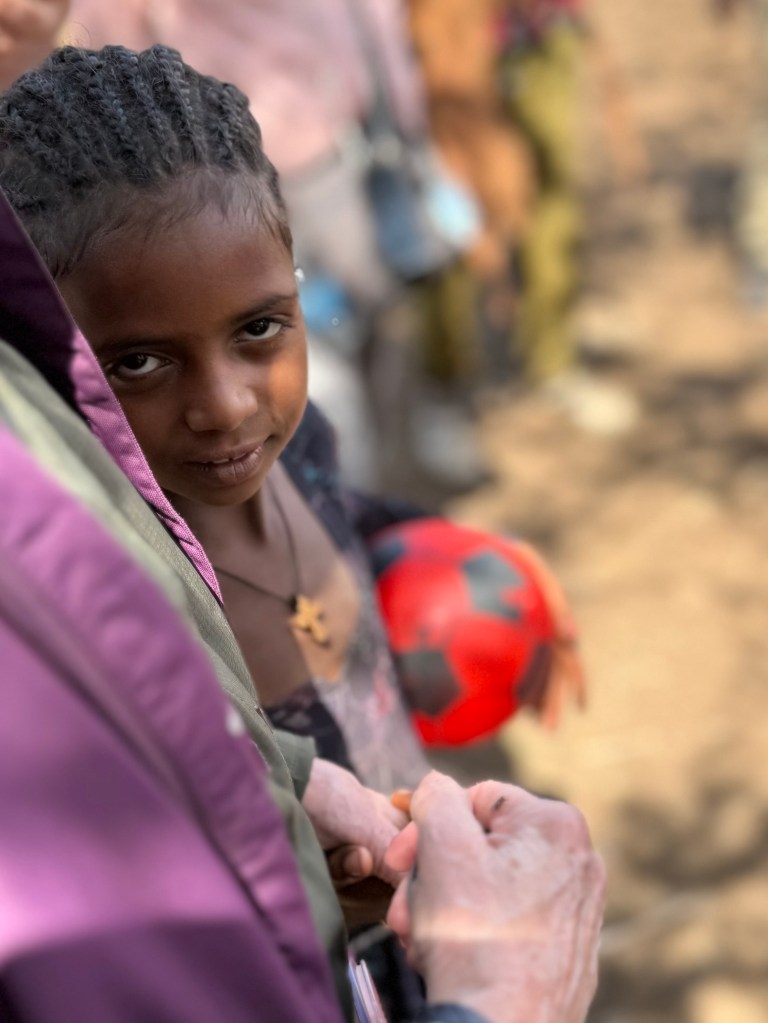
Prior to visiting the farming community, the team split into small groups, were given an allowance and a shopping list (in Amharic) and let loose in the market area to purchase items for our host families. It was much fun to interact with the shopkeepers. With 100 Birr ($0.75) leftover after purchasing cooking oil, we acquired a 9”ø red & black ball. When we met our hosts at the farm, one of the girls latched on to it (with mom’s permission, of course) before latching onto one of our group who has been the kid magnet. It’s so interesting to see how kids are so innately perceptive about people.
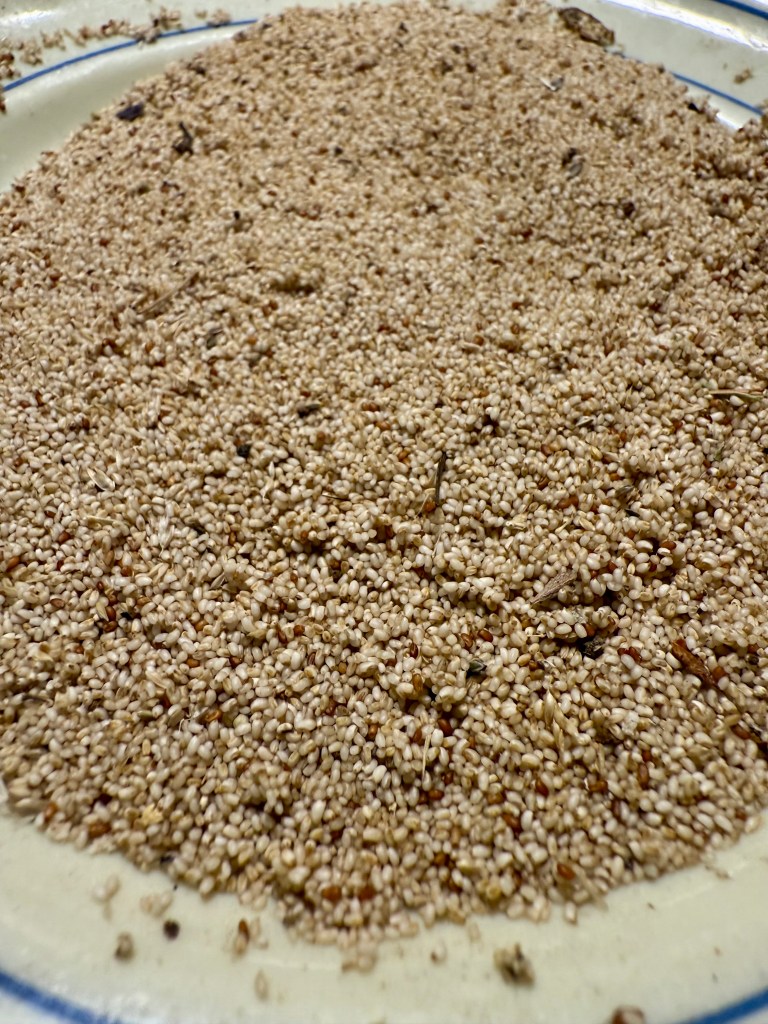
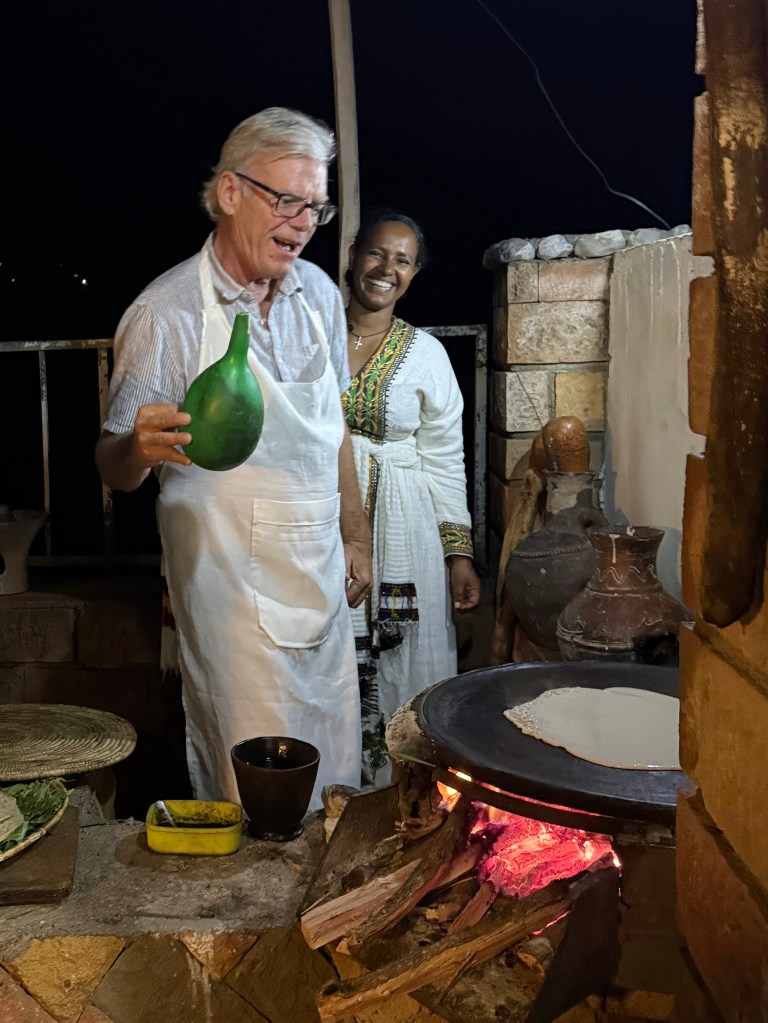
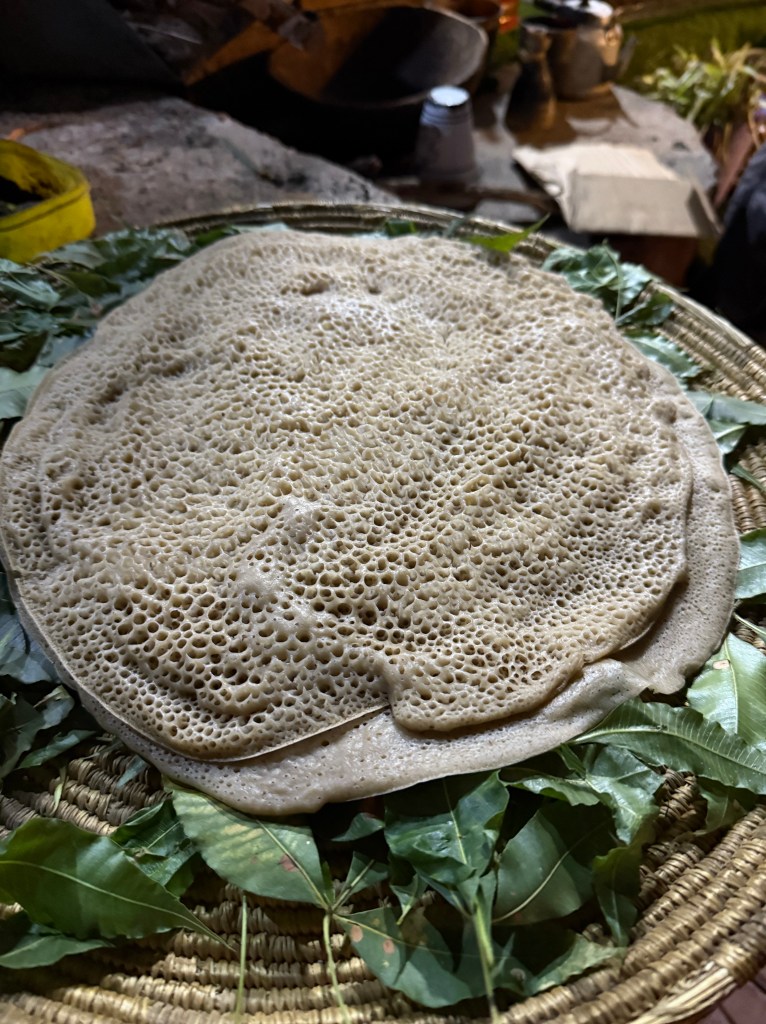
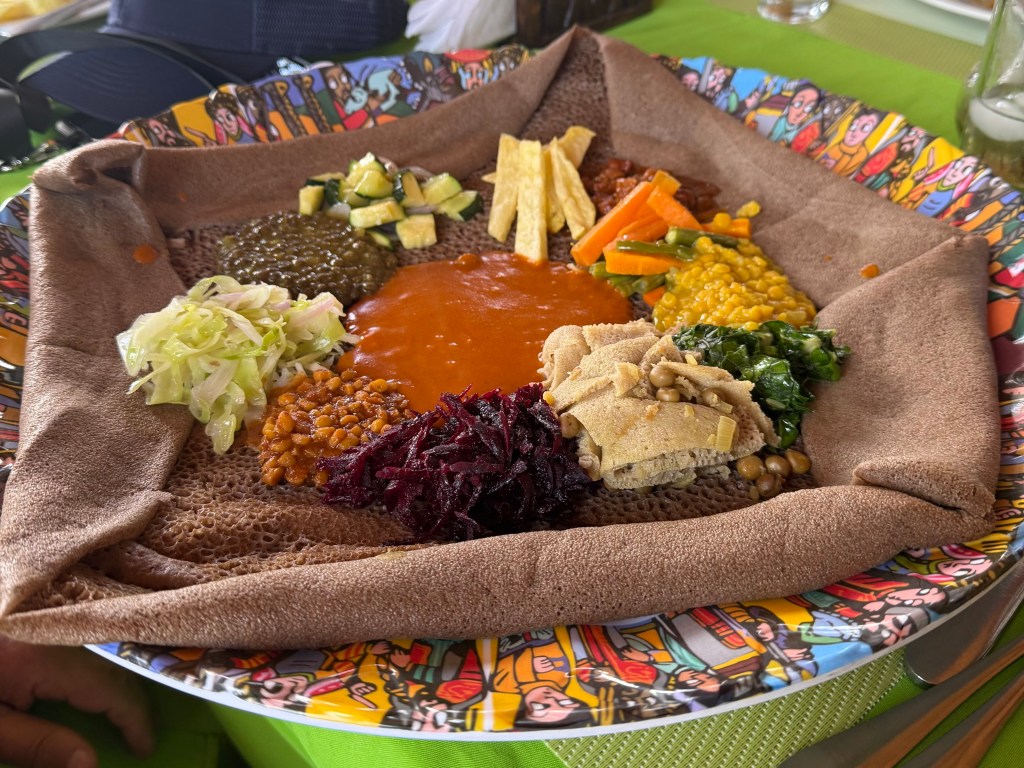
While in Lalibela, we had dinner with a middle class family with school-age children, gaining an understanding about their daily lives, hopes and concerns. It was also an opportunity to learn more about injera, the sourdough flatbread that is the staple food of Ethiopia. Made from teff, a high protein grain indigenous to Ethiopia, everyone eats injera, often multiple times per day.
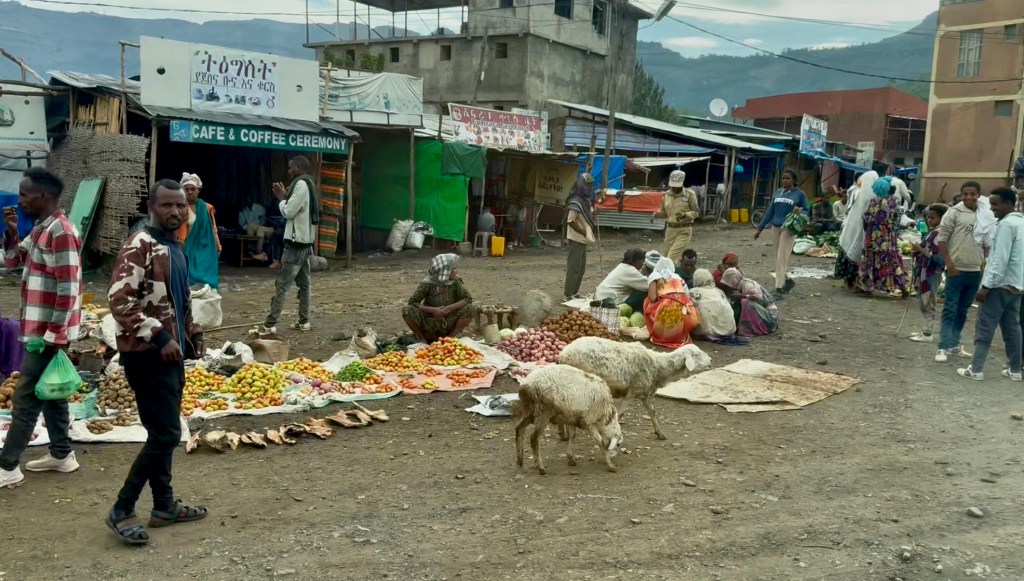
Before leaving Lalibela, with a bit of free time left, I accompanied Elias, our first-rate trip leader, on a walk thru the bustle of the main road nearby, checking out the various vendors and workshops and generally soaking up the scene.
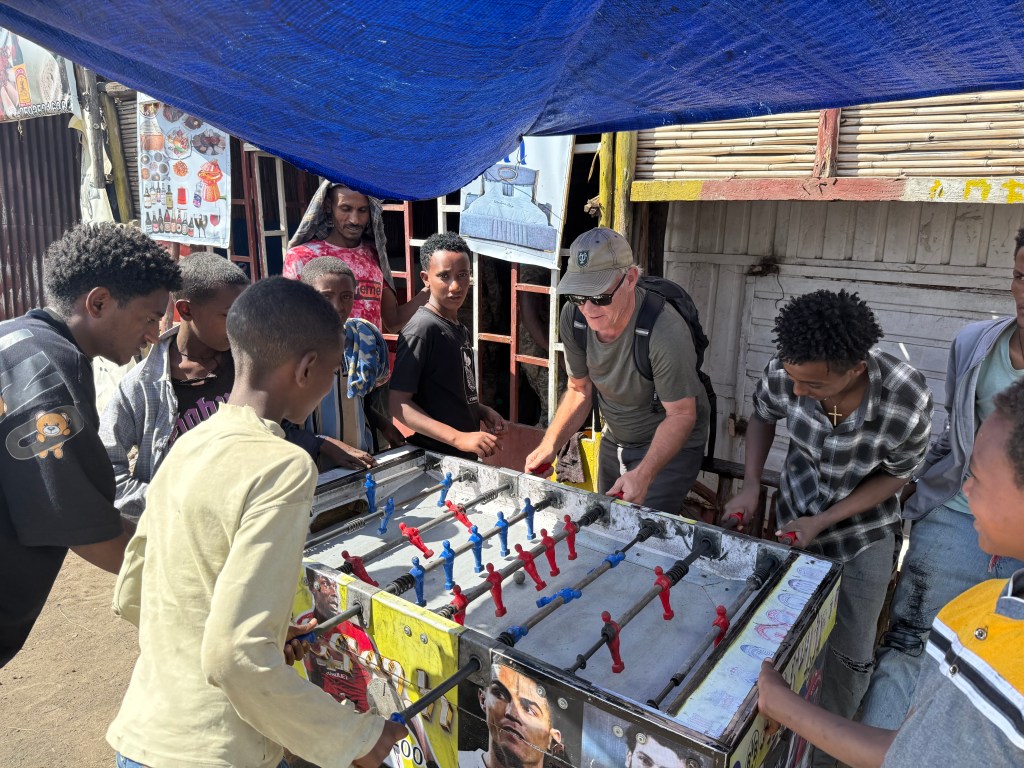
Soon we encountered a group of young men playing foosball (known as jotoni in Ethiopia), which, next to pool, seems to be a favorite pastime for this demographic. I’m super impressed by their skills, playing 3 balls at once — puts the bros back home to shame. We watched discreetly for a while then noticed an open table nearby. As Elias and I played, a crowd soon gathered and quickly we teamed up with locals for a lengthy battle royale. It was a complete blast: the competition made it fun; the connection made it unforgettable.
 Vernaculae
Leave a comment