Algeria… It may fly a bit under the radar screen for many travelers, even though it is Africa’s largest country, as well as one of the richest. But as a locus for history, given its prominence on the western Mediterranean Sea, it is a rich land. With indigenous groups (Amazigh, who we know as Berbers), Carthaginians, Phoenicians, Romans, Vandals, Byzantines, Ottomans and the French all holding sway here over the ages, there is much to appreciate about the past 10,000 years of human history in this large swath of Northern Africa. Indeed, all of this history is a powerful draw for a curious traveler. Yet even more appealing to me was the prospect of interacting with, and learning from, another culture. Already favorably predisposed towards predominantly Muslim societies, I was keen to compare and contrast Algeria with her Northern African neighbors to which I have traveled. When so much of our contemporary culture seems predicated on transactional interactions between people, as if human relationships are some zero-sum game, I love how the tenets of generosity, family and charity form such a strong backbone in these societies and how experiencing these traits have helped to shape me in my new life.
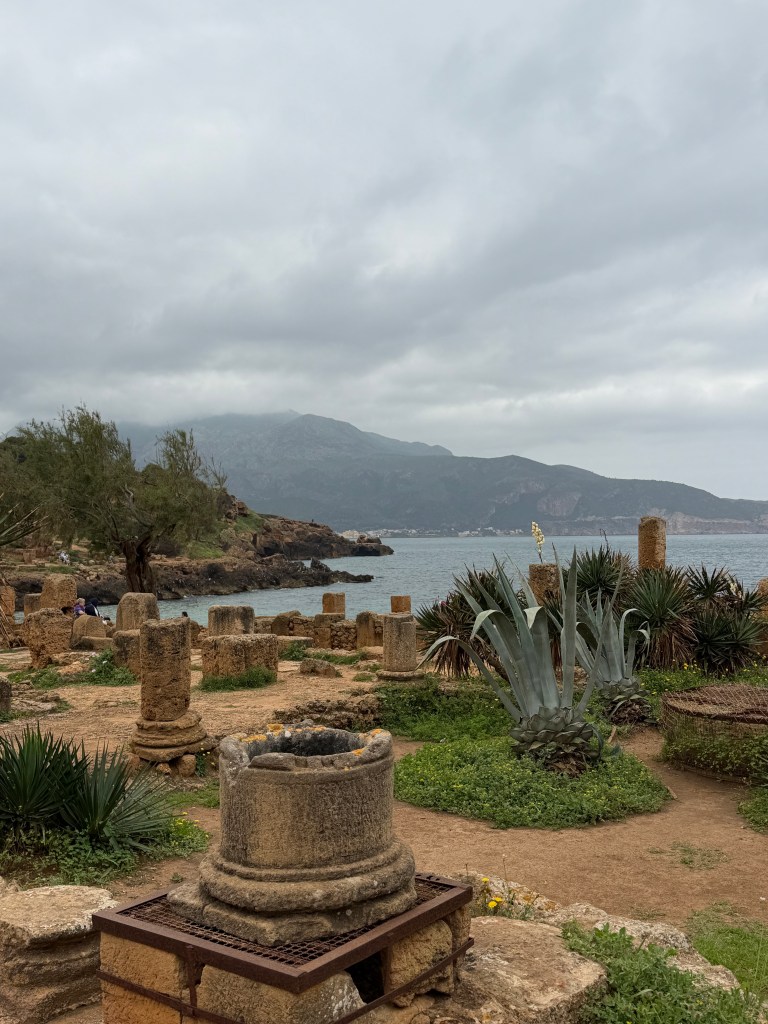
Arriving early to the county’s capital, Algiers, allowed an opportunity wander, visit some museums and, as a few others of the group came early, also glom on to a day trip that an enterprising member of our cohort had arranged. Less than an hour west of Algiers are the ruins of the Phoenician, then Roman, port city of Tipasa. In fairly good condition (as ruins go…), through wars and storms and earthquakes and a thousand years of inhabitation, the site includes remains of an amphitheater, temples, an early Christian cathedral and many villas. The ancient port is now underwater, thanks to earthquakes, but much remains of this UNESCO-listed site and it was a lovely day strolling thru nature and antiquity.
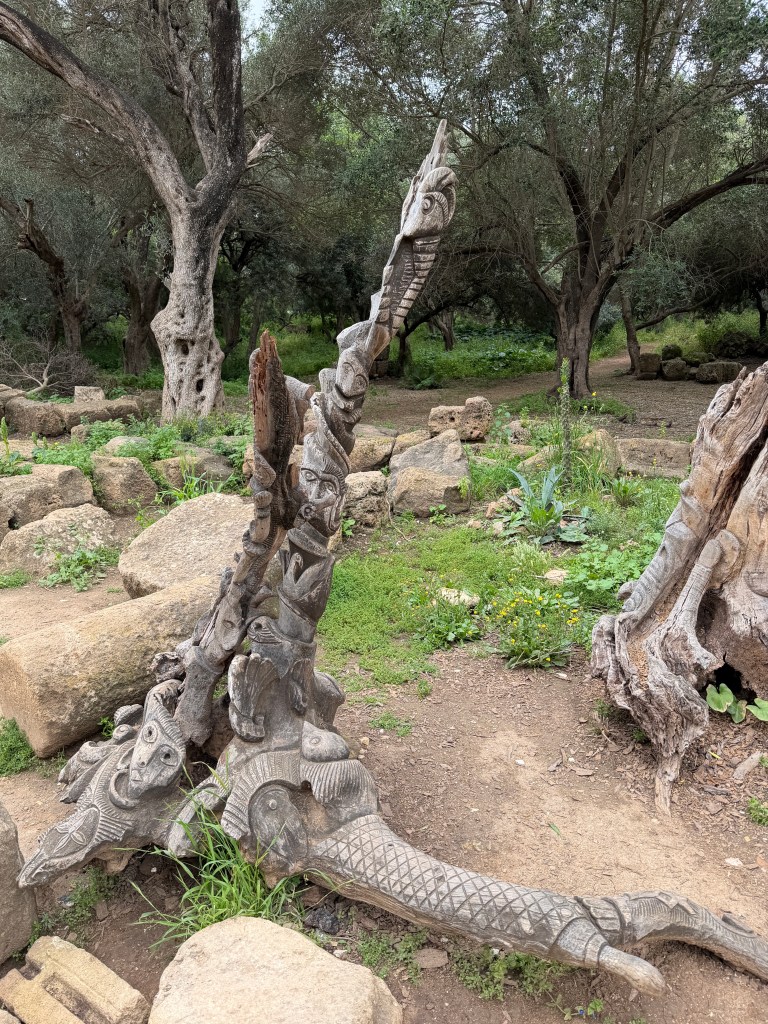
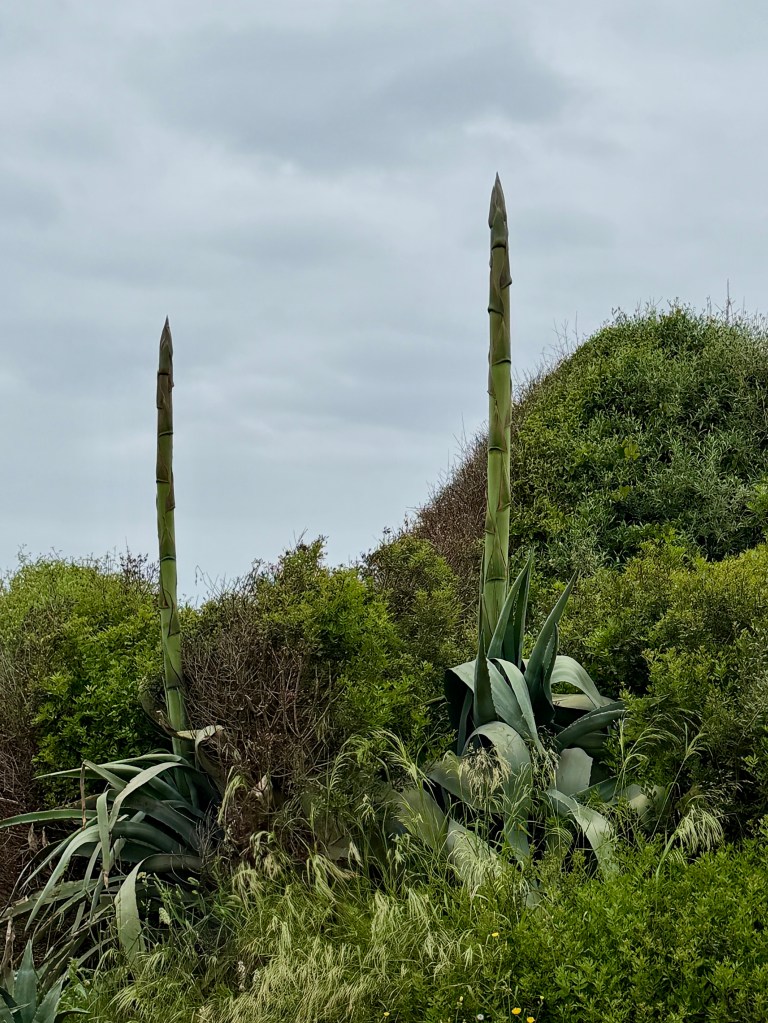
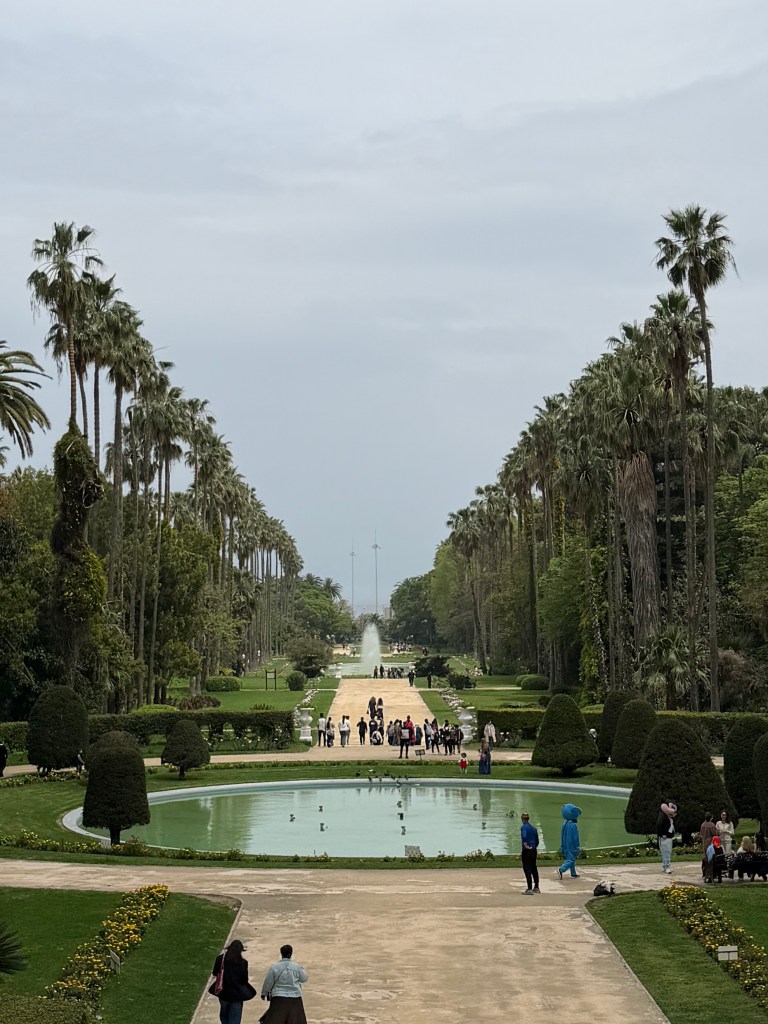
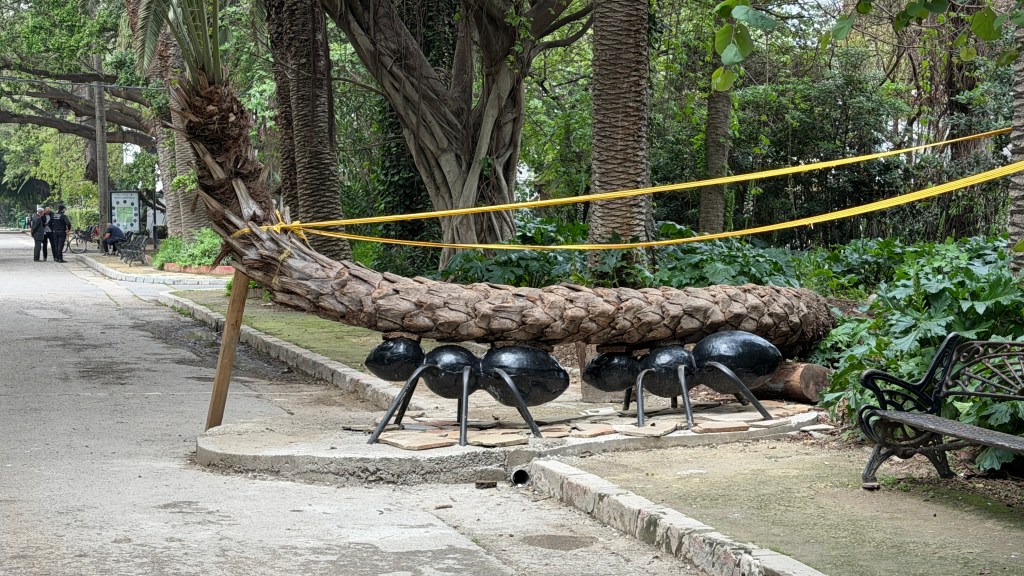
Our small group of 5 travelers spent several days in Algiers visiting local sites such as the Medina (the once-walled historic center of town) and the beautiful botanical gardens. There is a lovely banyan tree at the entrance to the gardens that local lore ascribes to one of the classic Tarzan films — the first starring Johnny Weissmuller (my Dad, also a swimmer, loved his films when he was a kid). Alas, several factors make this unlikely, however it is fun to speculate on how such myths, if this so be, come into being.
Modern Algeria has been significantly shaped by over a century of French rule, which ended in 1962 after an 8 year war for independence. The treatment of the Algerians by the occupying French forces was often quite brutal (see Vietnam); close to a million Algerians were killed by the occupiers just in the 19th century, in what some label a genocide. All so tragic. Yet, ties with France remain strong: French is widely spoken here, governmental structures were inherited, and the baguette is a staple of the diet (see Vietnam.)
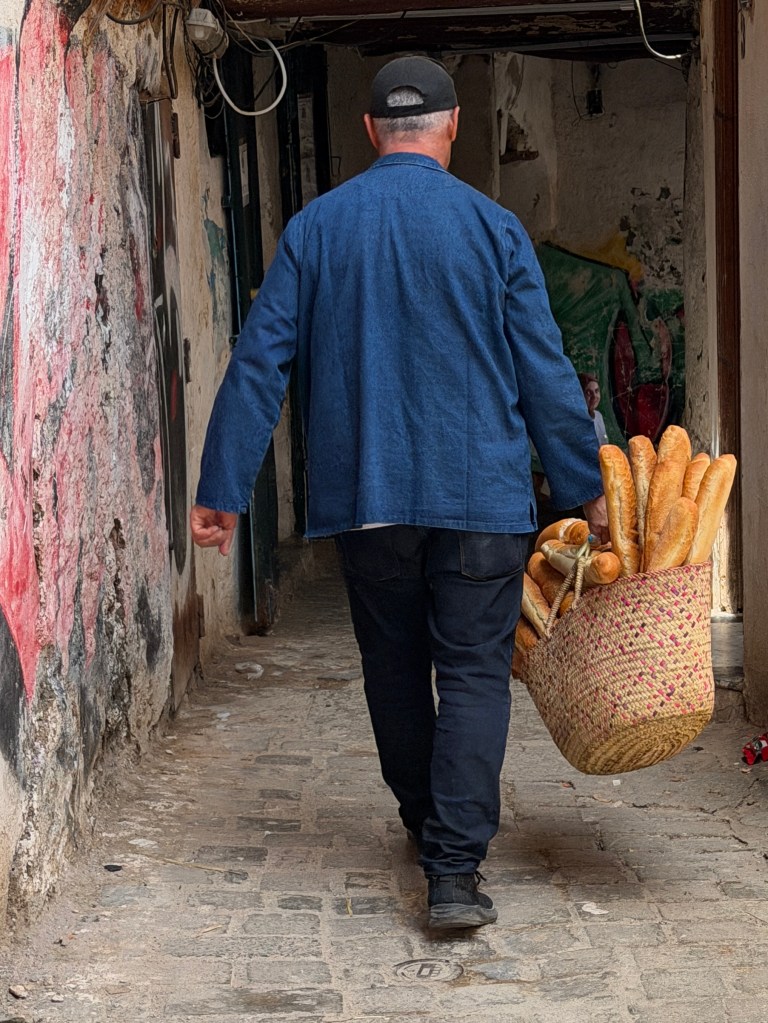
While still French in many day-to-day respects, modern Algeria is also a conservative Muslim country, both constitutionally and culturally. Most all women wear some form of head covering and it is not unusual to see women in full burqa attire (fully covered w veil over eyes) even in urban settings. Yet, as conservative as the country is, I have never, ever, felt more welcome in a place. Or maybe it is because Algeria is a conservative Muslim country: treating visitors as honored guests has deep roots in Islamic tradition and I experienced this consistently in my interactions with the locals. I wish that more societies were as embracing of strangers.
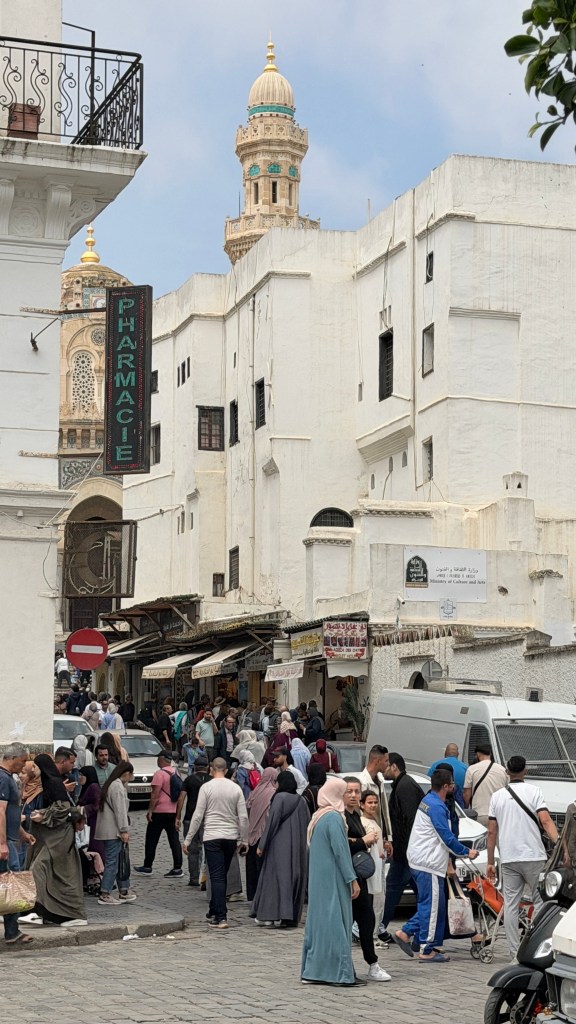
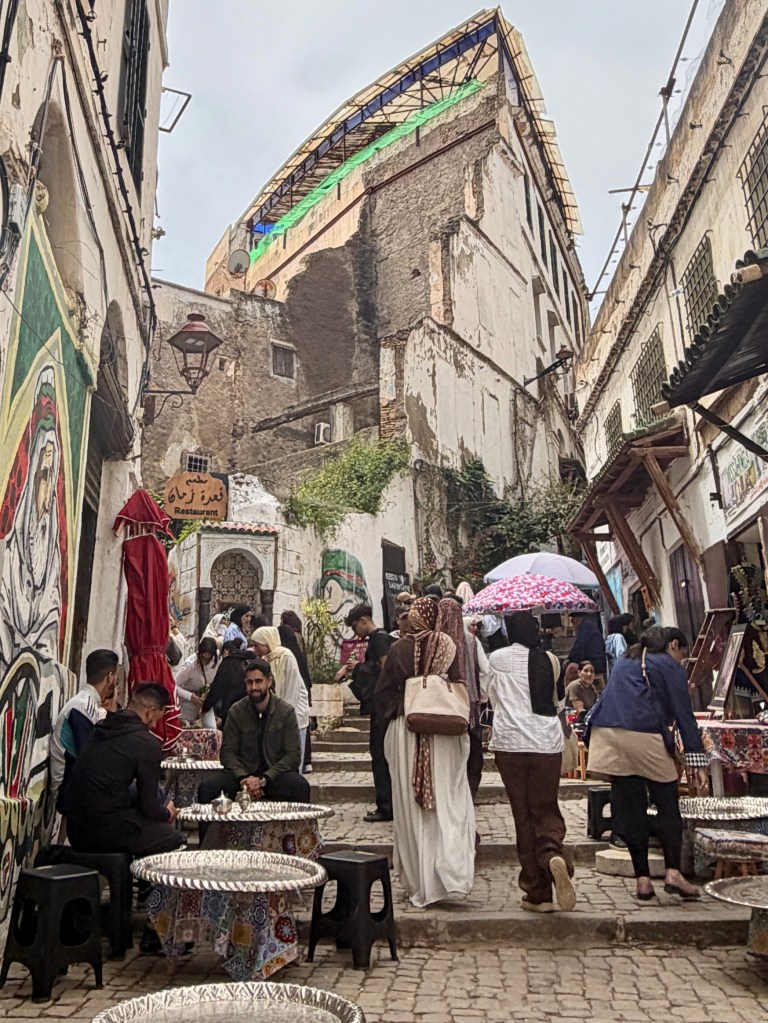
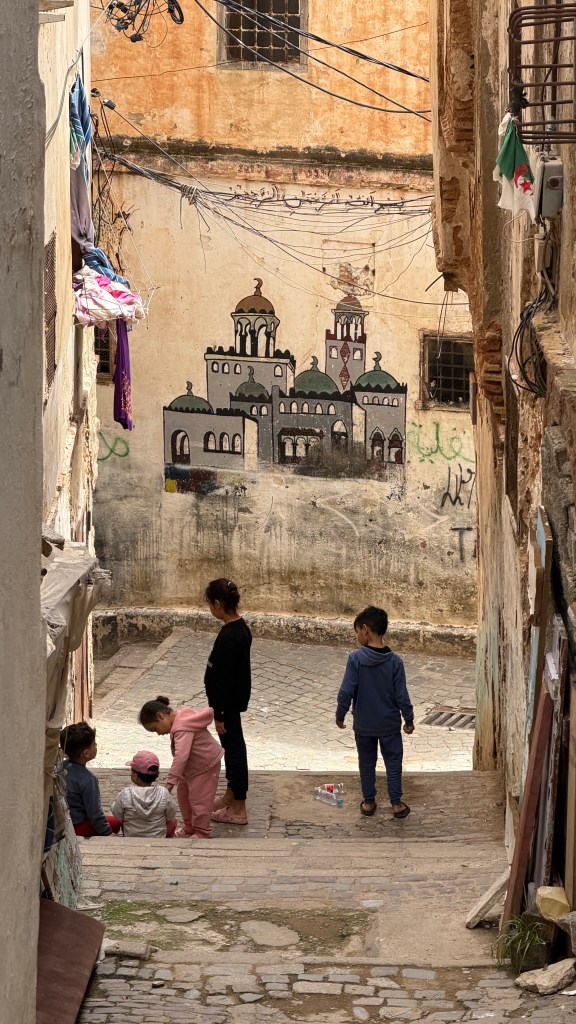
One of my favorite activities during our stay in Algiers was wandering thru the historic city center, the Casbah, much of which survived French redevelopment efforts. People still live and work here, as they have for generations, so it retains a particular and powerful sense of place. And, while it is true that I was embraced whenever I engaged with the locals, it is equally true that one is left alone whenever desired — which I appreciate. But it is a bit unique… One of the features of humanity that I have come to experience a fair amount is how we engage in trade with one another and how there seems to be a correlation between the level of touristy-ness and/or economic viability of a location with the, shall we say, level badgering experienced in the process. I have experienced vendors who have been very persistent and pushy, even in otherwise-welcoming Muslim societies, yet not once did I experience that in Algeria. Instead, it is a mix of welcome and respect that was encountered time and time over — that honored guest vibe in full force.
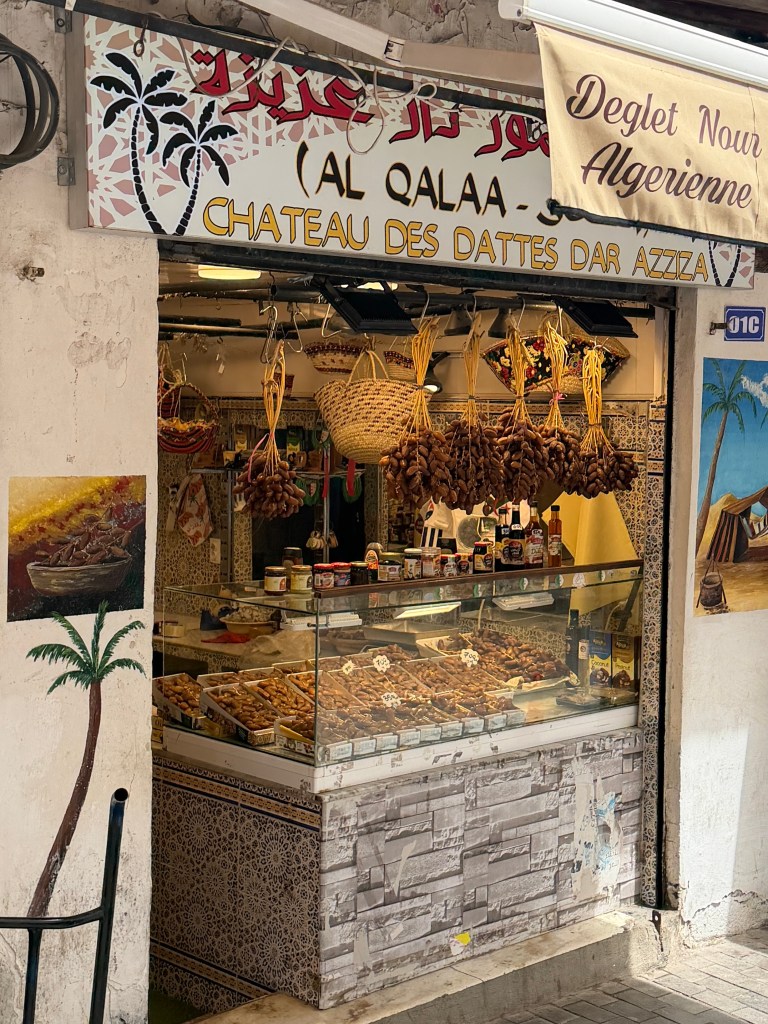
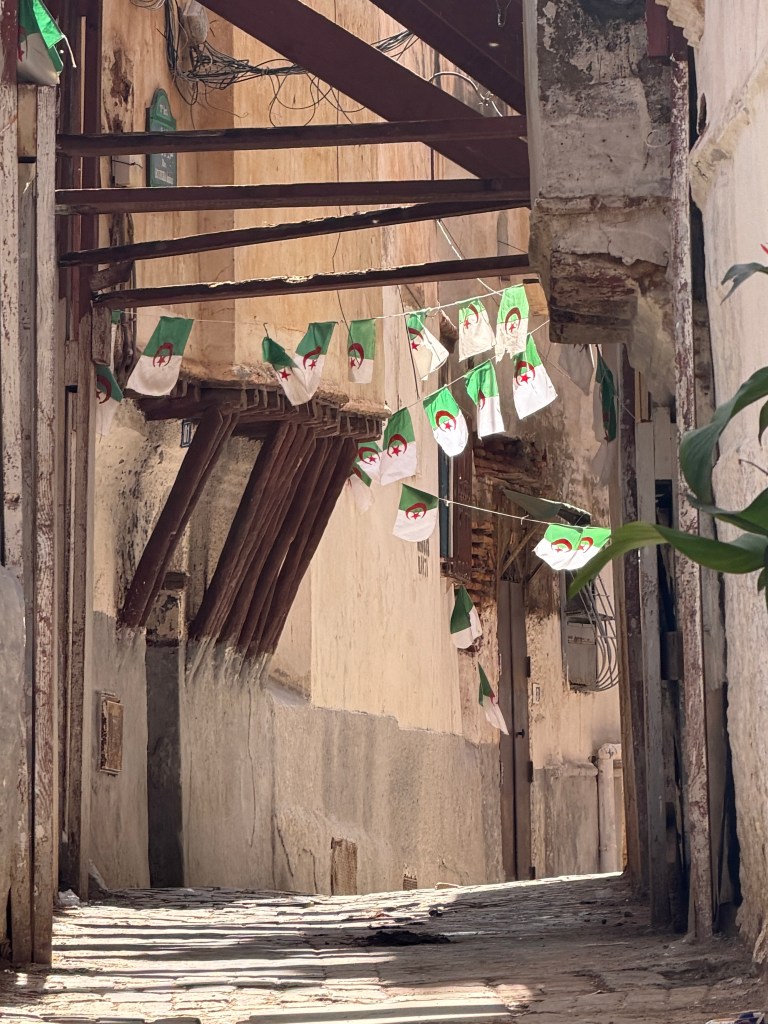
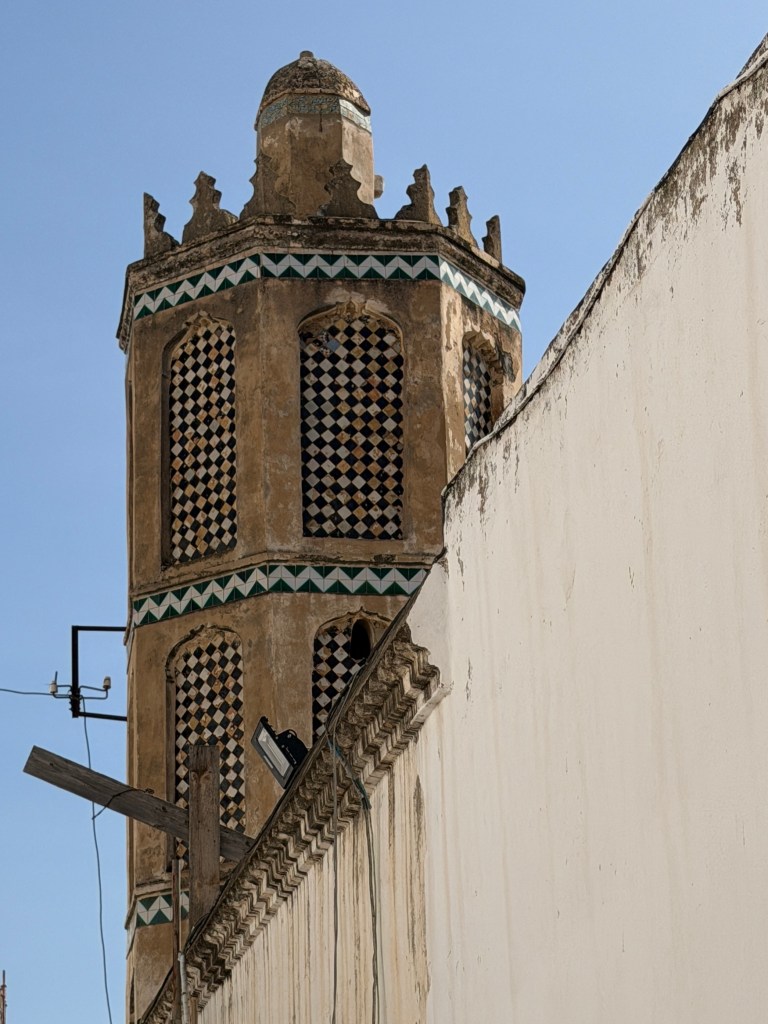
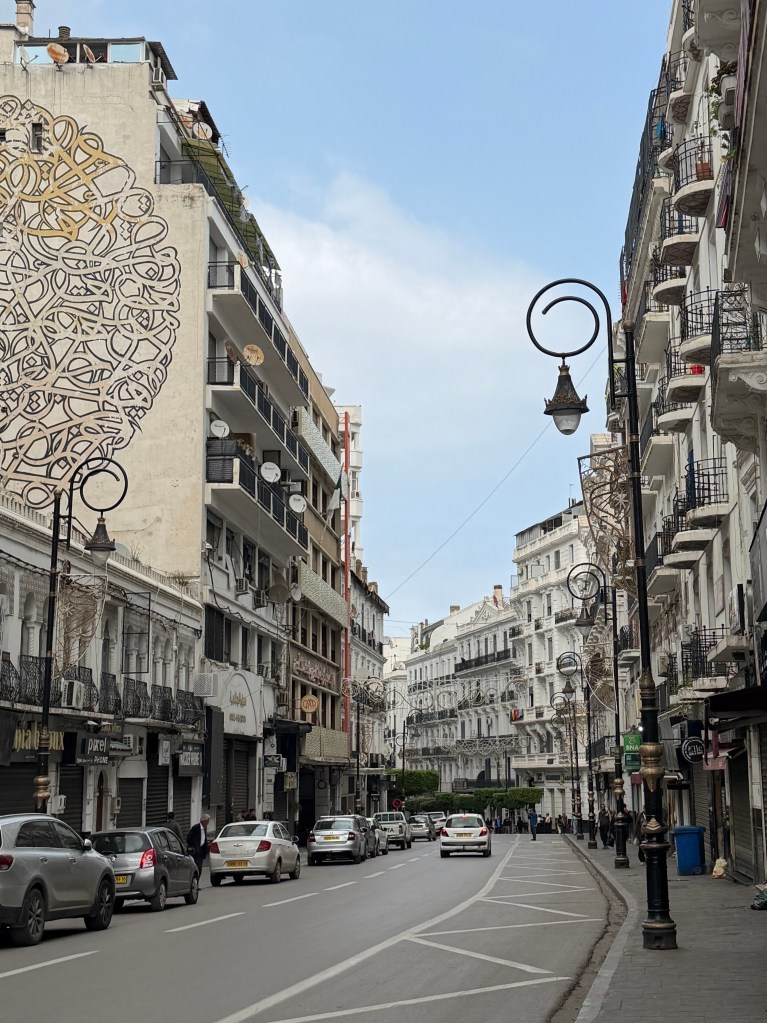
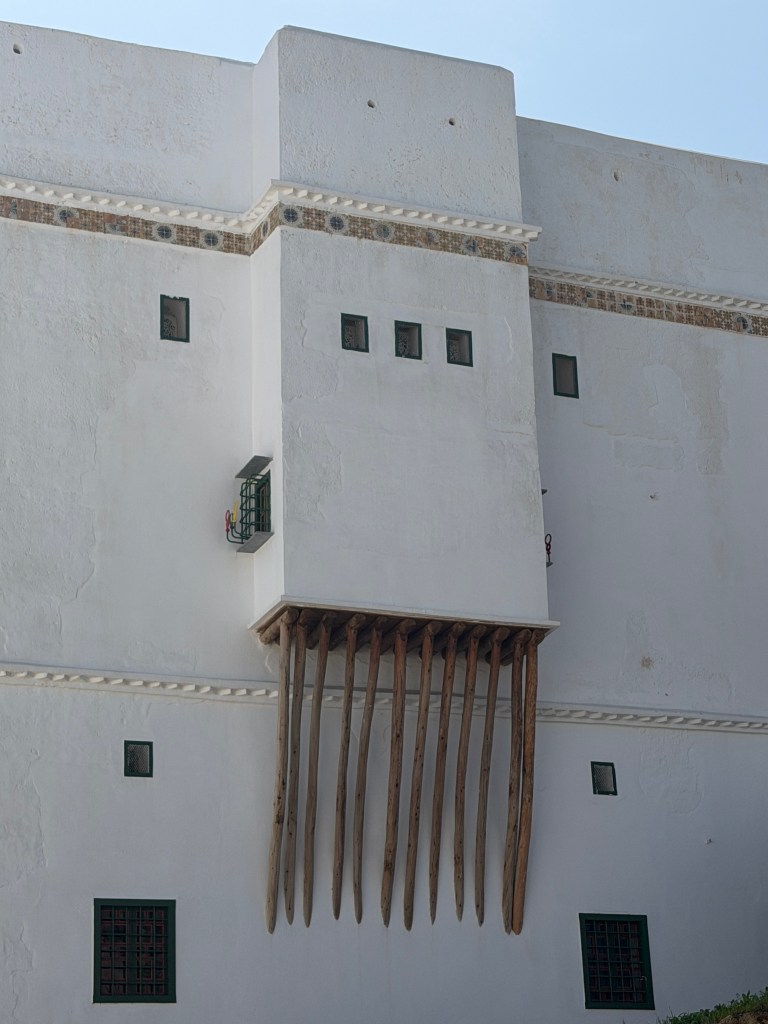
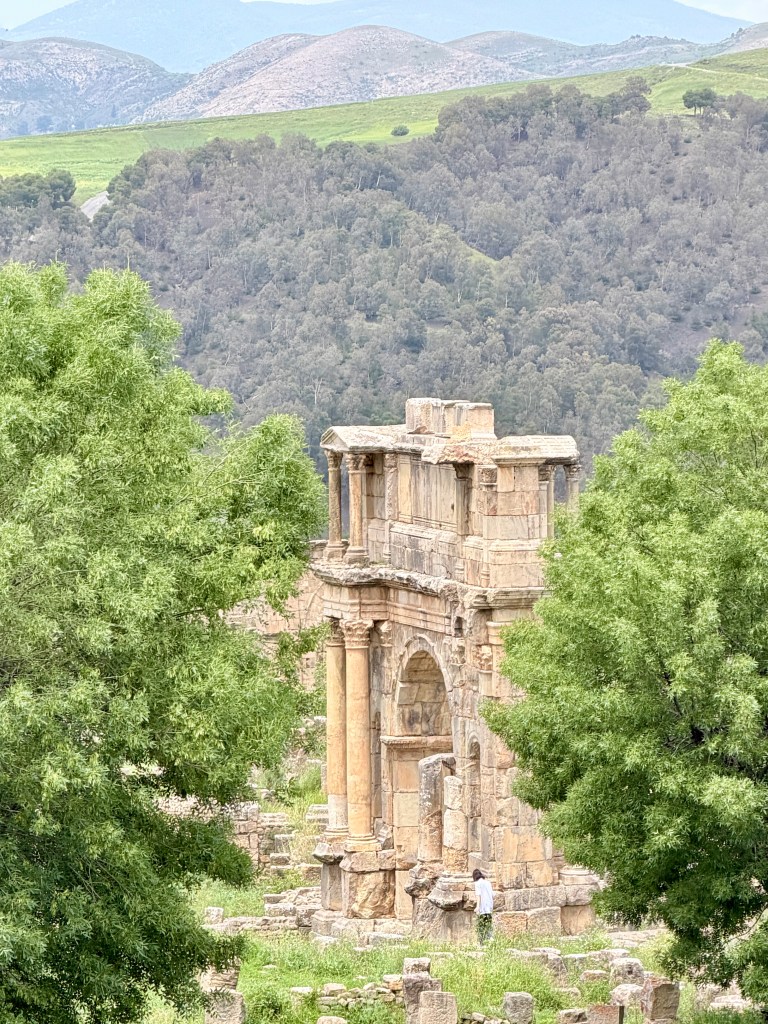
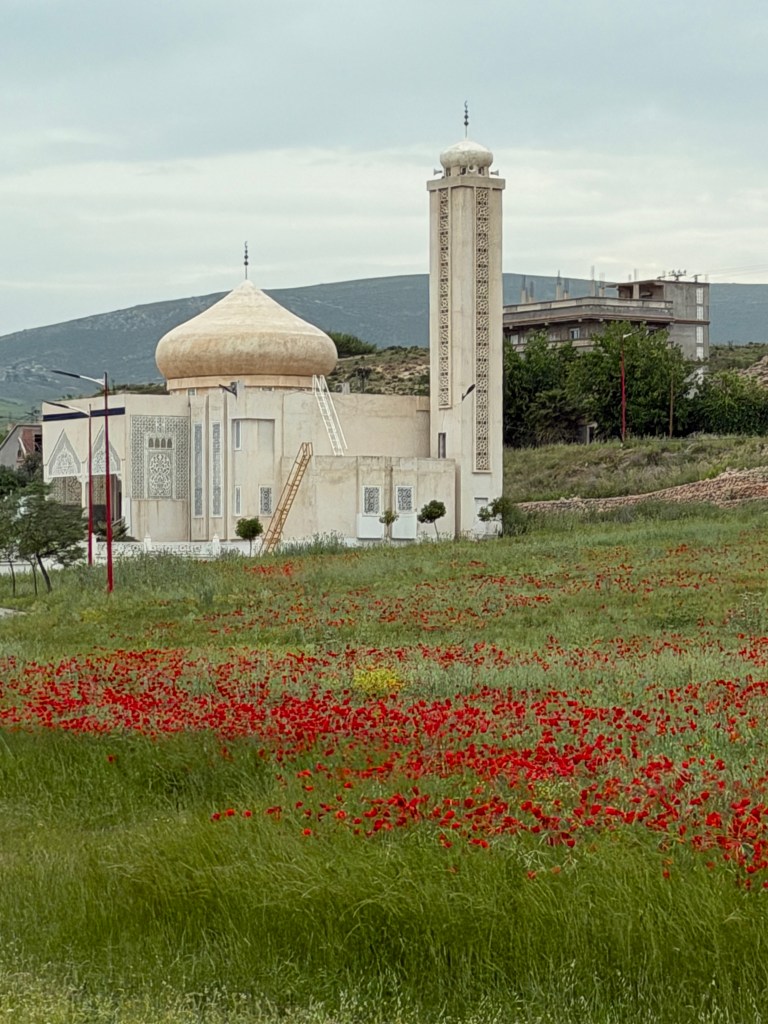
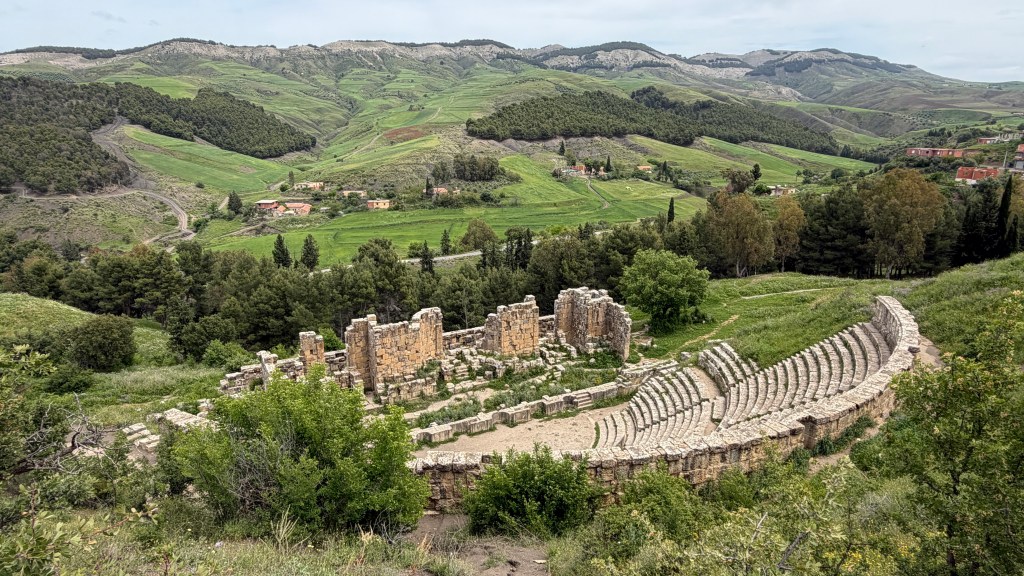
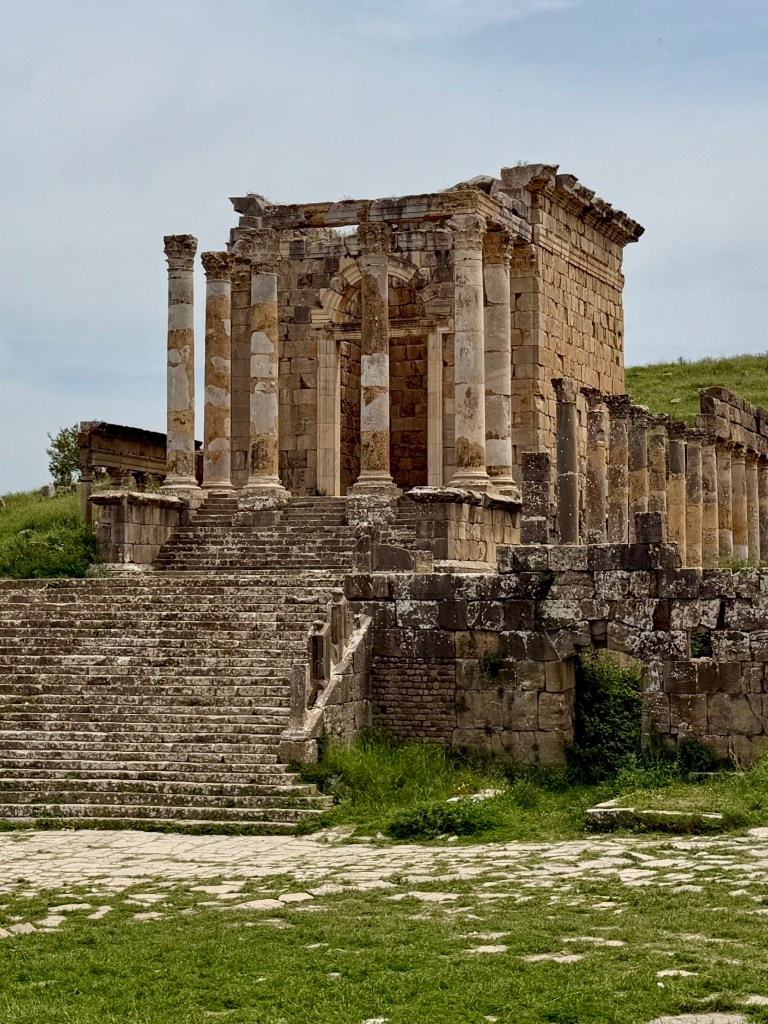
From Algiers we headed east through the late-Spring countryside; the wheat and barley harvest commencing soon, once the grain ambers. For now, huge brushstrokes of wild poppies streak the brilliant green fields with scarlet — so pretty and so pervasive. Our destination is Constantine, ancient hill city and our home base for the next few days. Along the way we visited the Roman ruins at Djemila (Arabic for beautiful). The Roman-era site, then called Cuical, has been abandoned for 1,500 years, ever since the Vandals, well… vandalized the region and once people began to resettle this land, they chose elsewhere to build. Thinking about such historical realities reminded me how much I love wandering through these ancient sites, envisioning what life may once have been like: that this was someone’s daily path, on these actual stones, on the way to their market, to meet up with friends, to engage in all that which constituted “regular life” back at the dawn of Christianity. I think parts of that life it would still be recognizable today, particularly in street markets in places across the globe where seasonal, locally grown food is all that is available, well, like here.
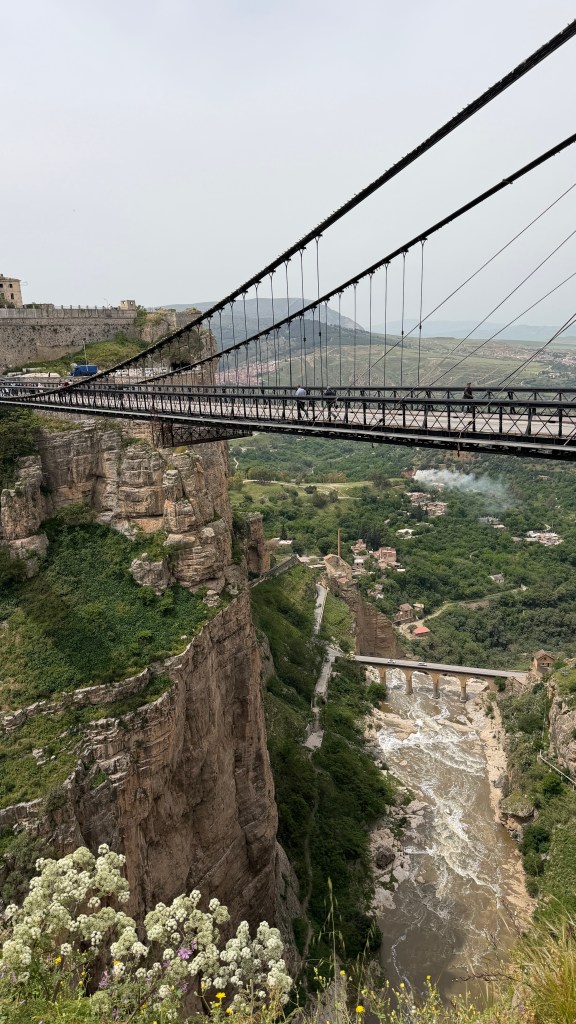
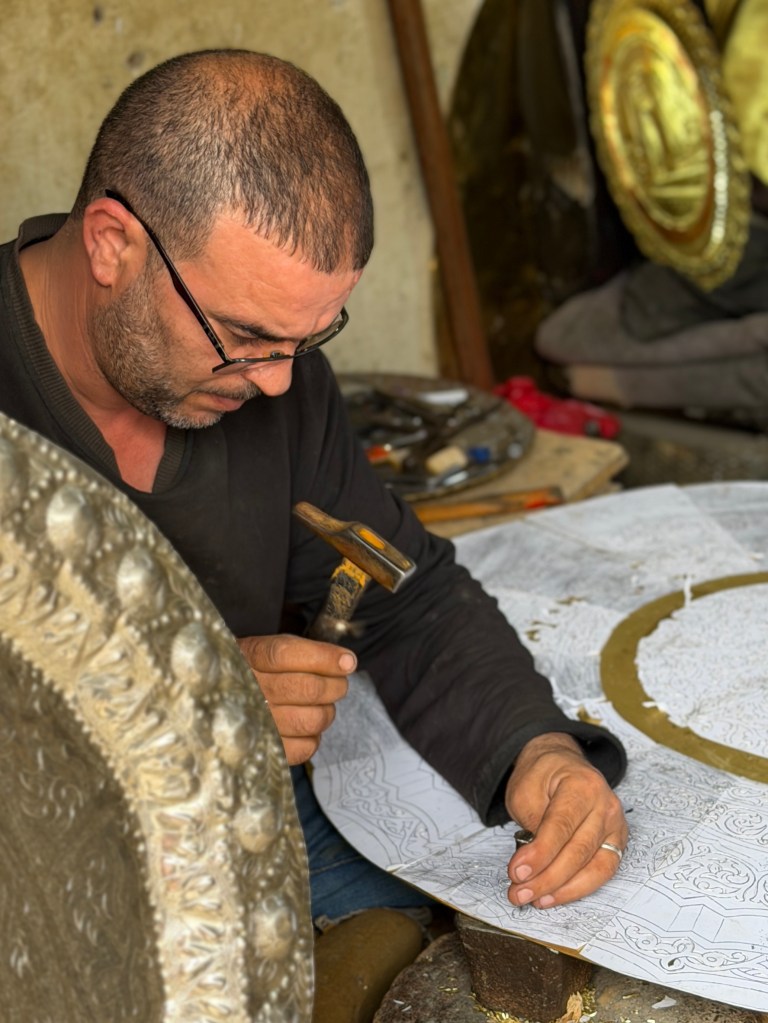
Constantine, Algeria’s largest city in the west, was our base for the next few days. We stayed within walking distance of the shops in old town and the tradespeople in the nearby copper market. Inhabited for millennia, but sculpted by eons, the steeply ravined land of Constantine is now known for its bridges: from Roman through French, each new building era saw construction taking place farther up from the river, leading to dramatic vistas today. We also wandered the nearby ‘copper’ market (air-quoted cuz they use many metal sheet goods, but mostly brass). It was super cool feeling so welcome that I could plop down next to an artisan for an up-close demonstration. Language rarely presents itself as an obstacle, particularly when the situation is approached with positivity and curiosity. Love these moments.
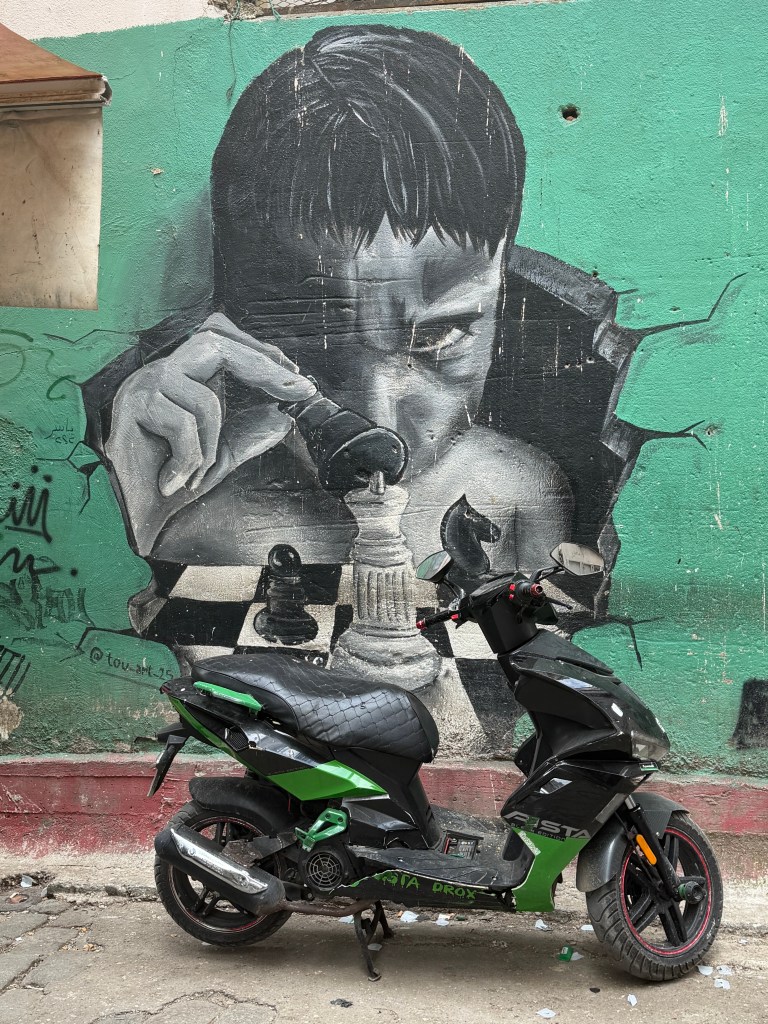
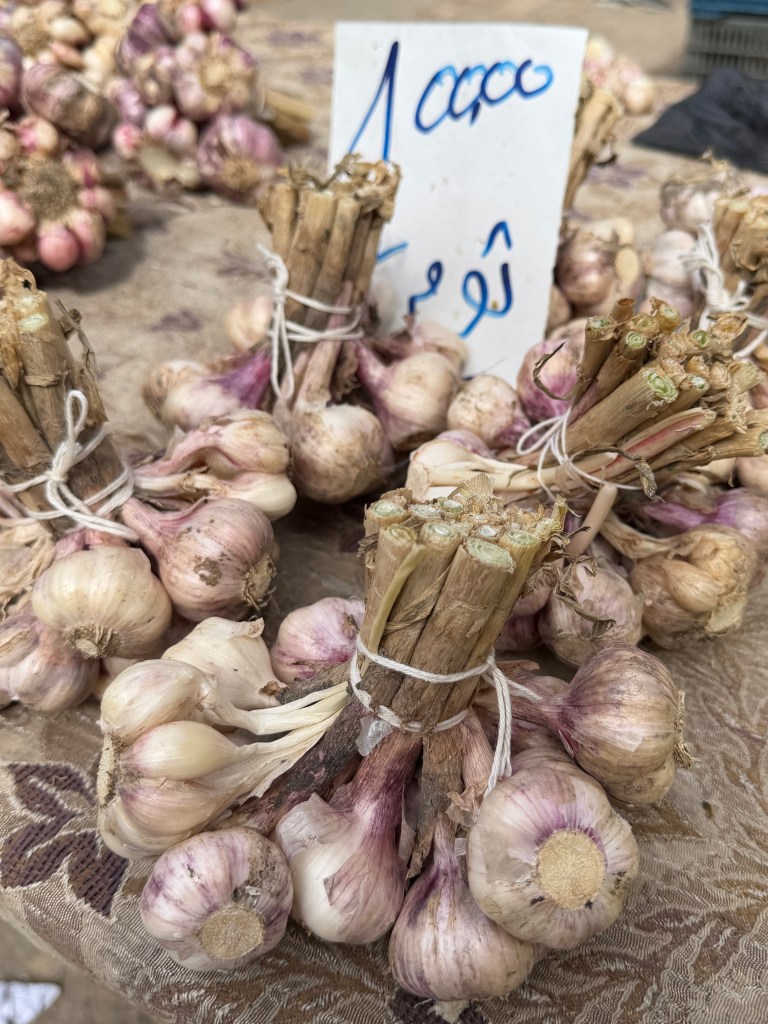
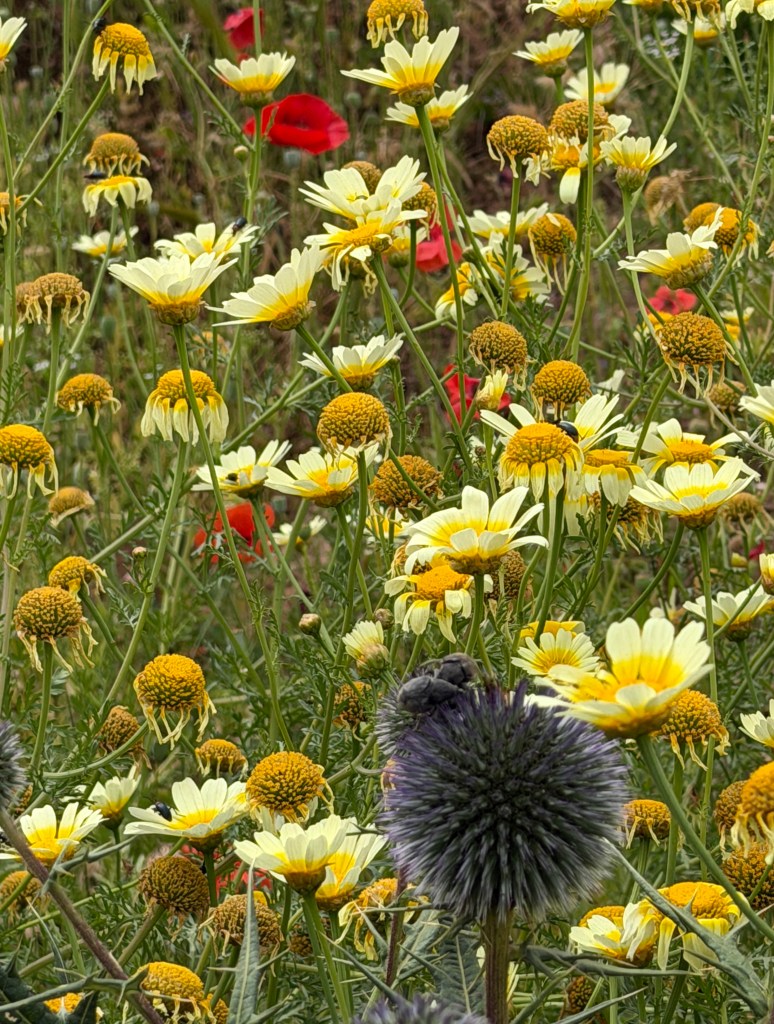
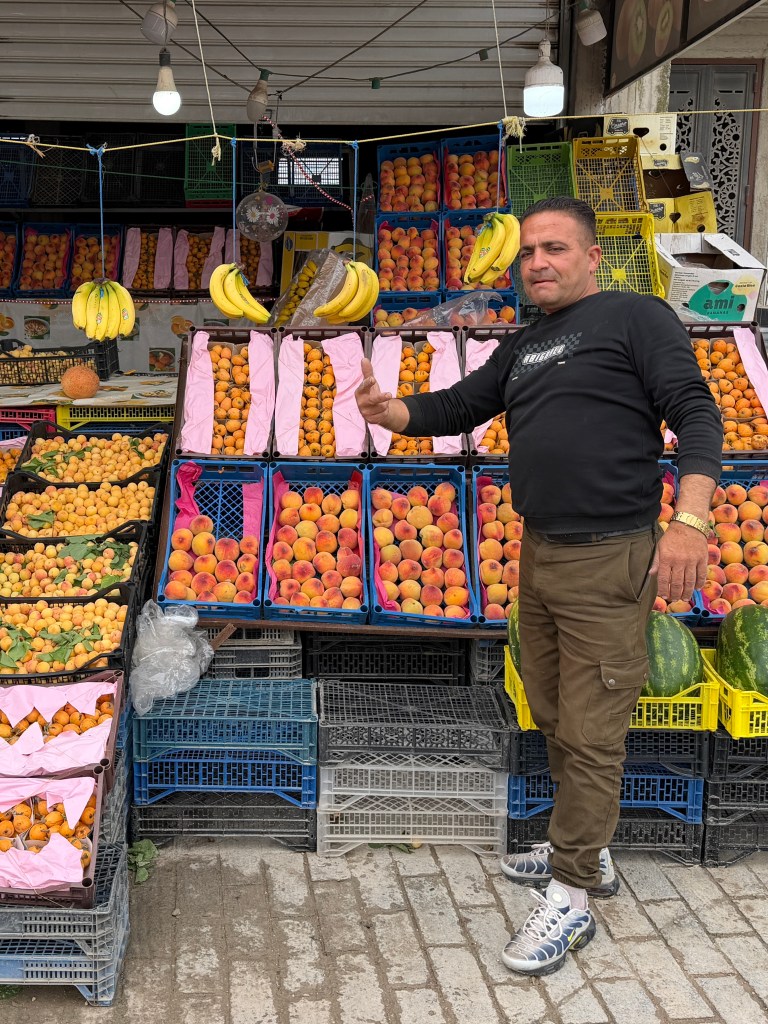
One more Roman town awaited — and a unique one because it was one of the few without a regular source of water. The Romans grew the town of Tiddis from an existing Berber village where they used cisterns for water storage; abundant arable land and plenty of limestone filled out the other urbanization requirements for the Romans. The day we visited was peak wildflower time in the hills, reminding me how much a gift flowers are to our lived experience. Our lunch that day was one of my favorites: a rural town, a bakery (where everything they sell is made that day) and a fruit stand (where everything but the bananas was grown nearby.) The icing on that cake was my interaction with the fruit guy — each of us using our broken French to communicate, including him wanting to be photographed with his bounty of stone fruits. I so enjoy these spontaneous interactions with folks along this journey.
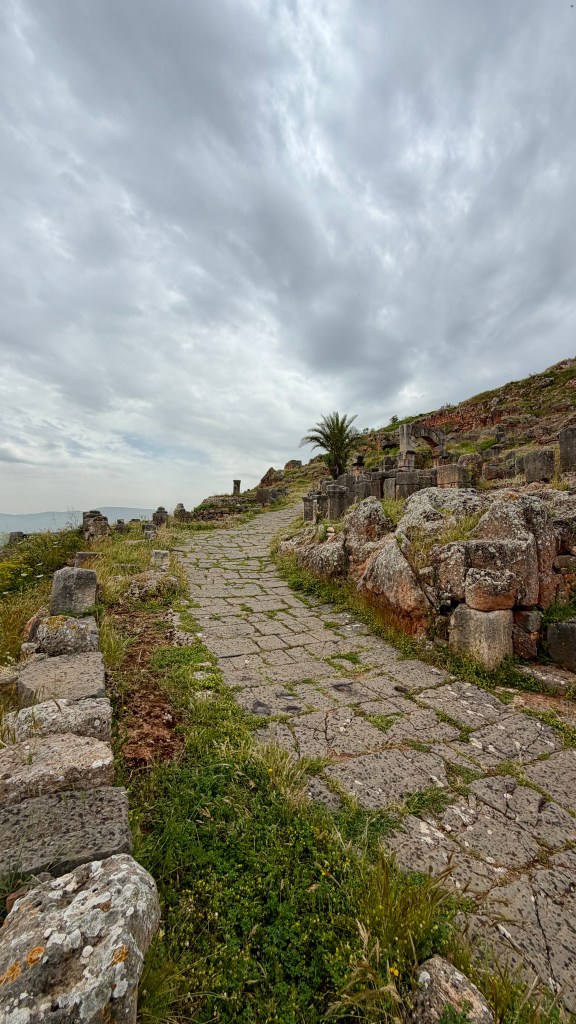
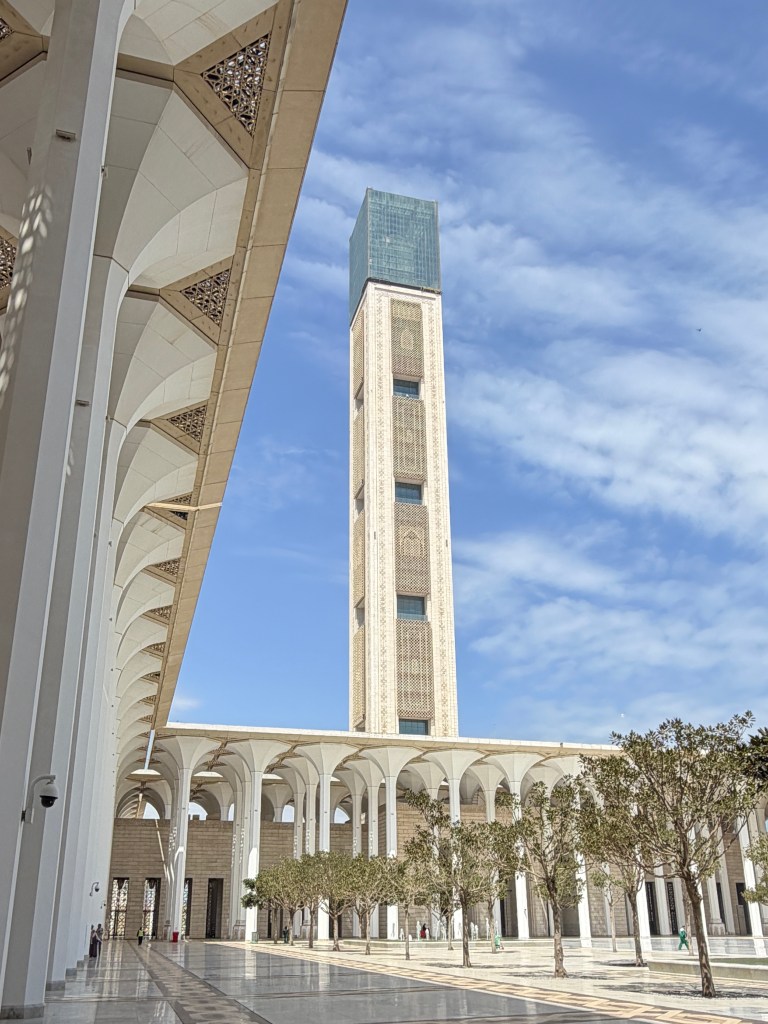
On our way back to Algiers for the flight to Tunisia, we spent time at the Great Mosque of Algiers, the world’s third largest (behind Mecca and Medina) and boasts the planet’s tallest minaret. While the mosque is quite interesting, the most fun thing about the visit was what happened to my fellow travelers in our small group. All female, my four compatriots, along with our local Algerian female trip leader (who was awesome) were upstairs in the women’s section (mosques are traditionally segregated by gender) where they met a group of local women and fell into a long conversation. The locals wanted to practice their English and learn about life in the States. The travelers were curious about family life, school, women’s role in Algerian society — apparently the conversation was wide ranging. Off-camera, the women literally and figuratively opened up to the travelers, doffing their burqas and niqabs and eagerly discussing their lives. What an amazing experience this turned out to be, for all involved.
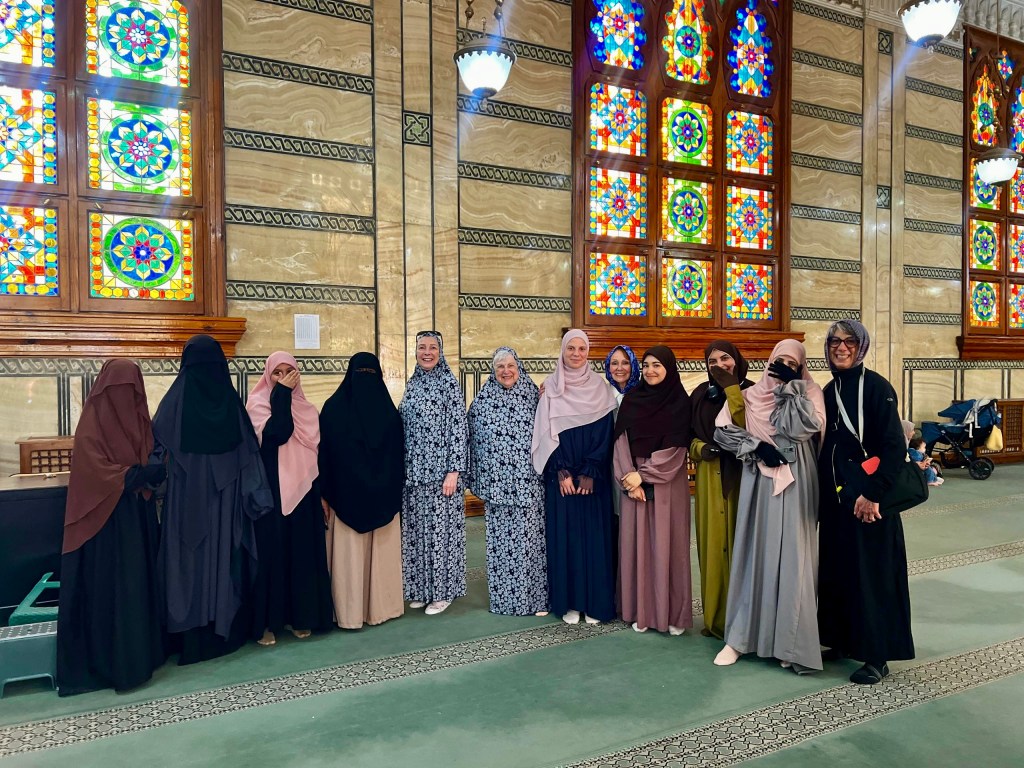
I wouldn’t be surprised if this interaction is one of the first things my colleagues think of next year when someone asks about their Algeria experience. I do love such spontaneous moments as they shine a warm light on the commonalities amongst humans and between societies. And it well illustrates our species’ social super-power: cooperation.
As I digest my Algeria experience, I am left with a deeper respect for the concept of welcome. Although it has been a consistent attribute of the predominately Islamic countries of the Mediterranean I have visited, it felt most tangibly in Algeria. As a visitor, a stranger, certainly an outsider, to be treated as a dear guest is a heartwarming experience and, frankly, makes for a far more enriching connection between local culture and traveler. May you find it so when you are welcomed in Algeria.


Leave a Reply