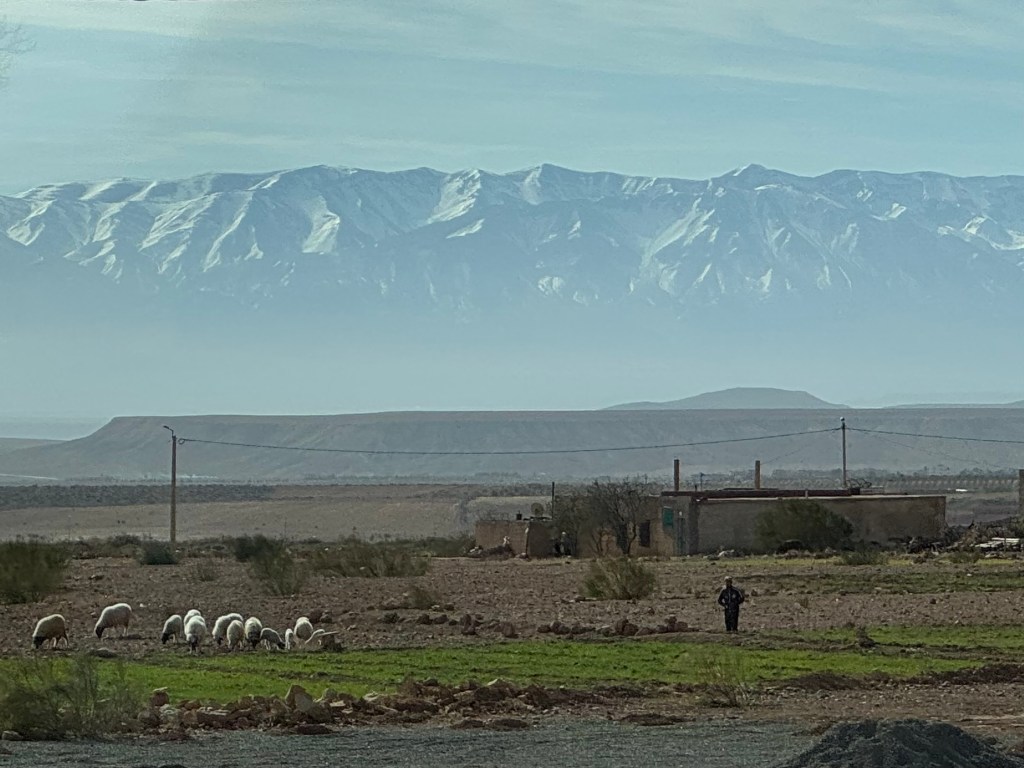
The populated northern half of the country is generally hilly, if not downright mountainous; after all, this is the part of the continental plate that is gently, yet persistently, crashing into the Iberian peninsula. The Atlas Mountains formed thus and also formed a barrier to the Sahara to the east and south. Or, barriers, I suppose: the High-, Middle- and Anti-Atlas are some of the subranges that make a large part of northern Morocco a blend of high peaks and arable valleys. This geography, and the hard-scrabble nature of much of it, provide a set of habitats that meshed well with nomadism — the way of life for most of the myriad Amazigh tribes over the ages.
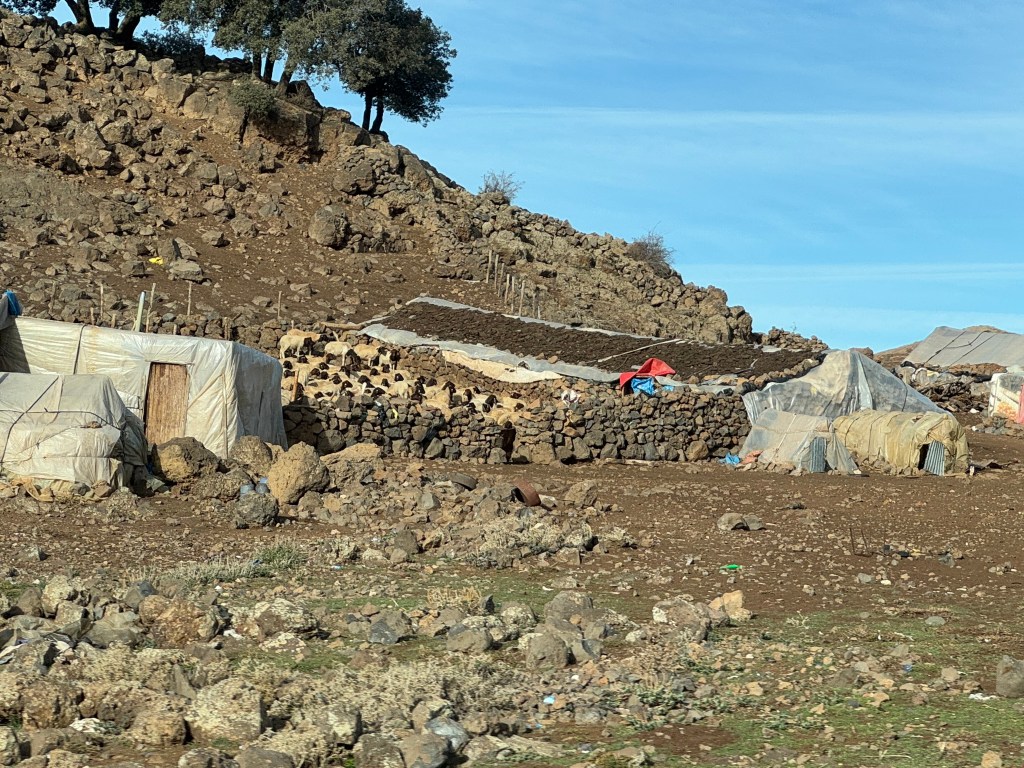
Knowing that some form of interaction with a nomadic family was on the itinerary soon, I was curious about how their lives are evolving as society, and even their land, changes around them. Numbers are dropping each census; the forecast is for only ~10K nomads left this year, down from 70K just 20 years ago — with climate change competing with social changes as primary driver of this sedentarism (and both are ramping up.) Certainly our trip through the mountains suggests a healthy array of seasonal encampments and communities, but also illustrate (from afar, at least) some of the challenges of a life of pastoralism: the onward creep of modernity, a drying climate and, frankly, there is just less of a need for goat herding these days…
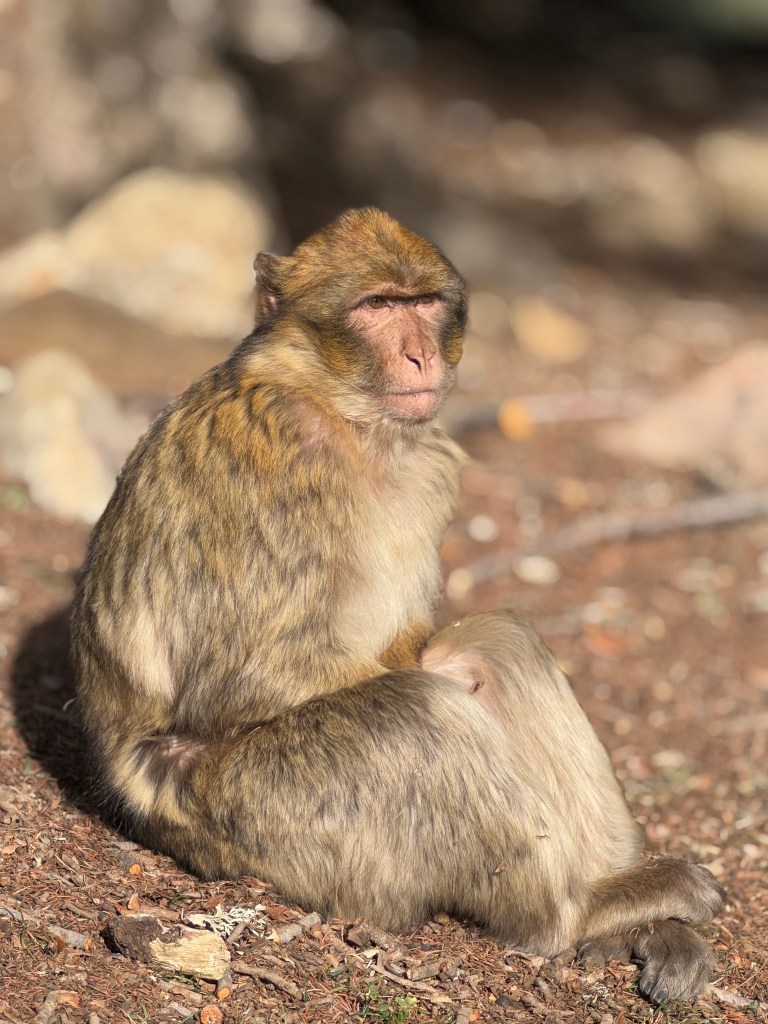
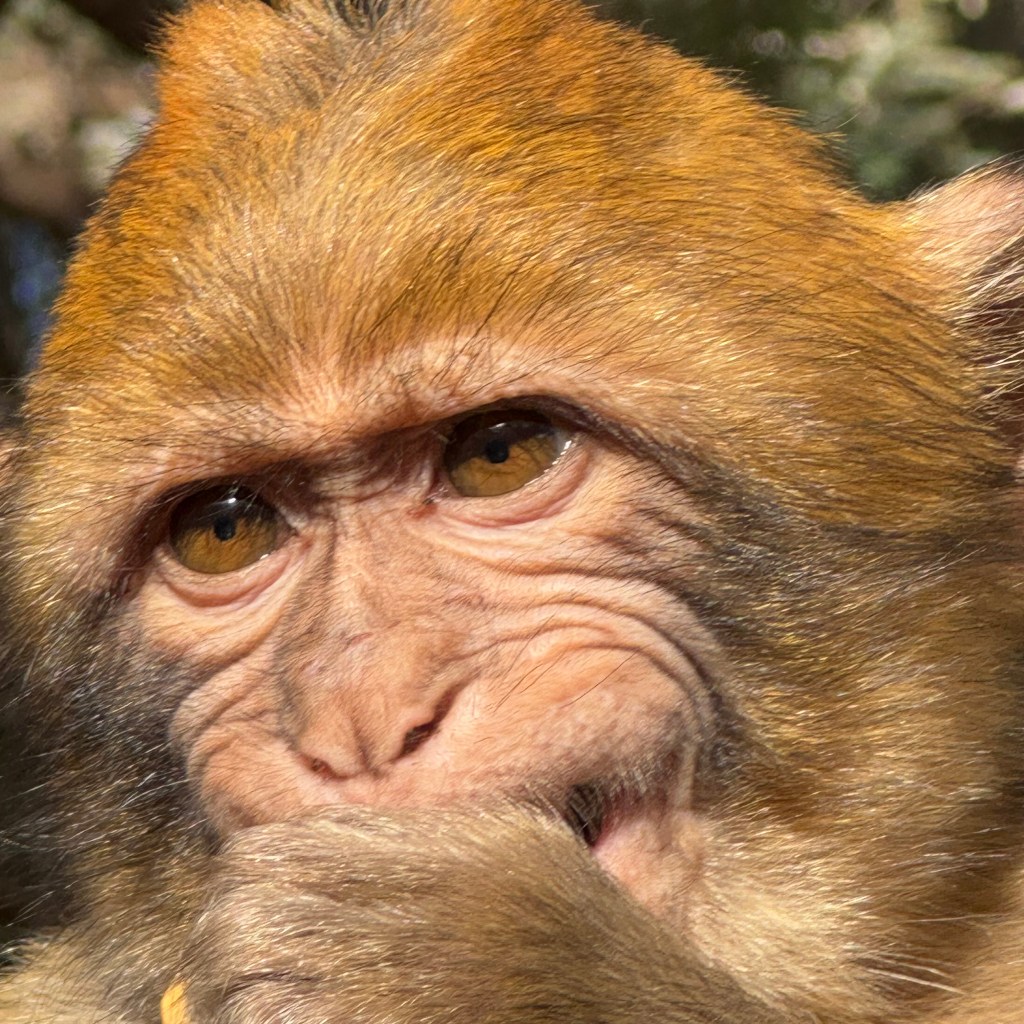
In the Atlas’ mid-altitudes, cedar forests support colonies of Barbary macaques — the same kind that were introduced to, and remain in, Gibraltar. While some wild groups remain, and are nomadic within their seasonal range, some of their brethren been touristified and have settled into a (presumably) symbiotic relationship with some human minders (local Amazigh) that provide peanuts for tourists to buy to feed to the monkeys, providing a reliable, if homogenized, diet for the macaques with little to do but pose for tourists. I do worry that such arrangements simply teach the monkeys one of humans’ worst traits, that of lazy consumption. Full disclosure: I broke my own rules regarding not feeding wildlife by giving them some of my cashews — they must have gotten me all snake-fascinated with that piercing stare of theirs…
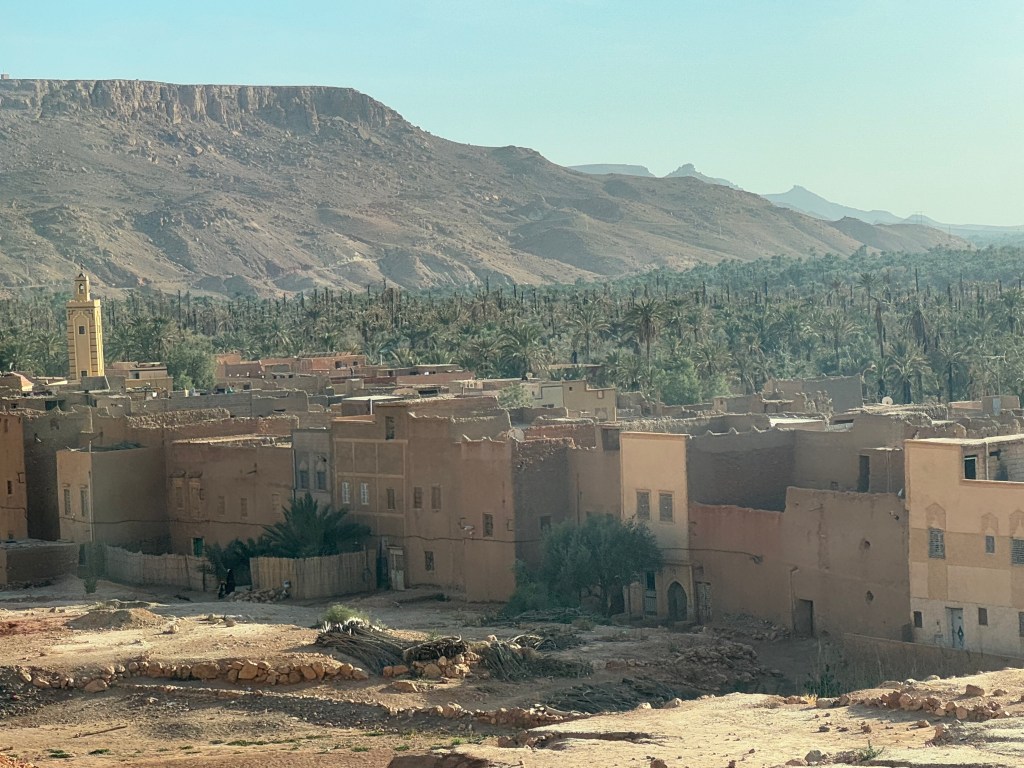
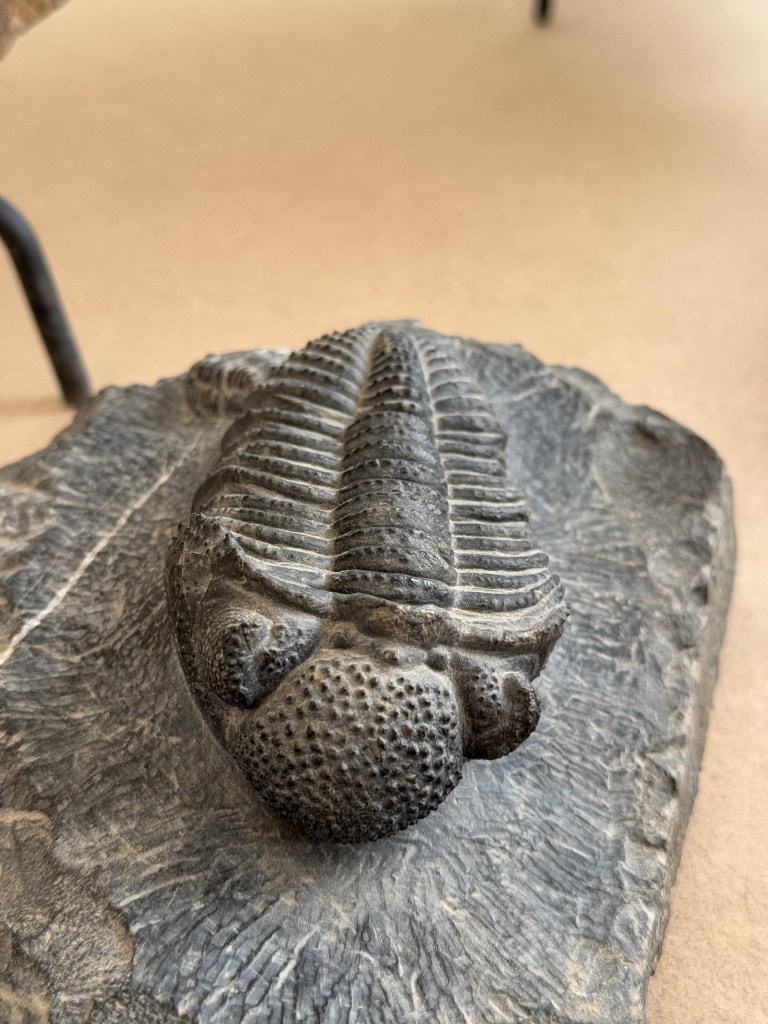
As the mountains give way to flatter lands, small adobe-brick villages, some many centuries old, are seen amongst the date farms. In Erfoud, one of the largest cities in the area, we stopped at a fossil shop to understand the process from collection to presentation. Having had an interest in paleontology since finding a fossilized shark tooth in the Chesapeake as a kid, I found this stop super-interesting. What is now Morocco was once seabed, teeming with trilobites and ammonites and Erfoud is the primary center for fossils in the country. Would be neat to come back to experience the hunter-gatherer part of the process…
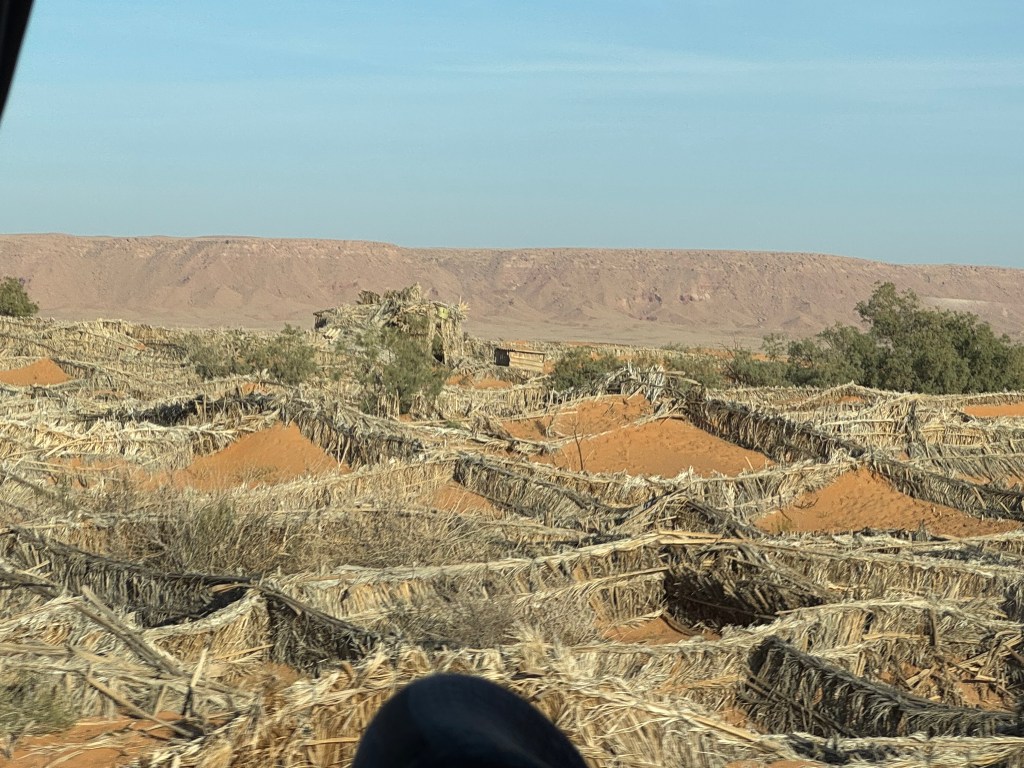
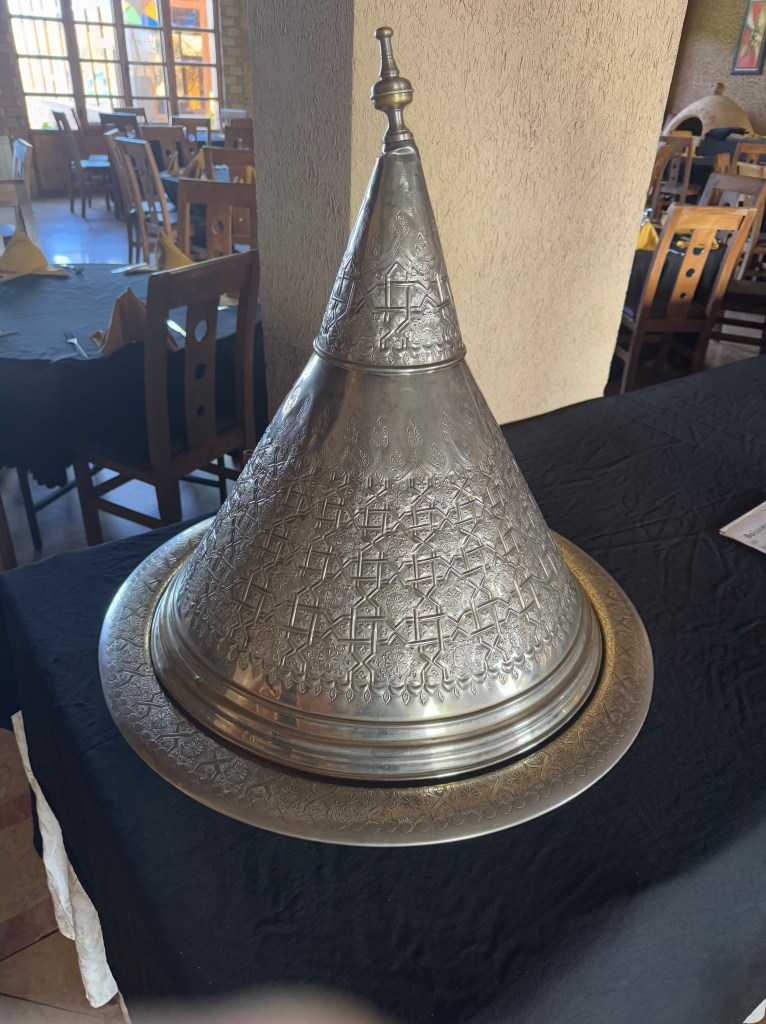
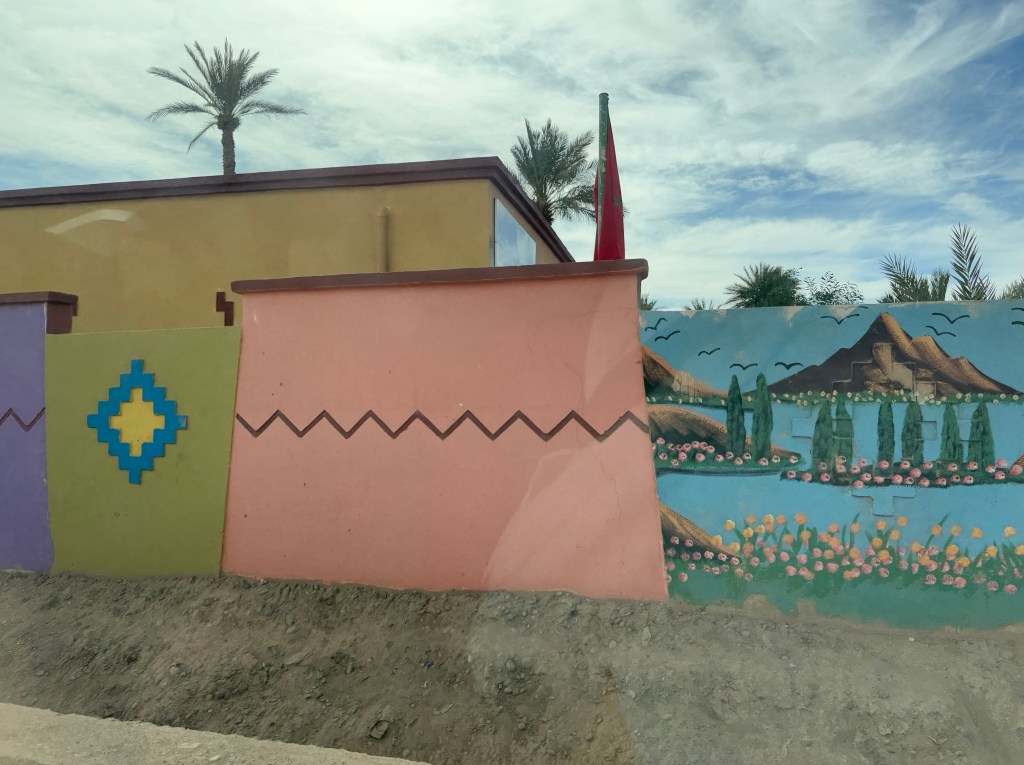
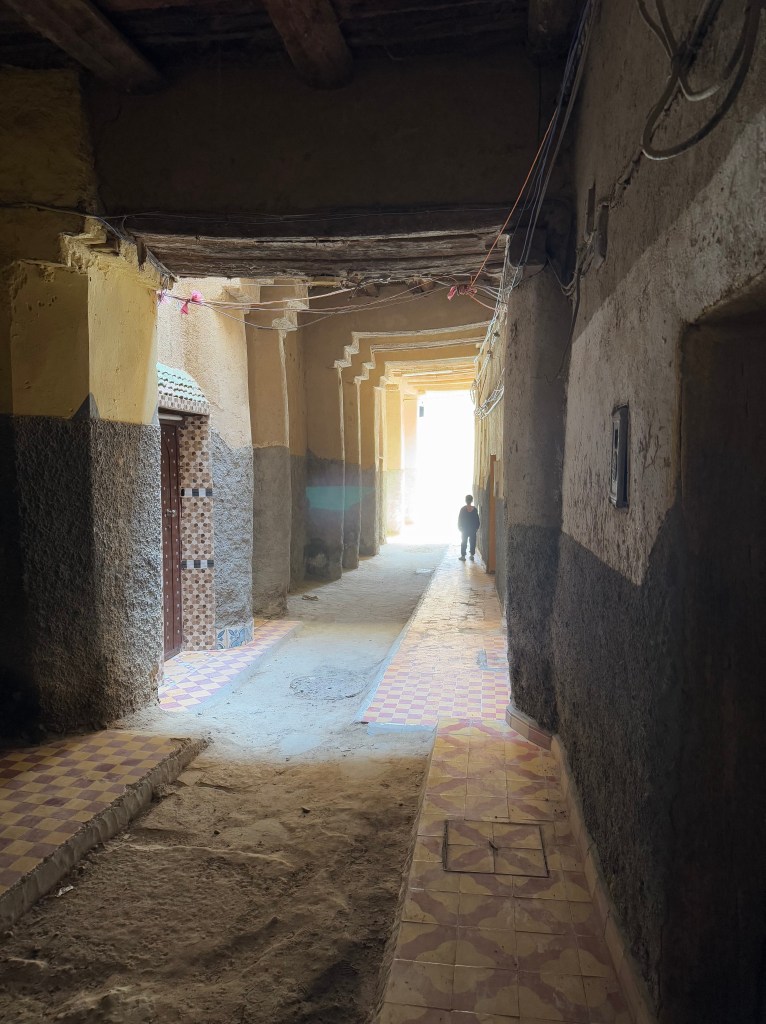
Further along the way south, we stopped in the town of Rissani to visit a ksar, a typical Amazigh apartment block/fortified village. Made from ubiquitous local adobe brick, and well-adapted to the climate with strategically placed light wells and ventilation shafts (and highly secure from marauding bandits back in the day), there are still thousands of inhabited ksars in use across the country. The one we visited in Rissani dates from the 16th century and houses 1,400 people. It has been renovated for electricity and running water — alas, no air conditioning though… Interestingly, until the 1970s, this was the only kind of residential structure in Rissani and much of the country.
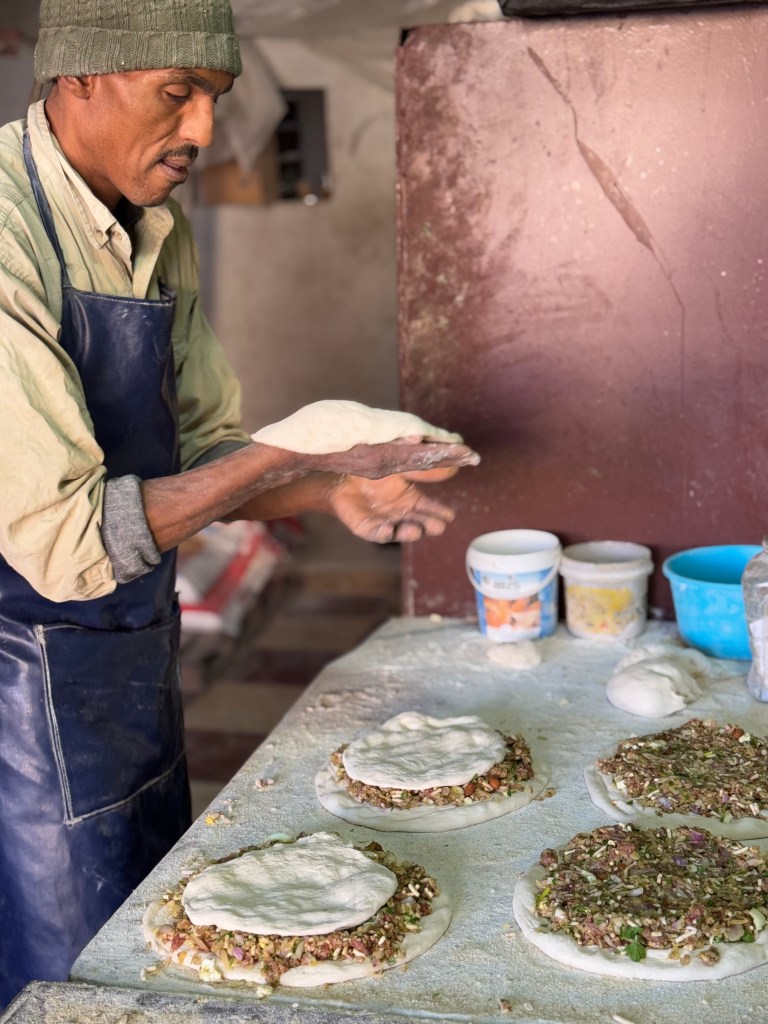
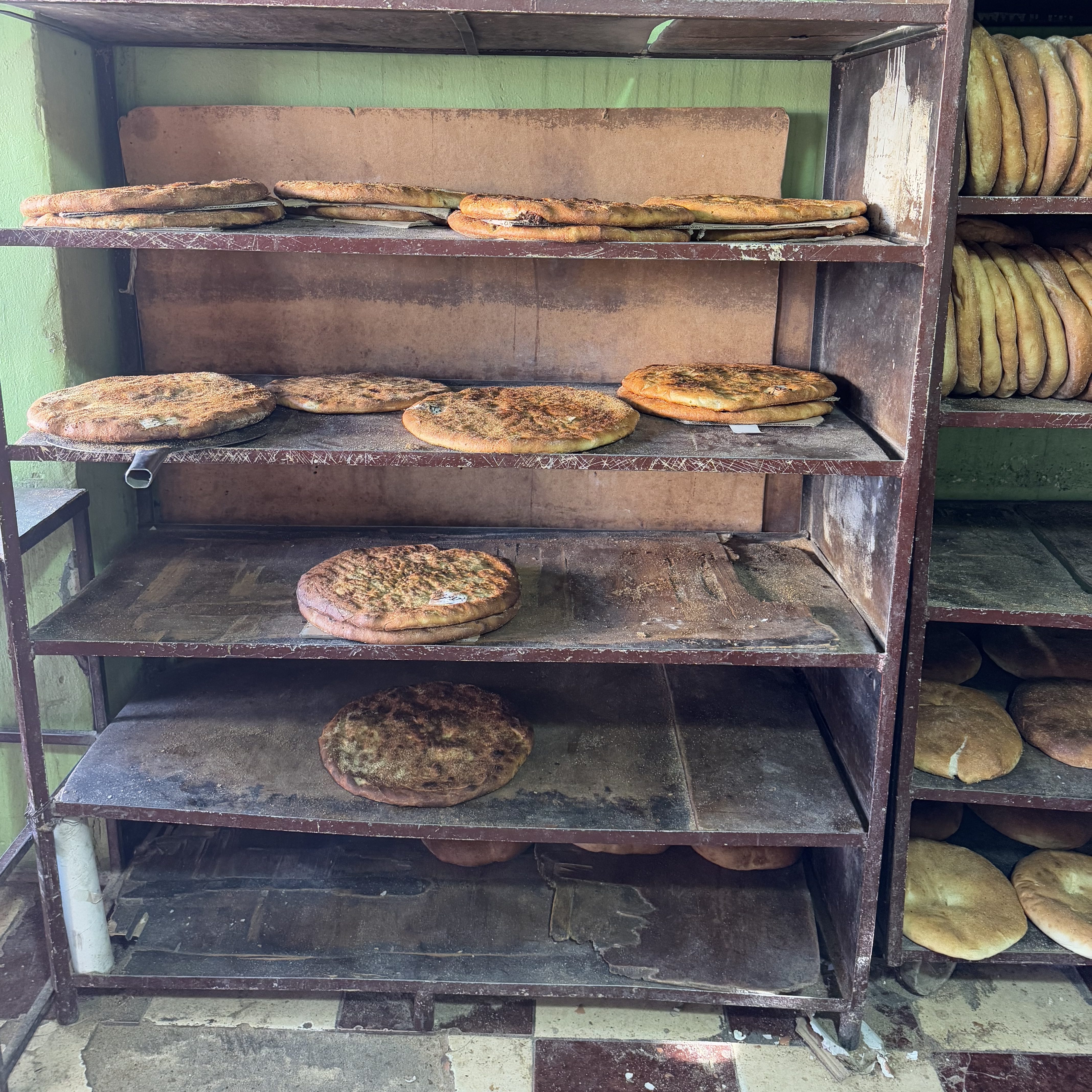
Further along on our walk, we took in the souk (marketplace), the adjacent sheep and goat market, and ended up at a bakery that specializes in madfouna, essentially a stuffed pizza that the local Amazigh have been making for generations — some refer to it as a “Berber pizza.” I refer to it as delicious.
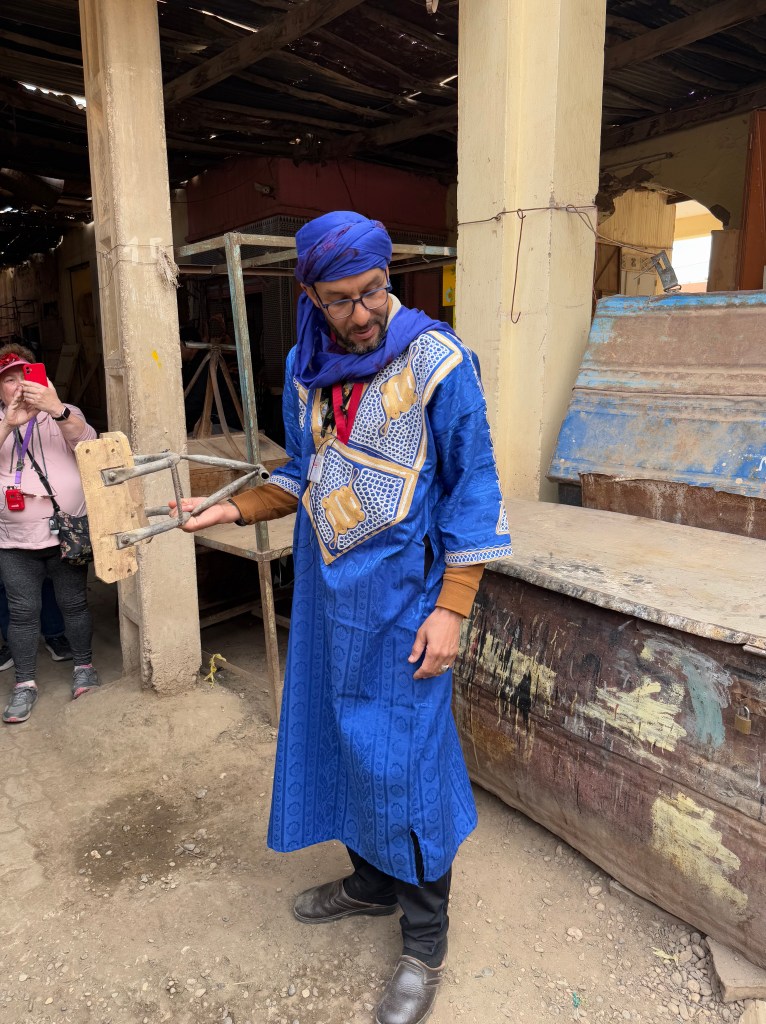
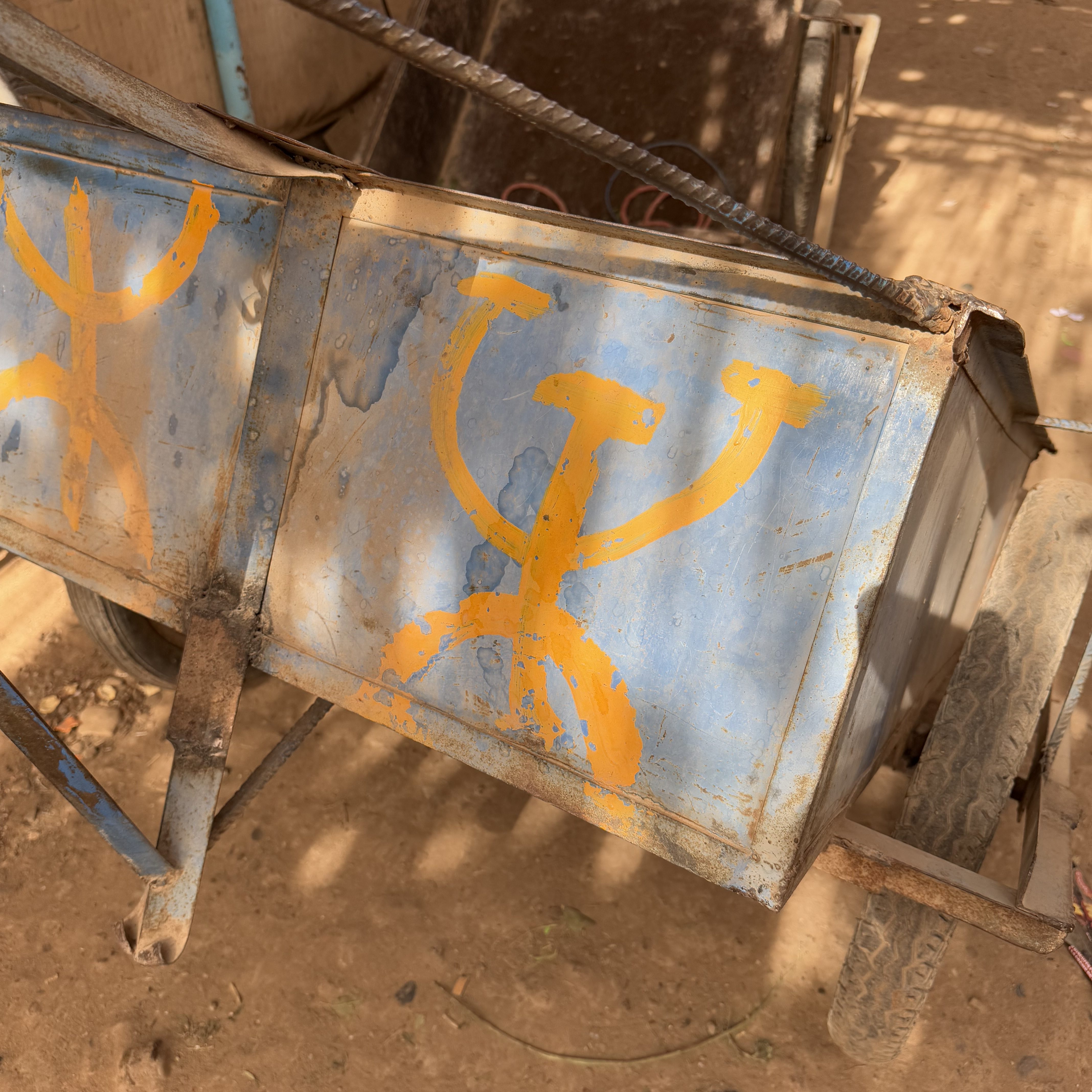
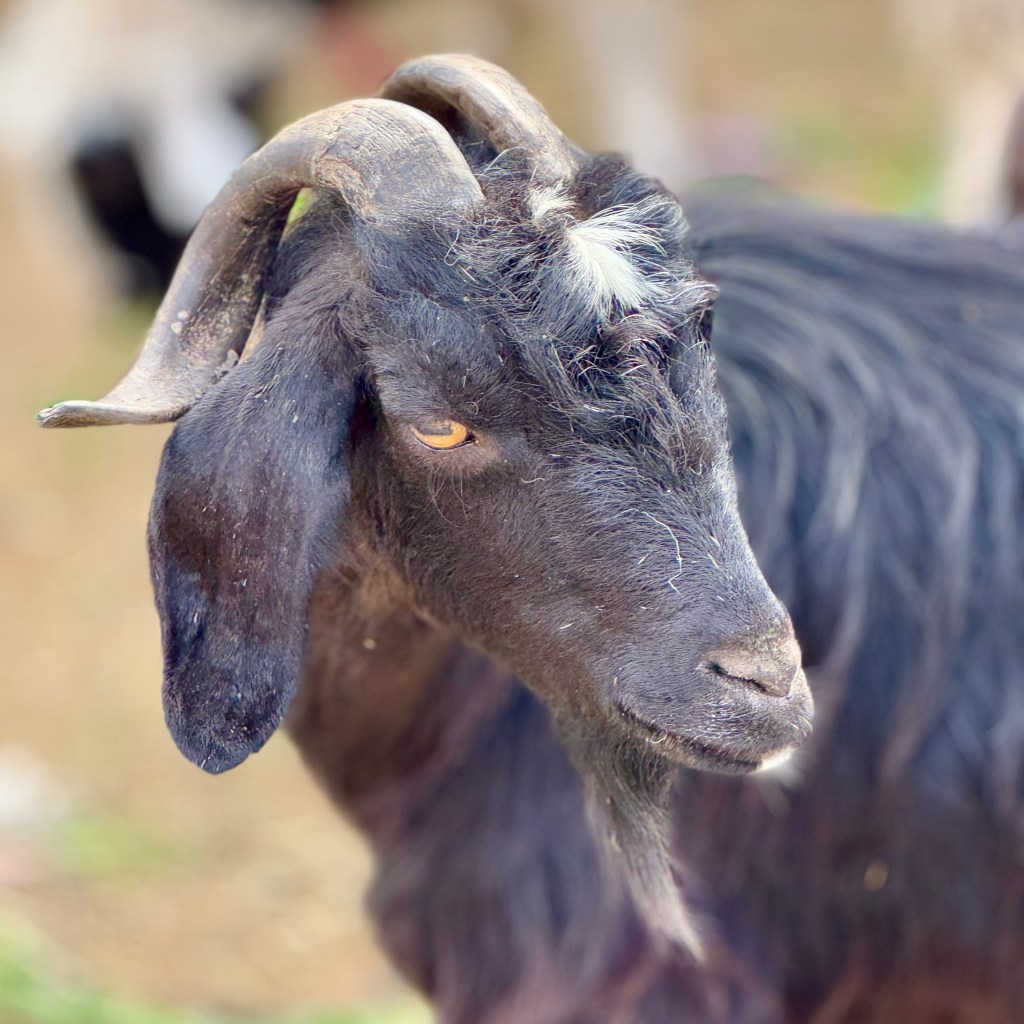
One of my favorite moments came when we were waiting for our madfouna (handily ordered by our guide as a snack for the group, with ground meat filling purchased at the butcher shop next door to the bakery.) I was watching the madfouna maker going about his work handling the early afternoon rush. He noticed my interest, called me over and took me back to the see the ovens and the racks of dough getting a final rise. Super fun and interesting, but what I appreciated even more was experiencing this spirit of inclusion and welcoming —”hey, come check out what I’m doing…” I experienced this in many circumstances, not just in retail situations, to the point that I became comfortable just wandering into workshops and other spaces that, at home, I would avoid entering out of some misguided sense of propriety. Especially away from touristy areas, people like sharing their lives with you if you show an interest; these tend to be my favored moments.
One of the main draws for me on this trip was an opportunity to get a deeper understanding of the Sahara Desert. The largest desert on our planet (parts of which are super young, geologically), the Sahara was, since childhood, a place of mystery and danger, yet somehow alluring as well…
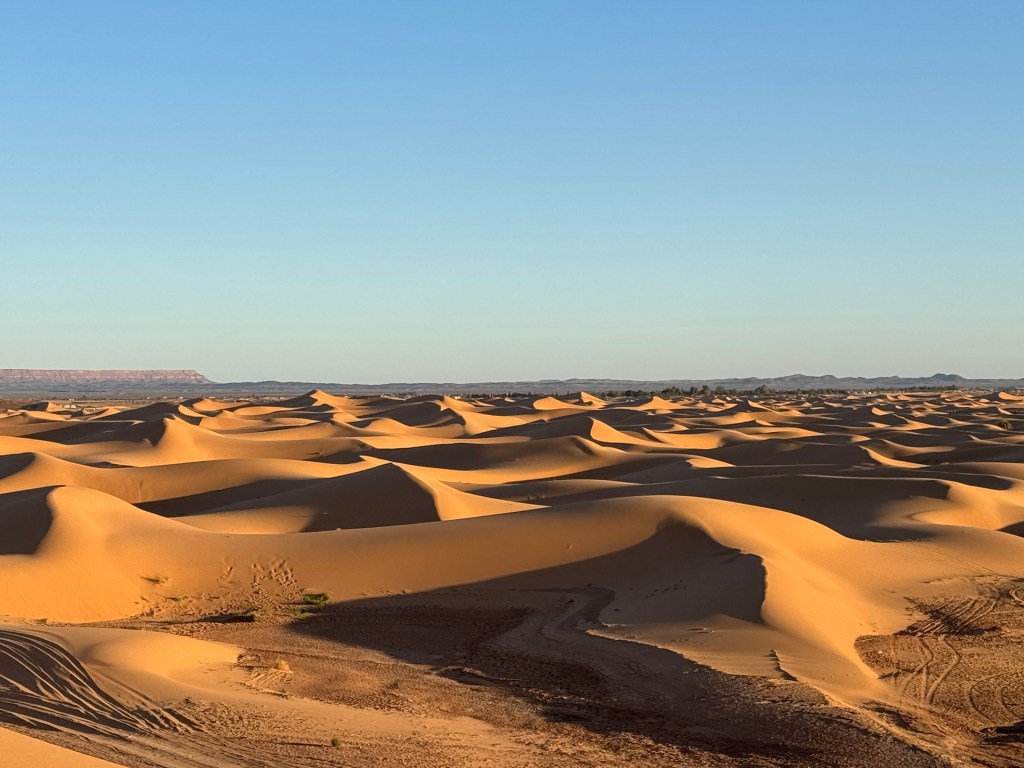
Stretching from the Atlantic to Egypt, roughly the size of the United States, the Sahara desert is, surprisingly, hardly sandy at all — only about 5% of the desert’s area is dunes, the rest is mountains and high, dry plains. And in the dunes around Merzouga, the water content is high enough that the dunes are stable, not seeking to swallow non-dune areas as happens in other parts of the world. Another interesting fact about the Sahara in Morocco is that it is very young. As few as 5,000 years ago southern Morocco was savanna, with giraffe and hyena. With climate change now on steroids, this land, and its people, are seeing profound differences within human lifetimes.
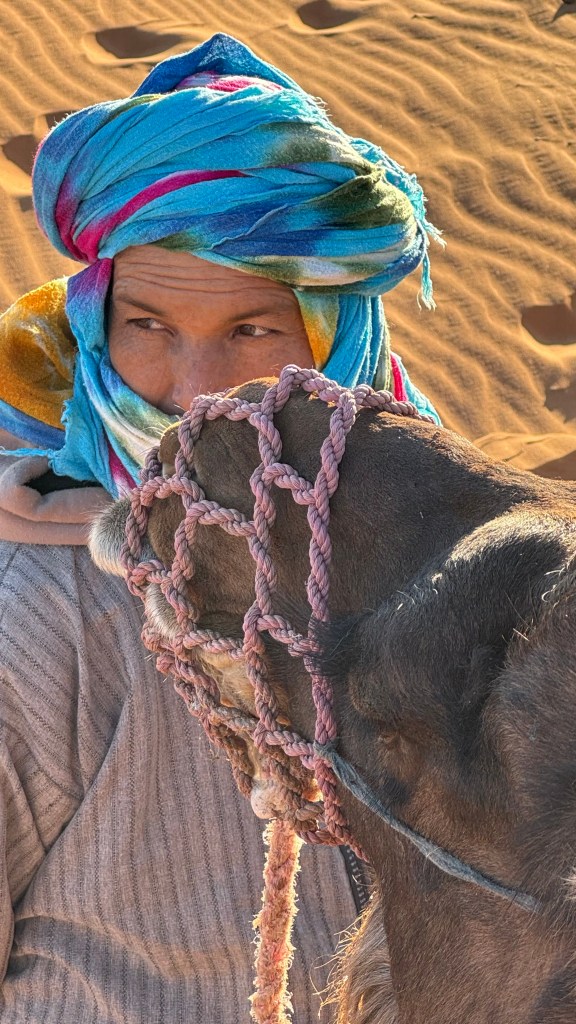
And, of course, what trip to the Sahara would’ve be complete without a ride on a camel? Ostensibly ambivalent about this type of experience, I found it quite relaxing to ride on a camel — the slow, smooth, gentle rocking back and forth whilst traversing spectacularly shaped and shaded sand dunes made for a rather wonderous time.
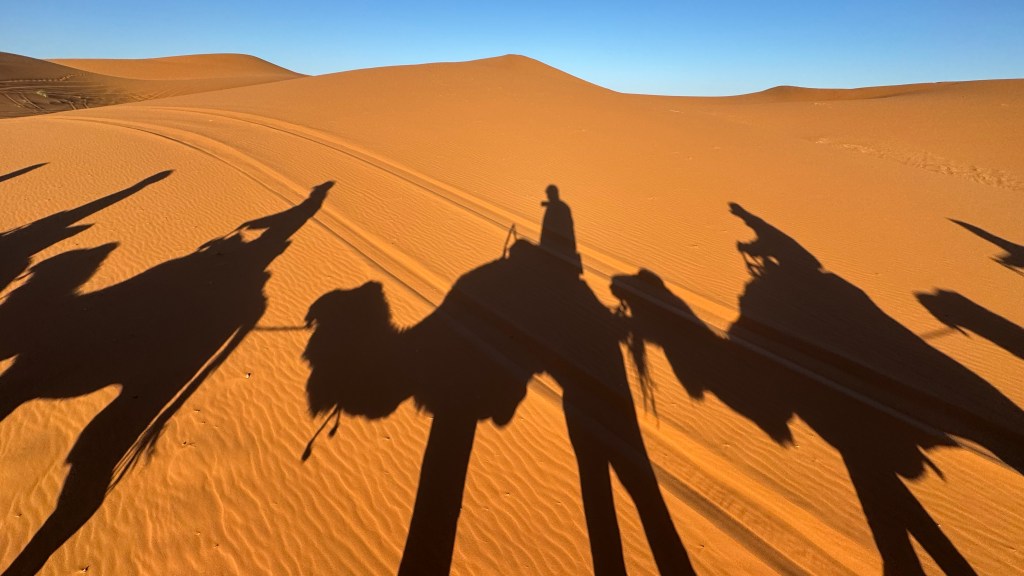
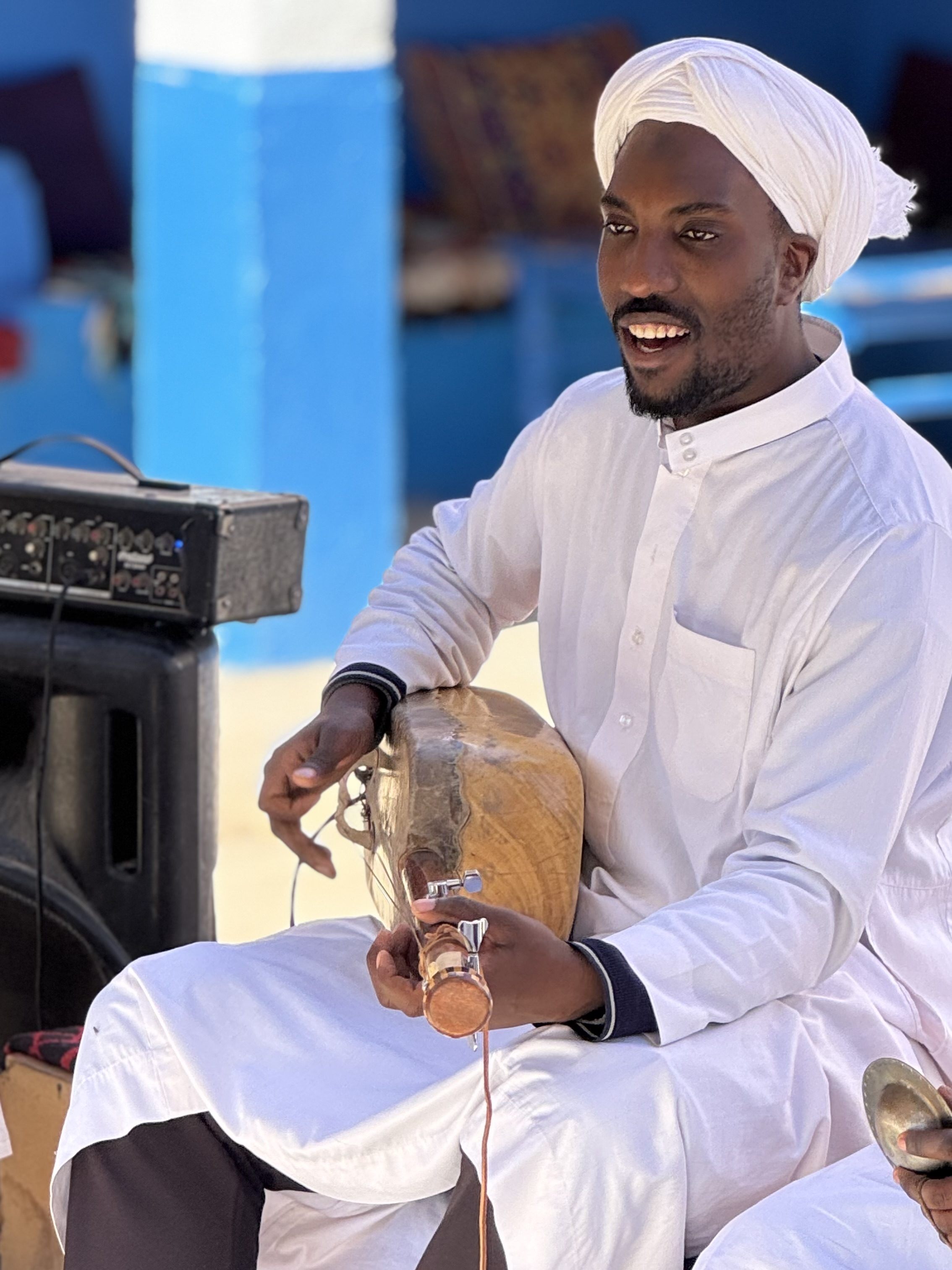
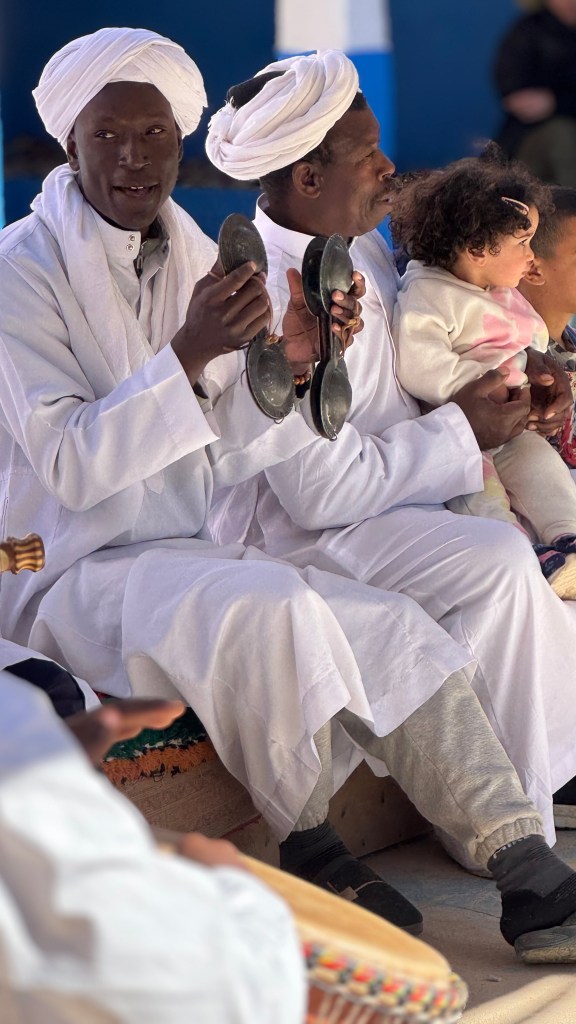
As recently as the 1960s, camel caravans still plied the Sahara, continuing a pattern of trade that is almost as old as the dunes. Along with the gold and humans and other objects of global trade, the melodies and rhythms of sub-Saharan Africa made their way to Morocco. We stopped at a former caravasarry that is now a music school for a most enjoyable learning (and participation) experience. I still hear the chug-a-chug rhythm made by the oversized steel castanets.
Later that day we met with a family of nomads who winter not far from our desert tent camp. Led by an eighty-something patriarch (whose wife died several years ago), with his eldest son and family (wife and 2 young kids), they live in a several room adobe structure and farm goats and chickens.
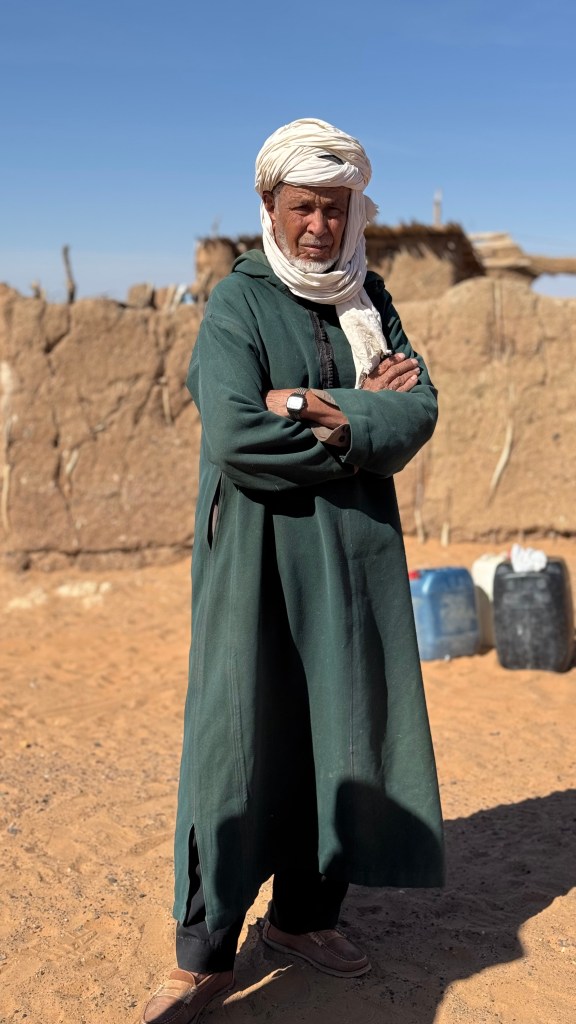
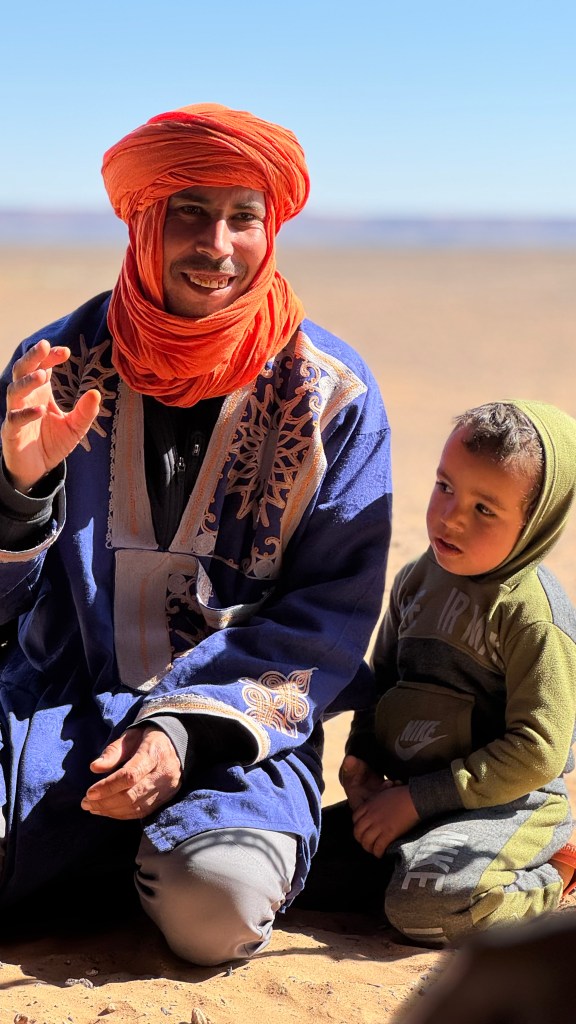
While the OG nomads we met are fiercely proud of their way of life, as modernity infiltrates — often in the form of solar panels and internet connectivity — alternatives to the way life become known and are found appealing, especially for the younger generations. This is the case of the son — he told his father that when dad dies, he will move to the city and cease the nomadic way of life; he just finds it too hard to provide the kind of life he wants for himself and his family. And this is how such profound changes to human cultures happen — one person at a time become many and change occurs… I find it fascinating observe such things.
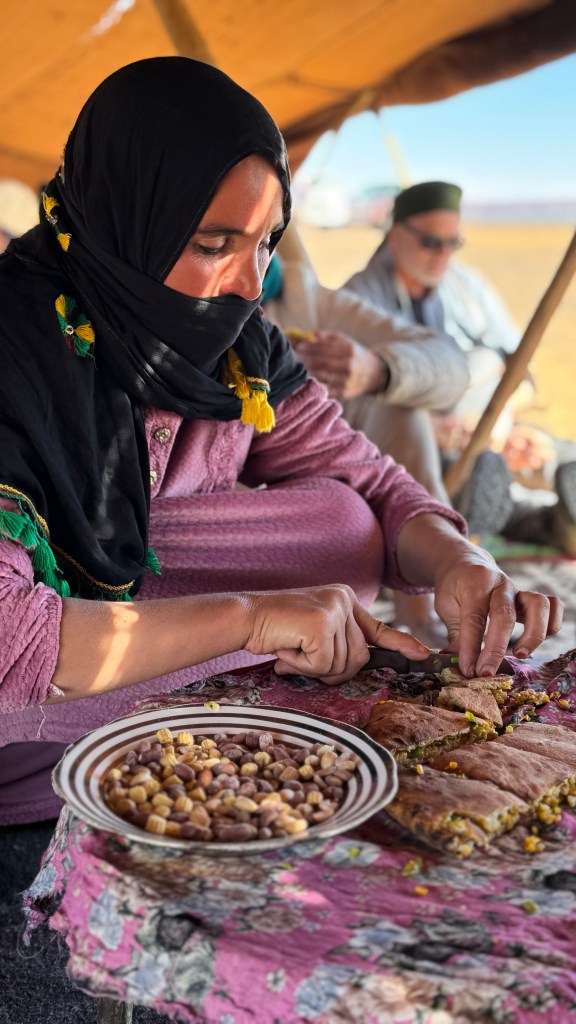
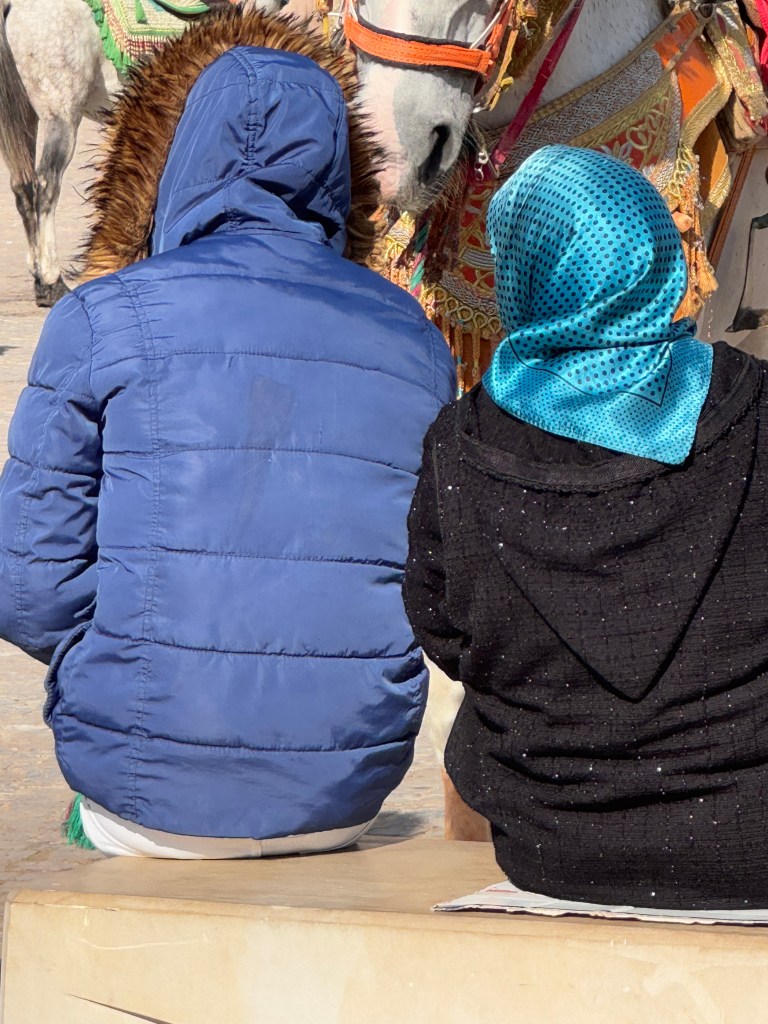
Lastly, another fun fact about Moroccans – they hate the cold weather. Cold is culturally related to sickness and stiff joints, so during the winter when daytime temperatures range in the 60-70s, it is common to see locals completely bundled up as if snow was forecast.