I had wanted to revisit Morocco since a family trip that took us to Marrakech for several days in 2013. It was an unexpectedly interesting and delightful diversion from the circumnavigation of the Iberian peninsula on which we were embarked and, ever since, I have been wanting to see, learn and experience more of this unique culture.
This uniqueness started early on: Millenia of trade and travel, abetted by geography, fashioned indigenous peoples, known collectively as Berbers – or preferably, Amazigh (phonetically “Amazeer”) – into an amalgam of tribes of pan-African, Arabic and/or European heritage, practicing either animist, Jewish or Christian traditions. Already quite a melting pot even before Islam swept in during the 7th century and homogenized many aspects of life, the spirit of tolerance and acceptance of others persist palpably in the cultures of the present day. That spirit may help modern Morocco navigate the myriad changes the society is undergoing, as experiences over the course of this trip would later illustrate.
With a population of ~37M, Morocco sits at a strategic crossroads at the northwest corner of Africa, within viewing distance of Spain and Gibraltar. A key connection between Europe and Sub-Saharan Africa along one axis with Carthage, Constantinople or Cairo, to the east. The arabized Amazigh, also known as the Moors, occupied southern Spain for centuries, adding Andalusian influences to the mix in Morocco’s major centers such as Fez. The only North African country to escape Ottoman rule, and aided by deft diplomacy and distance, a succession of dynasties held sway for many centuries until French and Spanish colonization in the early 20th century; the French took the populated northern half with Spain claiming the mineral rich desert areas to the south.
Independence from the French occurred in 1956, and, while Spain ceded control 50 years ago, governance of the Western Sahara region remains unsettled, at times violently, with Morocco continuing to battle an indigenous political movement. [Btw, Western Sahara is one of the least populated places on the planet (à la Mongolia or Greenland) and it’s also considered the last country in Africa yet to be decolonized.] [Also, while I do not profess to know the ins and outs of the micro-geopolitical situation with respect to the Western Sahara, I do recognize a plausible scenario in which Morocco is behaving as an oppressive colonist against the indigenous tribes of the region who are striving for self-rule. Just as the French did to the Moroccans. The irony is saddening…]
While just a half-century in duration, the French occupation in the 20th century left a huge impact on the Moroccan culture (language, coffee, administrative practices, to name a few.) French is still taught alongside Arabic in schools, as are Tamazigh (the Amazigh language) and English. Plus, Spanish is widely understood too, so when you come, you shouldn’t have a problem finding some channel for communication ;).
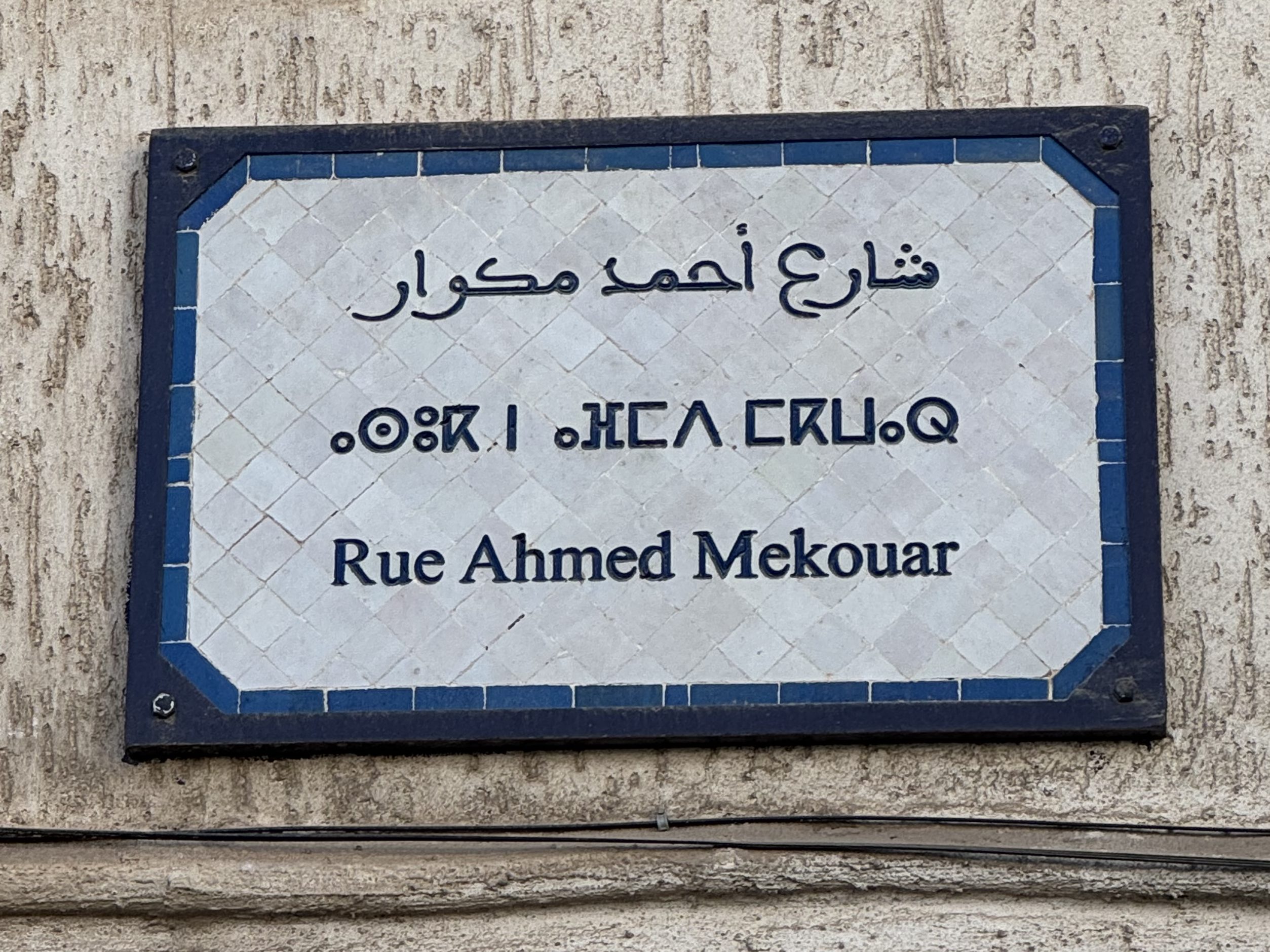
Still, linguistic impacts on society loom large and continue to evolve here: Tamazigh will likely replace Arabic as the state language in my lifetime and English is already poised to supplant French, at least on the street, as the “international” option. That such changes are afoot are readily apparent; signage on roads and buildings being a reliable barometer of a language’s status within the community. And, as I would soon discover over the course of the trip, cultural evolution is happening markedly across the societal fabric, in real-time, in this country.
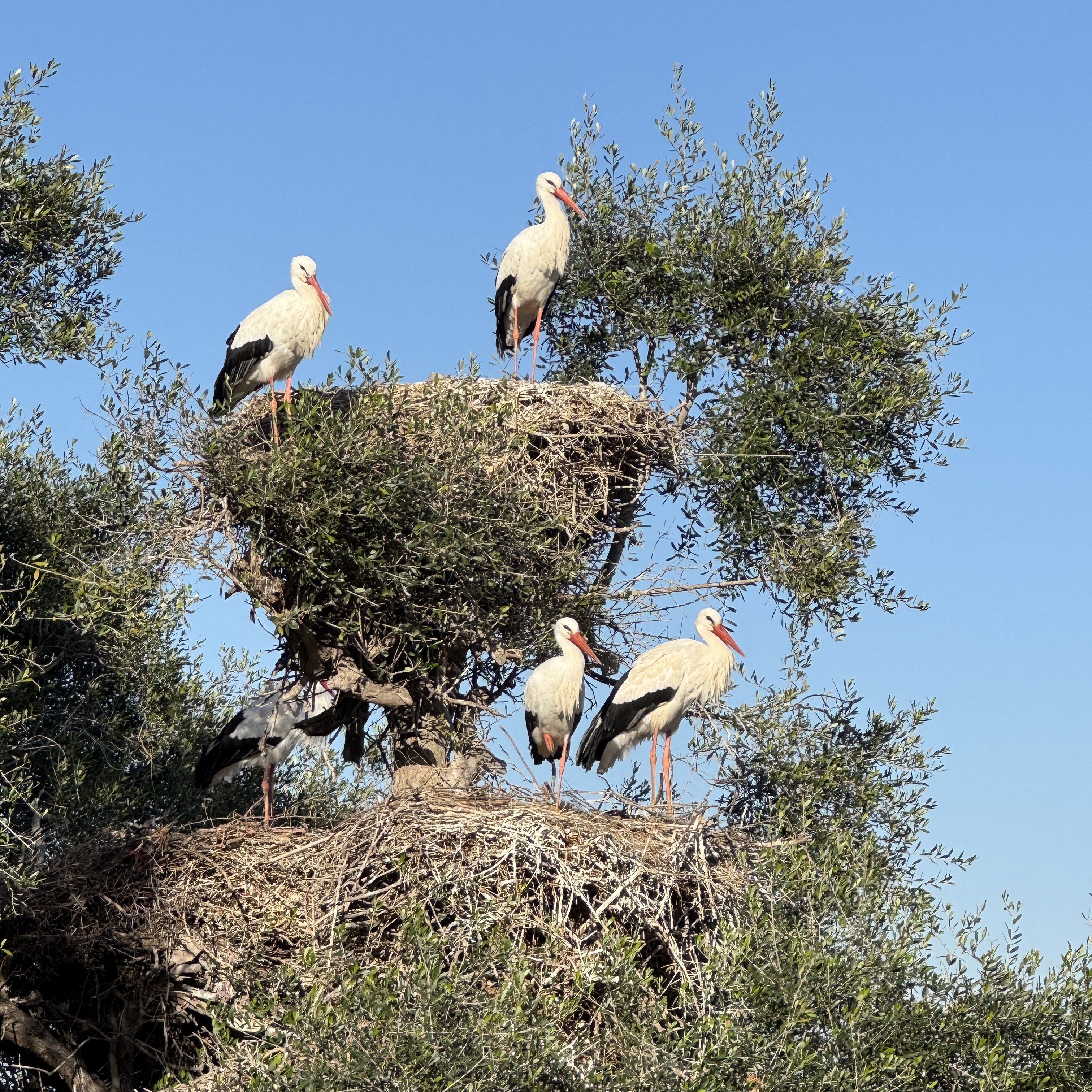
The first couple of days were spent in the capital, Rabat. Primarily the administrative center for the country (official home of the king), it’s also home to some interesting museums, striking contemporary architecture and Roman ruins at Chellah. The latter is inhabited year-round by scores of nesting pairs of storks, now all a-chatter in their clattering-sticks-sounding stork language — most fun to see and hear.
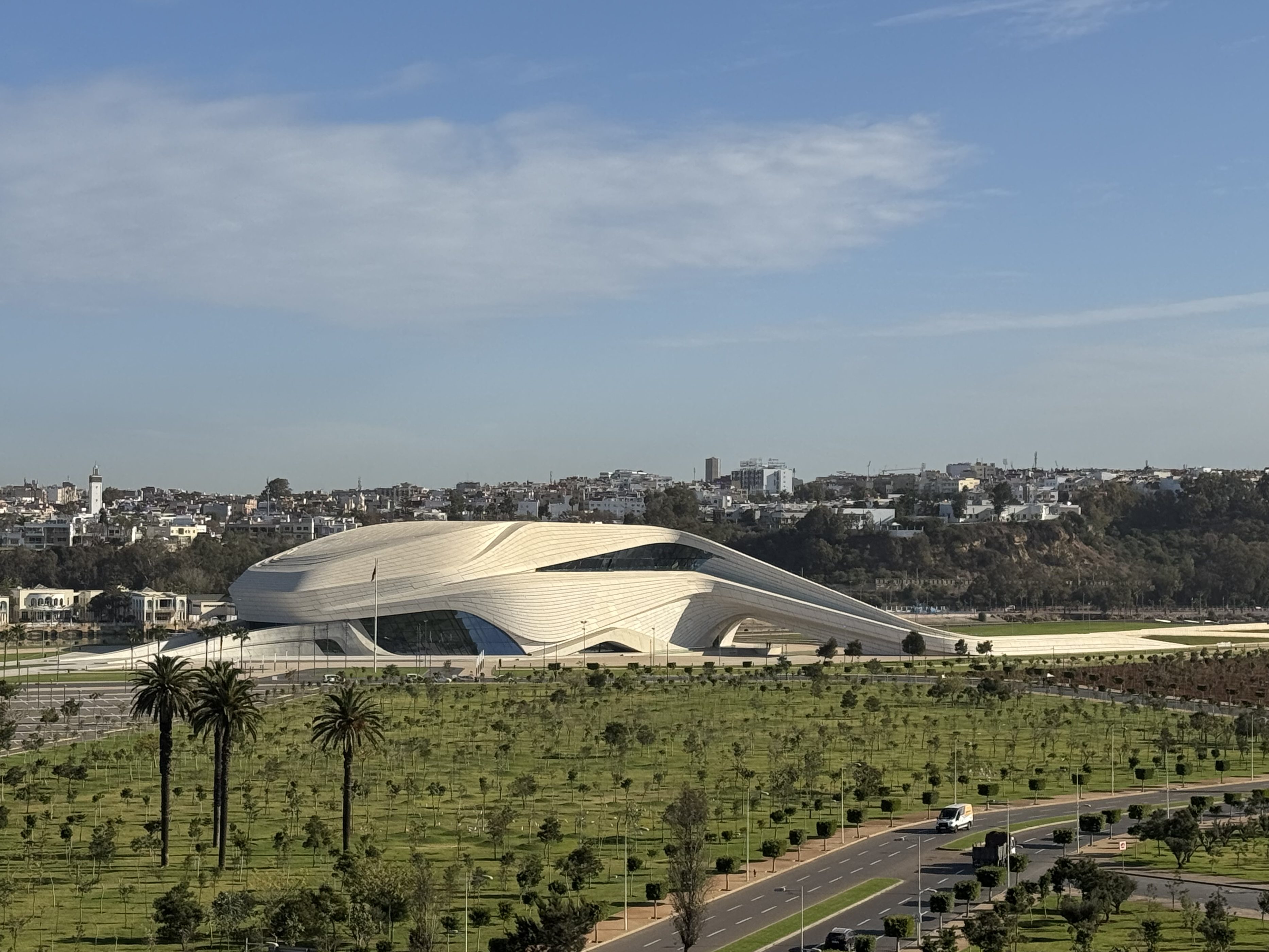
One of the most interesting buildings is the new opera house, designed by Zaha Hadid’s firm. It is one of the last buildings designed before her death in 2016 and was just inaugurated last autumn. I love her work and it would be so cool to catch a performance there one day. She was one of the only women to have cracked into the global group of “starchitects”, a mostly visionary and essentially all-male cadre. And that she was Iraqi, and a Muslim, make her accomplishments even more acute and impressive.
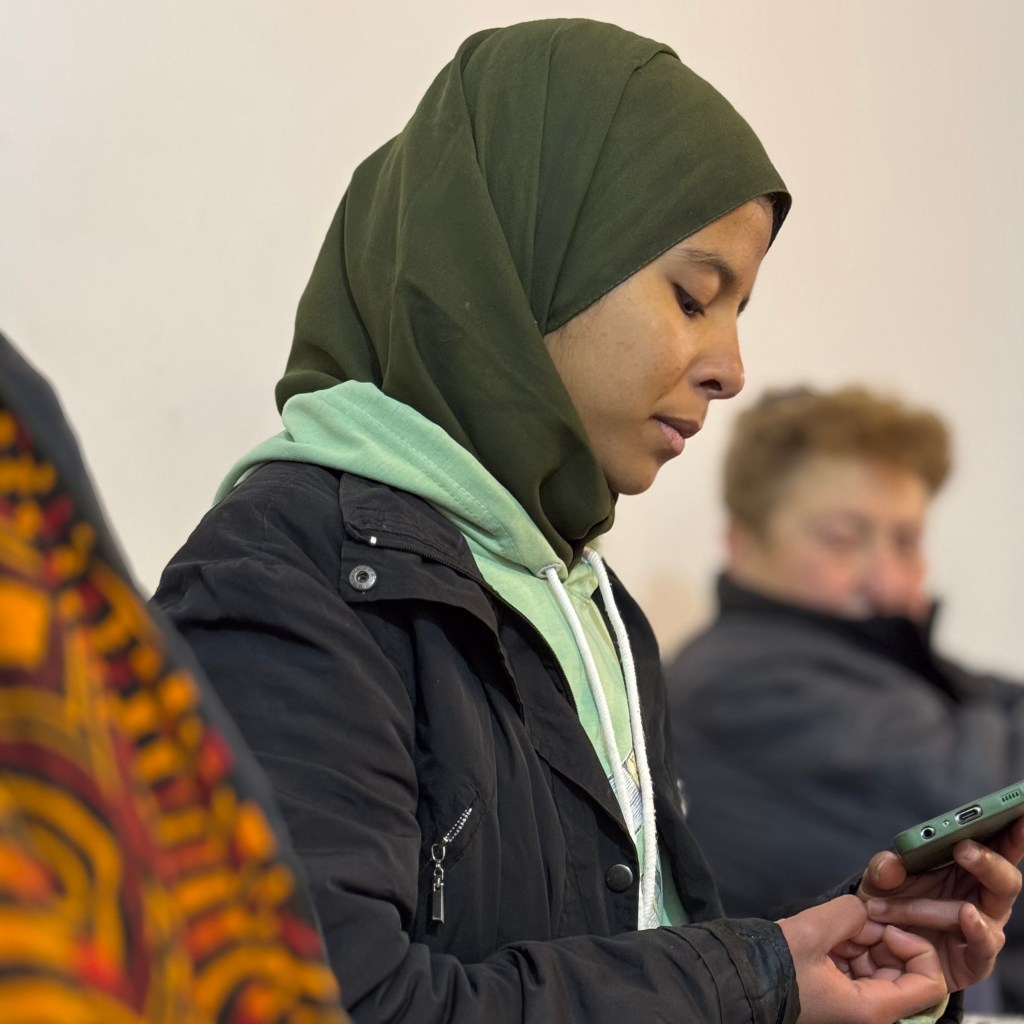
And, as it turns out, she was a potent role model as well: Fatima, the high school-aged eldest daughter of a farmer we met later in the trip, goes to boarding school at a city away from her small village, had access to, and did well in, STEM classes, and will study architecture at a Moroccan university this autumn (paid by government, btw); all because she fell in love with architecture after learning about Zaha Hadid — someone who looked like her and talked like her and prayed like her and changed the world like she just might…
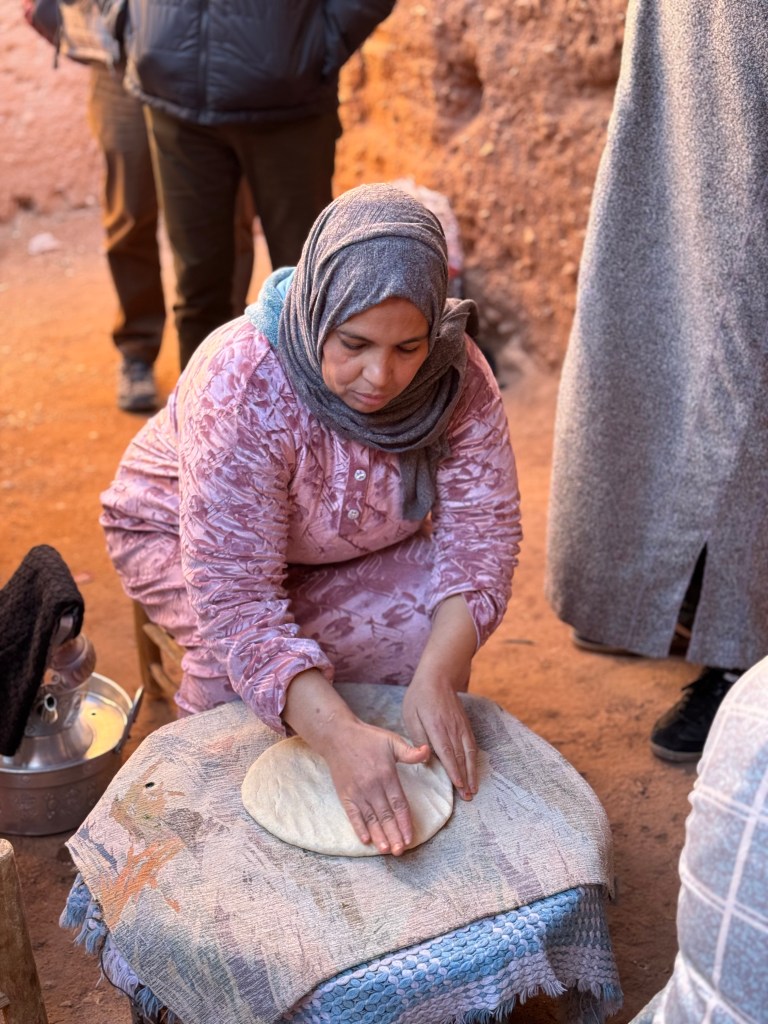
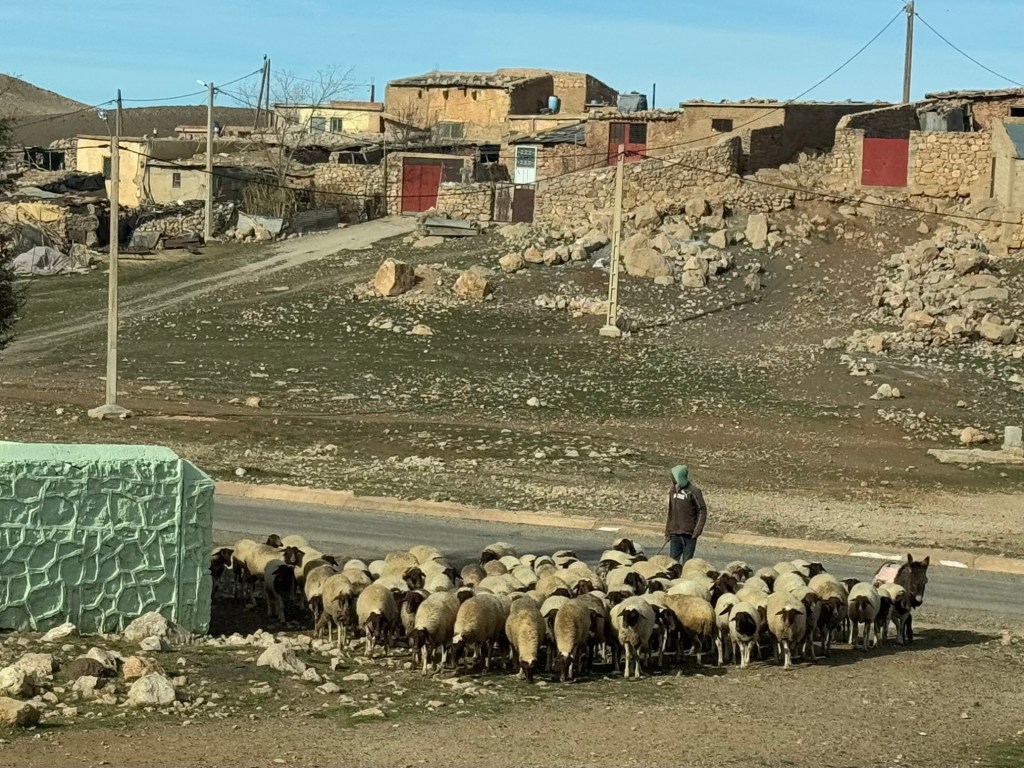
The story is more powerful when one considers that Fatima’s mom grew up unschooled, in an extended nomadic family, then fell in love with a farmer in a tiny village and is about to say goodbye to her daughter as she goes off to study at university, likely to live the rest of her life as an urban professional. That is a great deal of change in one generation in one family, yet illustrative of patterns playing out across Morocco today: nomadism giving way to sedentarism, education as the key to progress, and fragmentation of the traditional extended family.
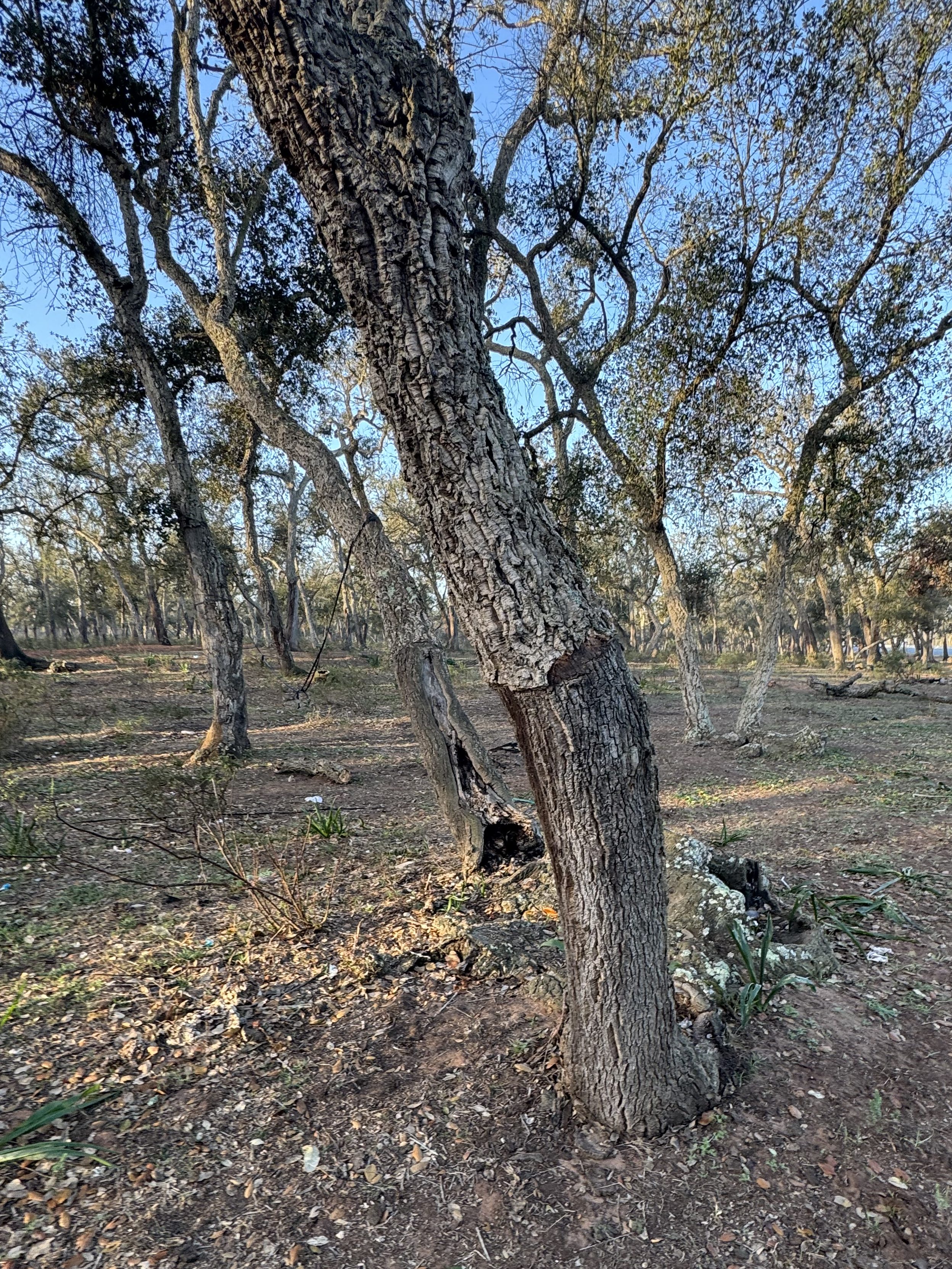
From Rabat we headed east for Fez, the former capital until the French relocated it to Rabat in a successful effort to disrupt and reshape the traditional Moroccan power structure. Along the way, driving thru the stony, rolling hills, still tinged with green from unusually abundant rainfall in September, we stopped in Forest Maâmora, a protected area of cork oaks. With 15% of the world’s cork oaks (grown in just 7 countries in the Mediterranean) and harvested every 9-12 years, these in Morocco are used primarily for flooring and other industrial uses. Great to see an age-old, and sustainable, resource continuing to be relevant in our modern world.
Further along the way, as forests turned to fields, the farmers were preparing their plots for the spring wheat crop. I found it interesting to note that there were a lot more donkeys tilling fields than tractors and even a few farmers hand-harvesting grain. With terrain often leaning towards “unwelcoming”, and fuel being comparatively expensive (retail gas is ~$4/gal), it is not a surprise that mechanization is not widely adopted. It’s a tough life as a farmer, most all of whom fall into the 2/3 of the population that the government classifies as poor.
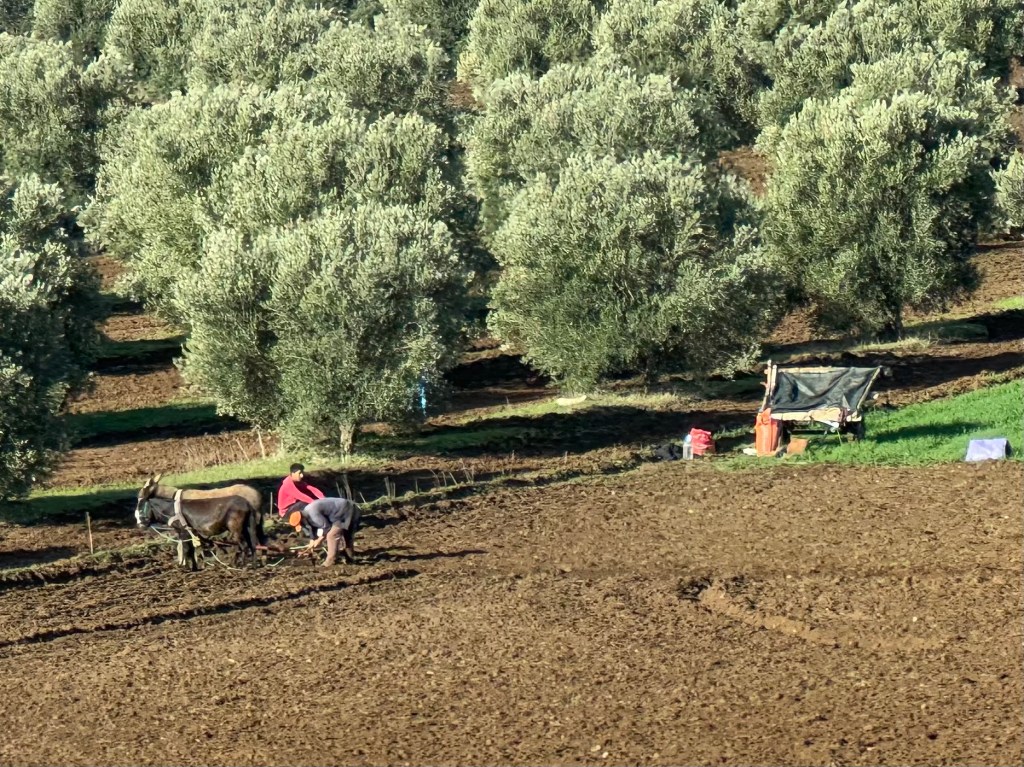
Like many other ag-based communities around the world, the farm labor pool here is shrinking, as family sizes grow smaller and young men prefer jobs in the city over those in the field. There is hope though, once utilitarian farm robots become commoditized and solar power essentially free, maybe our tools can step in when humans can’t. Yet to be seen is how existing ways of life – the nomad, the family farmer, the village dweller – find ways to accommodate such changes to demographics and technology.
We spent several days in Fez. I was thrilled. I still recall, as a kid, thinking it was cool that that there was an entire city named after that unique, tasseled, red hat — or was it the other was around, my young self wondered? (Well, yeah, it is…) As it turns out, my youthful interest in this place was well-placed: this nearly thousand year-old city has one of the largest and oldest medinas (walled cities) in existence and continues to be the country’s religious center. It’s also a major cultural center and UNESCO-recognized site.
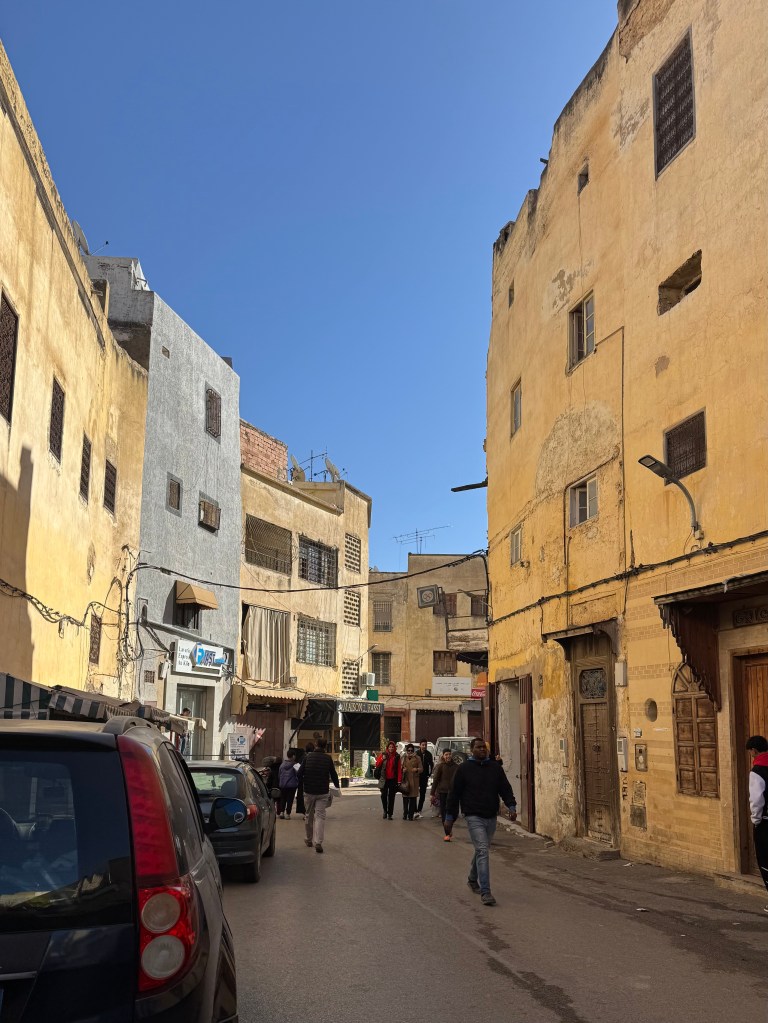
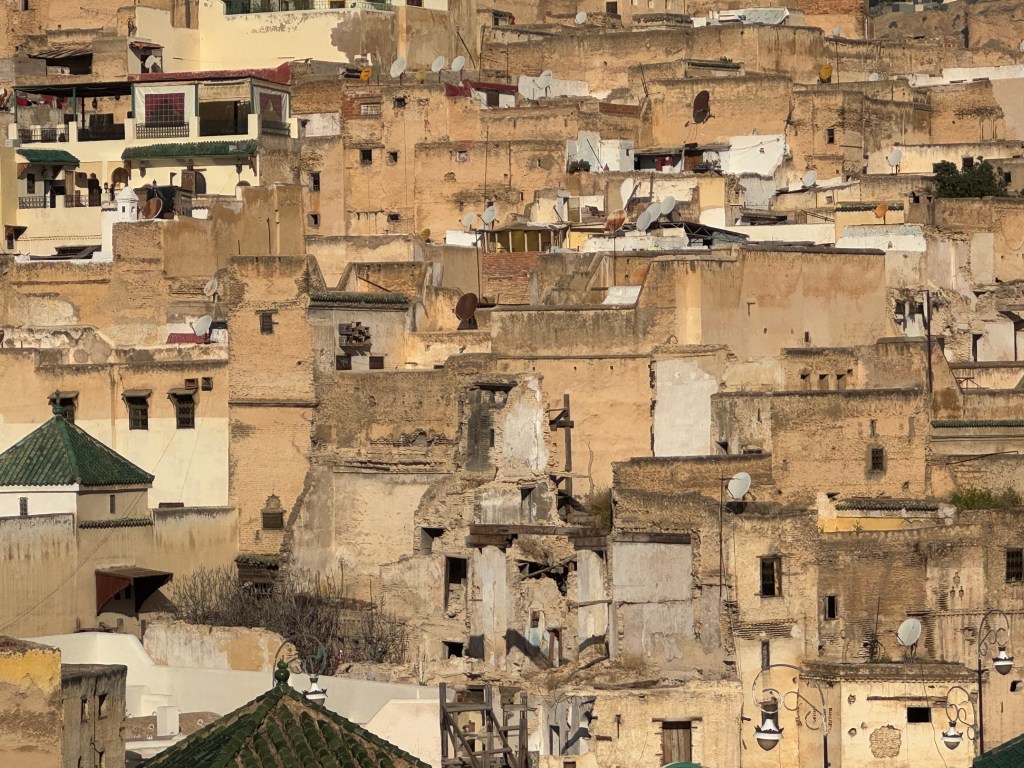
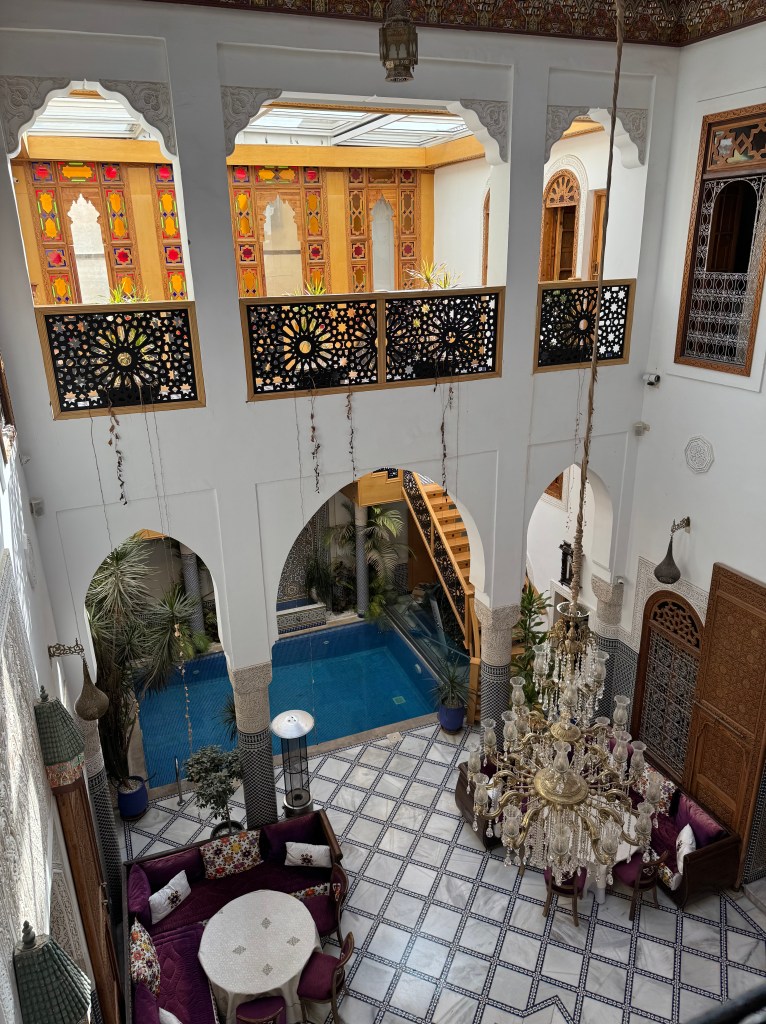
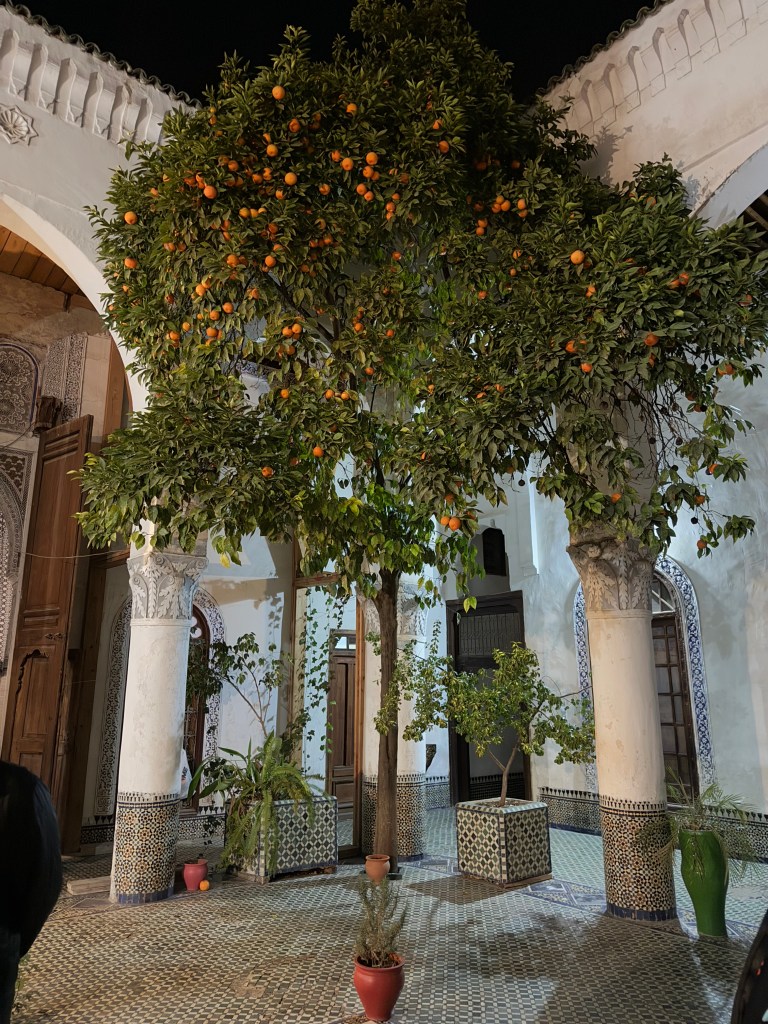
We stayed inside the old Medina (not the 750 year-old new Medina…) in an riad, a typical historic, multi-generational, courtyard home that has been converted into a guesthouse/hotel; its a great way connect with old Morocco. They are designed to function in hot, dry environments, leveraging moisture when available and enabling natural ventilation processes. We are lucky that the French consciously chose to leave the Medina alone (vs. “redevelop” in the name of progress) for the Medina is a treasure of ancient living environments. Indeed, what is now preserved is precisely how gazillions of humans have experienced urbanism over the eons. I find it enriching to explore such places.
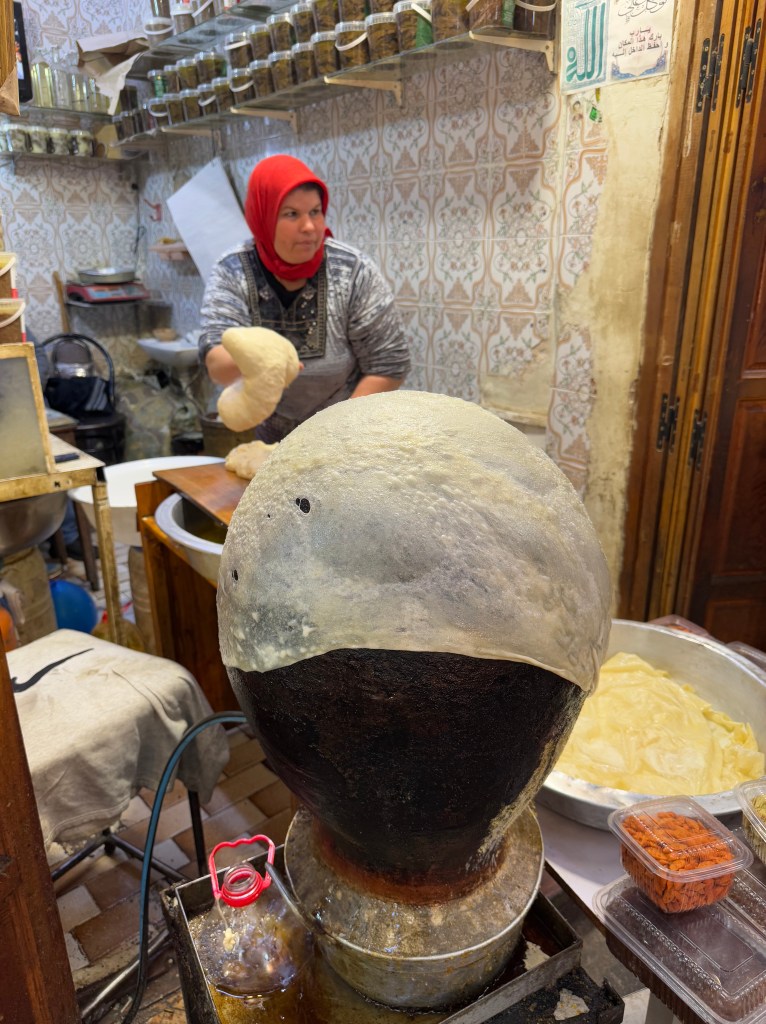
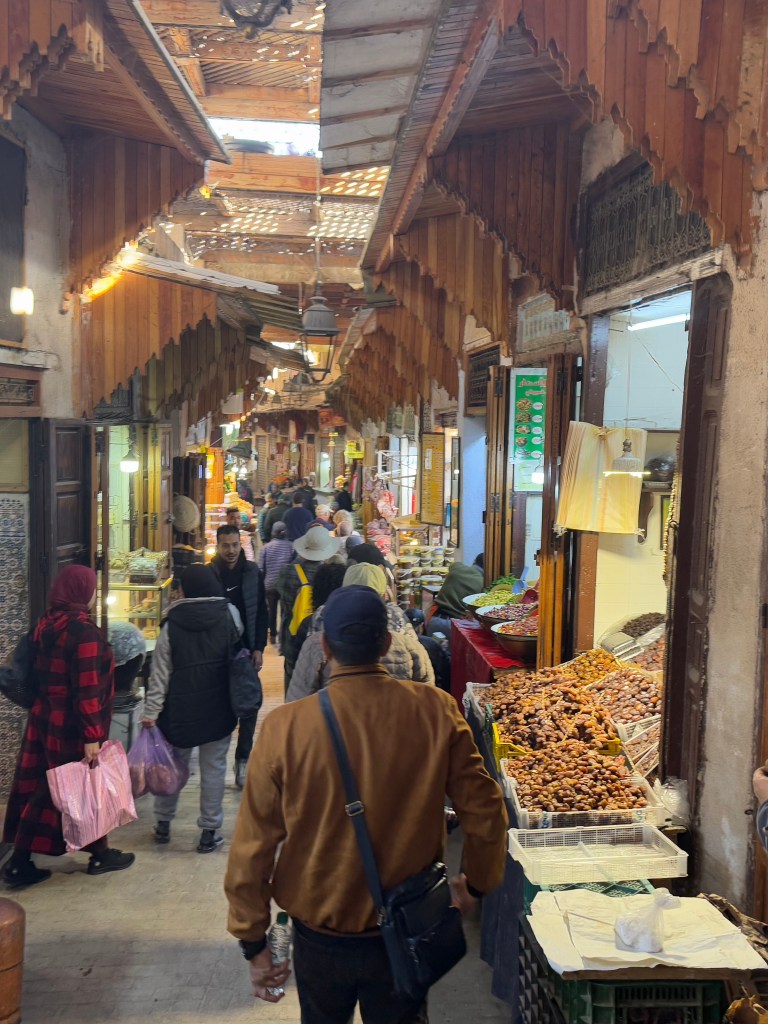
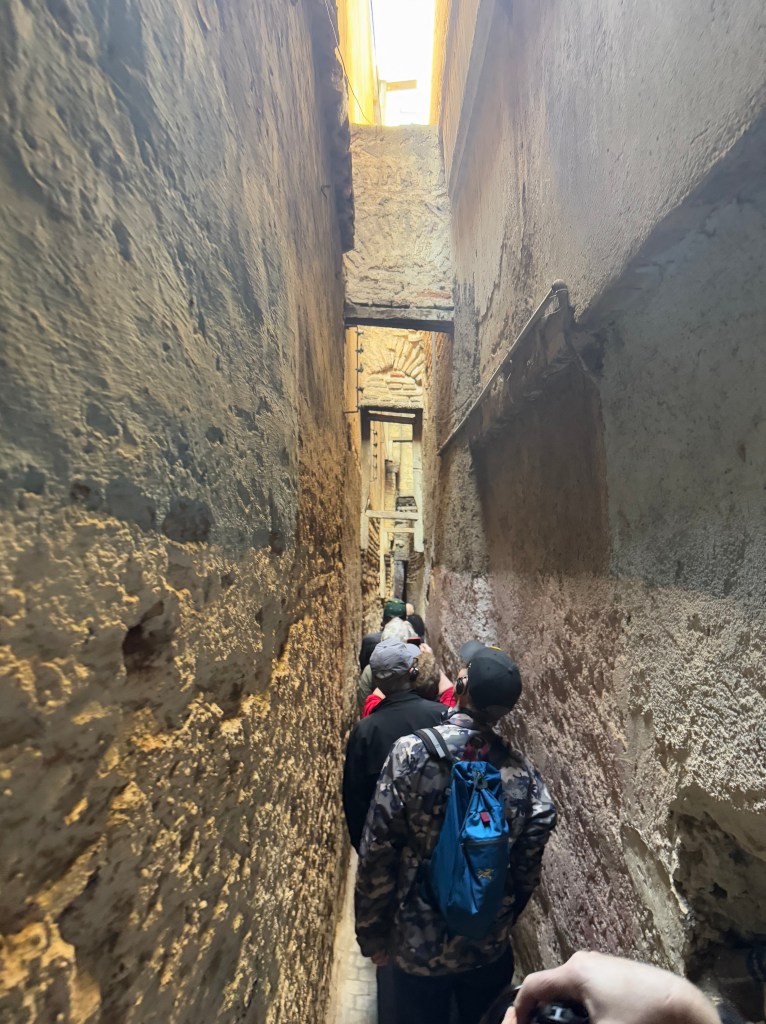
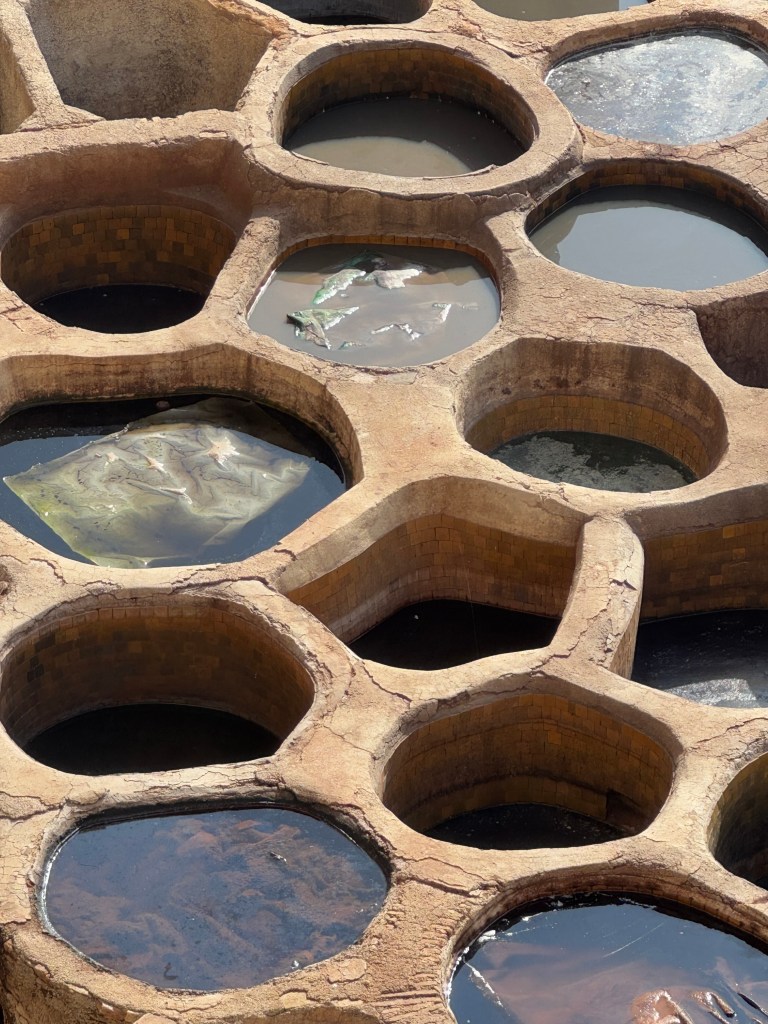
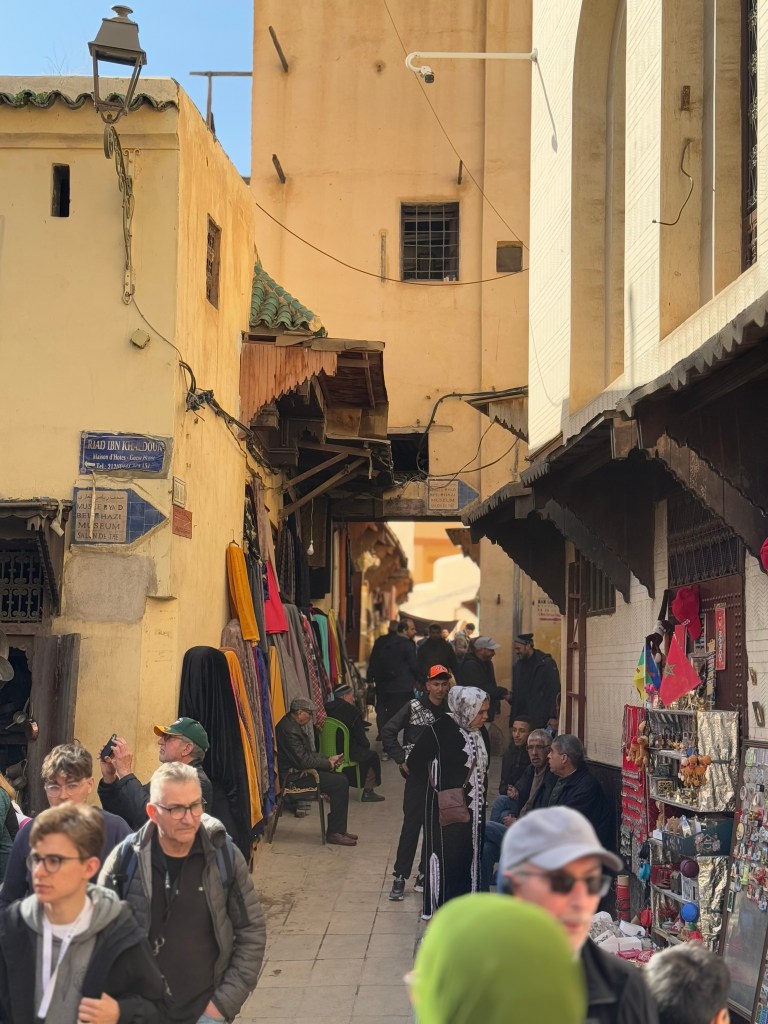
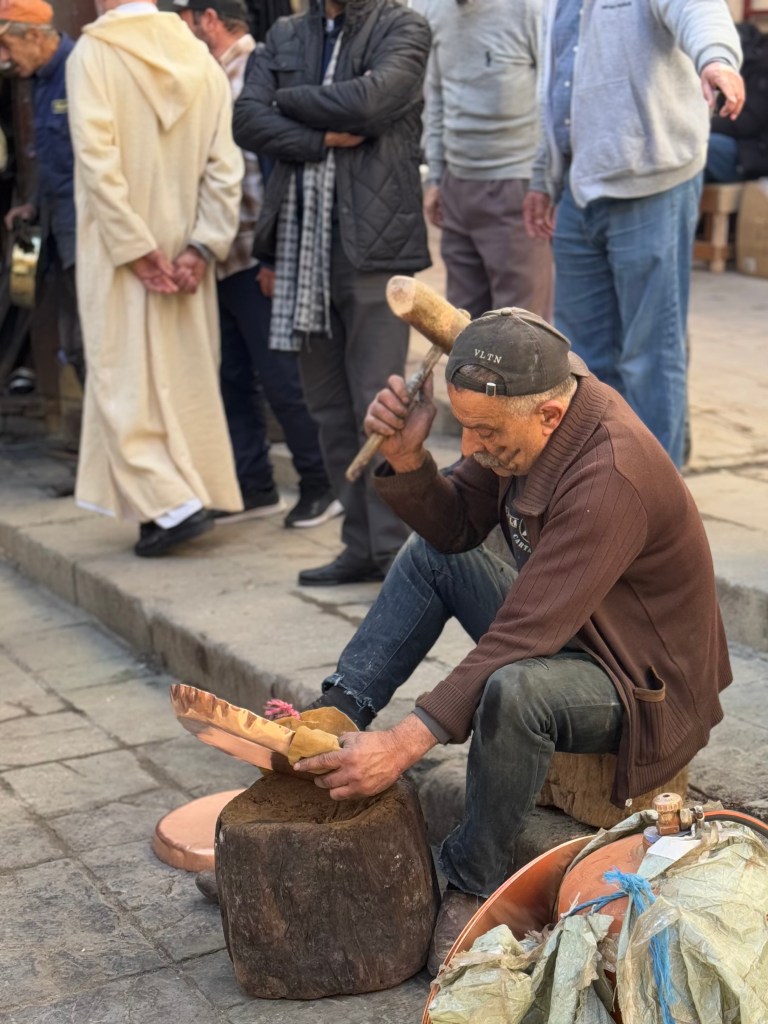
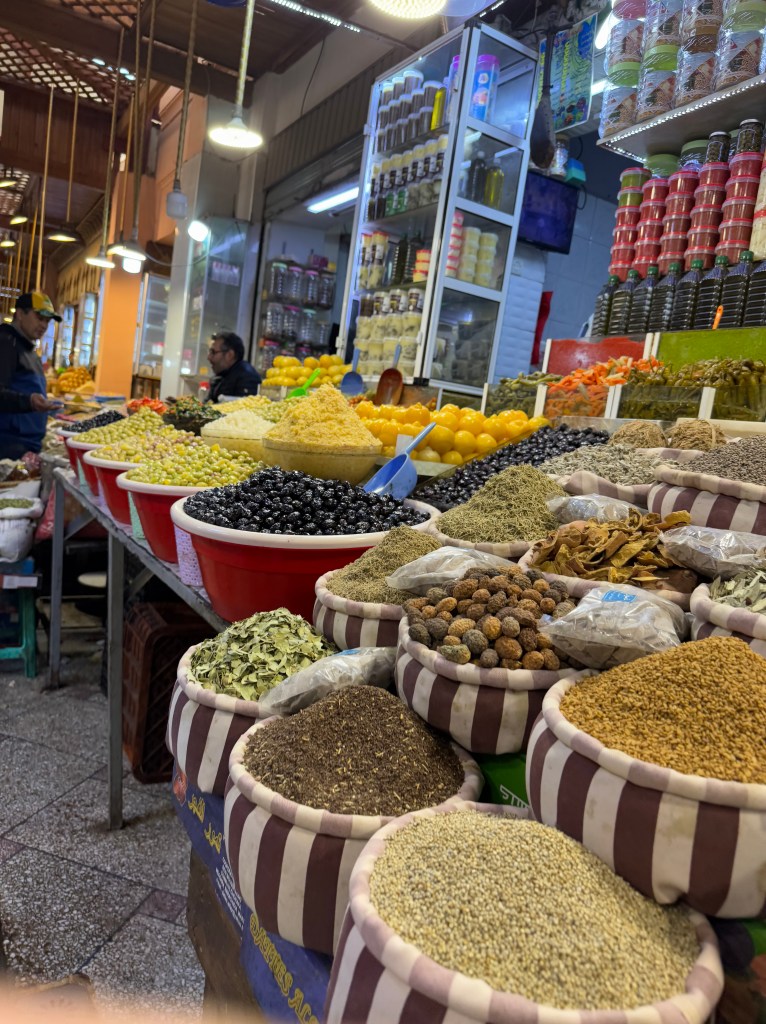
One way to explore is to wander the narrow, twisting alleyways of the car-less Medina; getting lost without actually getting lost, ducking into artisan workshops to understand age-old fabrication techniques and, in general, becoming part of the flow of local life here.
An even more immersive experience was a dinner we had with a 5th-generation local family in their 400 year-old home, just six of us travelers eating a meal cooked by the dad and discussing cultural differences and similarities with his two college-aged daughters. The gals’ situations illustrate yet again the state of societal change in Morocco today: Young people, particularly women, are highly focused on education as the way up, are crisply fluent in American language and culture and are expectant that women have an active voice and role in Moroccan life. It is easy to feel optimistic about Morocco’s future after interactions with this next generation…
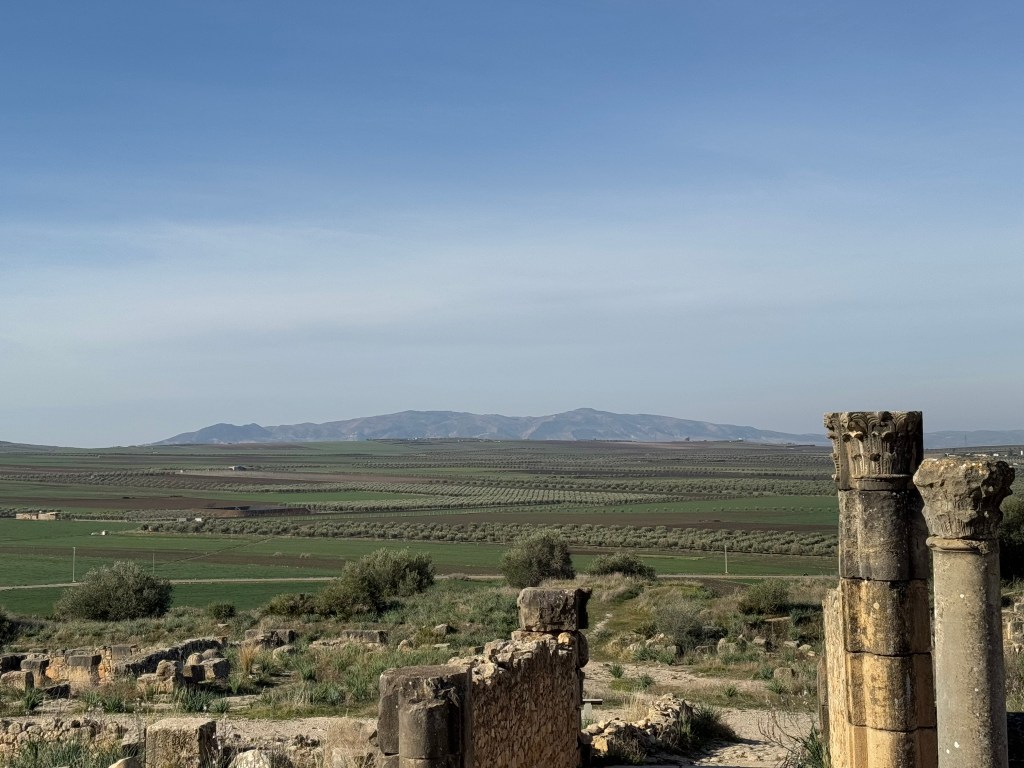
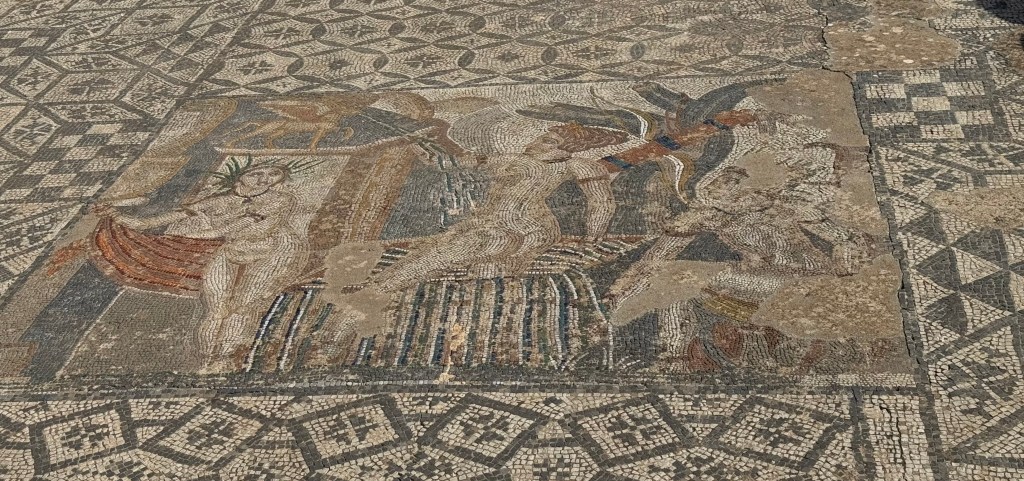
While still in Fez, we took a day trip north to see the Roman ruins at Volubis. A fertile land where wheat, barley and olives have long been plentiful, it was the capital of a major regional Amazigh capital for centuries, then was the southwestern extent of the Roman realm for a few centuries until Rome began to wither. Power eventually migrated to Fez, while time and seismic activity contributed to preserving Volubis as an archaeological site.
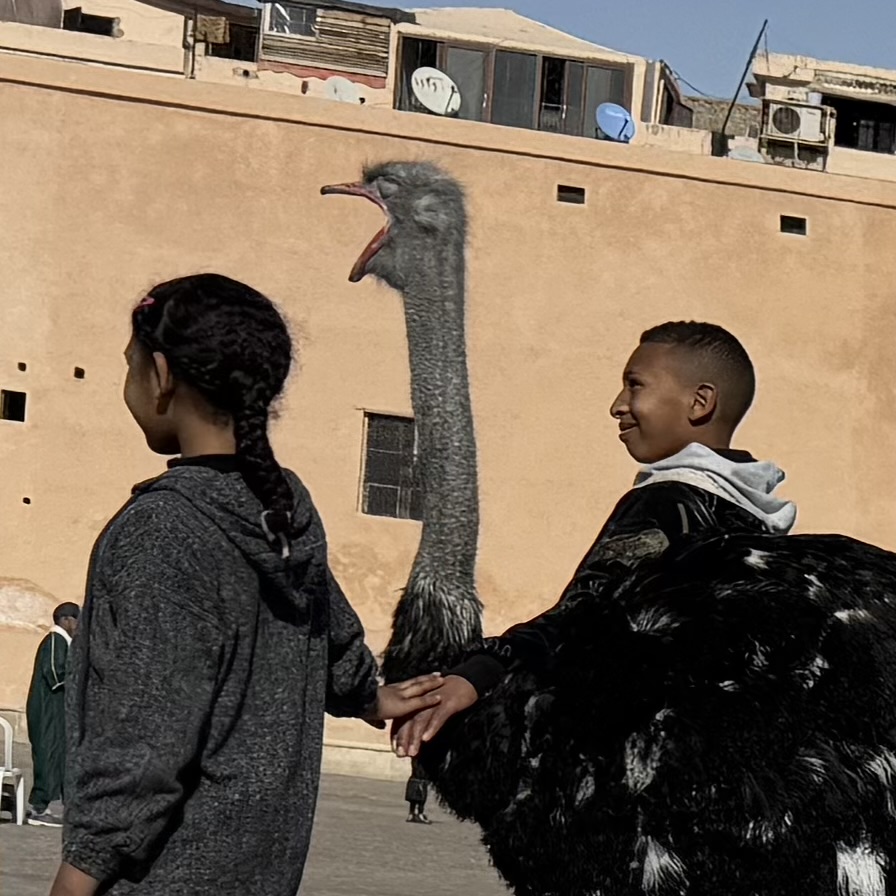
We also visited nearby Meknes, where a large square abutted a lively souk as well as a nifty musical instrument museum housed in an old palace. The square seemed a petit version of Marrakech’s, with dolled up horses and singing ostriches (kidding) ready for selfies. I do find I like the plaza vibe…
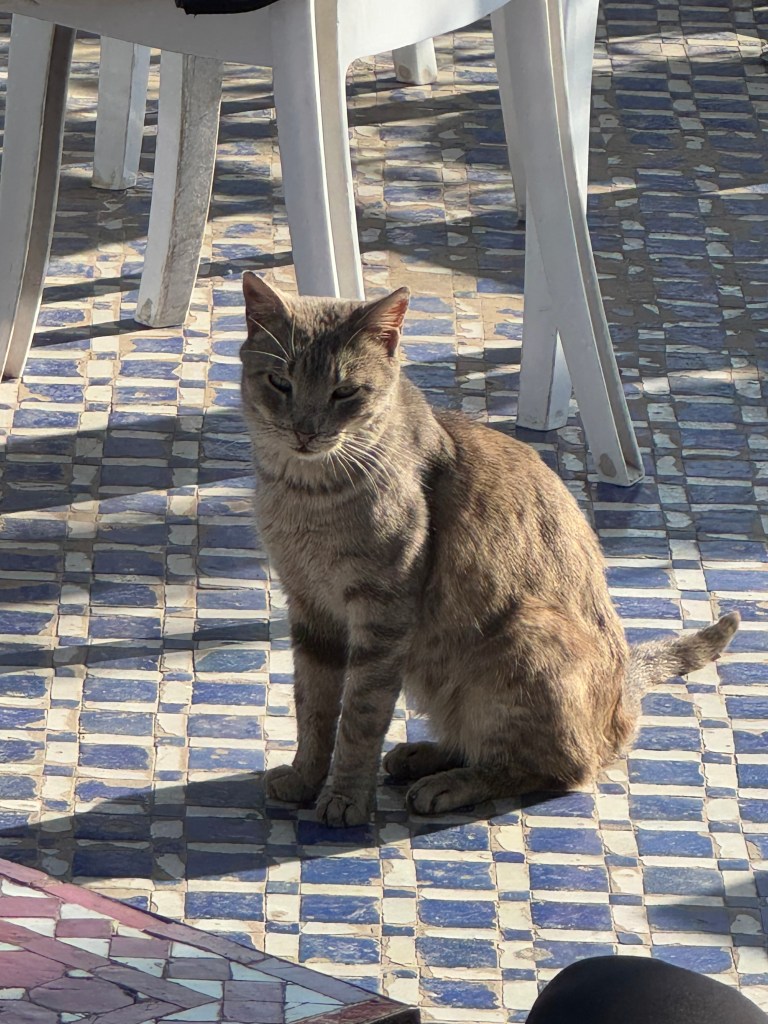
Fun Fact about Morocco #1: I quickly became convinced that the name of the country is actually MoroCAT, because, well, they are everywhere, and a paucity of dogs makes the cats stand out even more. They were a delightful adornment to the trip.
In the next edition, we travel south, through mountains and deserts, with additional opportunities for learning and exploration.

